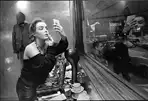
ハービー・山口 「それぞれの瞬間」

poster for ハービー・山口 「それぞれの瞬間」

このイベントは終了しました。
コニカミノルタプラザにて
メディア: 写真

このエントリーをはてなブックマークに追加

希望と不安を胸に秘め単身ロンドンに渡った青年は、夢を諦めず、写真家となった。ロンドンに住んでいたパンク全盛の時代から、azumi (wyolica)、トータス松本(ウルフルズ)、Chara、永積タカシ(SUPER BUTTER DOG)、bird、福山雅治、BONNIE PINK、宮沢和史…。
70年代のLONDON、パンク全盛期の頃のミュージシャンやアーティストから、現代のTOKYO、夢とノスタルジー、憧れや希望を持つ若者たち、街が見せる一瞬の素顔をすべてモノクロ・ファインプリントでご覧いただきます。

スケジュール

2007年01月16日 ~ 2007年01月25日

アーティスト

ハービー・山口

MyTAB コミュニティー

  • 2人がこのイベントをオススメしています。: rt4ever, mujinamo

コメント

willoughby: (2007-01-25 at 13:01)

If there is a single cultural moment of the twentieth century that doesn't deserve another retrospective, then it's punk. What is there left to see, feel, think or know about the late 70s movement that hasn't already been laserwritten in collective memory? Have you made plans for the year 2017? That'll be the 50th anniversary, coinciding with the deaths of most of the main protagonists. It's reassuring to know that I too will no longer be alive for the centenary celebrations.

New takes on punk are most welcome, then. Japanese photographer Herbie Yamaguchi arrived in London in the 1970s just in time to be swept along in the safety pin explosion. His portraits of punk luminaries and also-rans capture them in off-stage moments of crushing normality. So here's Johnny Rotten of The Sex Pistols having a smoke while doing a funny stare; and there's Jimmy Pursey of Sham 69 having a smoke while sitting on a wall; and look, is that Gary Disease of The Dog's Bollocks having a smoke while neutering his mutt Winston with a piece of broken mirror? Alright, the last one may be a lie.

To Yamaguchi's credit, it's a classic example of outsider triumph. His more naturalistic shots penetrate the image that his subjects worked hard to project. Sometimes they reveal the image in its construction: the application of make-up; the references to idols of the past; the use of props that are symbolically working class. A case could be made that, as a body of work, they are iconic. After returning to Japan, Yamaguchi spent much of the 80s and 90s turning his lens on homegrown talents like Ulfuls, bird and Bonnie Pink. Who? Oh yeah, exactly. It's here that Moments of Life reveals its bitter fruit.

One glance at the knowing expressions of the British stars reveals that it's enough simply to know that you're destined for greatness to be considered great. The wan smiles of the Japanese stars are different. The knowingness here is of the likely transience of their fame, which they are already preparing for with displays of ordinariness. Their celebrity blazed the firmament with a desire to be loved, but left a crater no deeper than a human hair. Sure, there will always be die-hard fans, reunion tours and radio play but there will be no music heritage industry radiating out from the centres of government, media and academia to grant them immortality and embellish their art. In this gallery, they exist only in tragic juxtaposition. Moments of Life makes it plain that, if there's one thing in which Britain excels over Japan, it's in preserving the legacies of its musical acts.

The real story of punk is this: the people it inspired had, by the time the 90s came around, assumed control of much of the British media, even parts of government (Tony Blair was infamously a part-time punk.) Punk was then rapidly institutionalised through retrospectives like this. It was, they remind us, not just protest. It was The Protest. It is difficult to imagine this happening in Japan where the the transfer of power between generations is a more glacial process. So far, we've only had Koizumi frightening the Bushes with his deranged-man-with-a-knife-on-the-beach impersonation of Elvis, which means we may have only two more decades to wait for the first prime minister of punk.

David Willoughby

コメントするためにログインするか、無料サインアップをしてください。

All content on this site is © their respective owner(s).
Tokyo Art Beat (2004 - 2012) - About - Contact - Privacy - Terms of Use