
Exhibition/event has ended.

"Siebold & Hokusai and his Tradition" Exhibition
Edo-Tokyo Museum


Finished
SHARE
Artists
Hokusai Katsushika et al.
Hokusai Katsushika (1760-1849) was the first painter who mastered Western style painting in Japan and established his unique method of expression. His Ukiyoe style not only attracted Japanese audiences, but also western Impressionist painters such as Van Gogh in the later modern period, even before Japanese art and culture was popularized in Europe.
According to recent research, Dutch traders who stayed in Nagasaki between 1818 to 1839 commissioned paintings from Edo artisans including Hokusai on a regular basis and brought works back to their home country.
This exhibition introduces Hokusai's works that are preserved in Holland and France to explore the unknown side of this artist, and also look at the relationship between Hokusai and the German doctor Siebold, who stayed in Japan during the period. In addition, some of Hokusai's masterpieces are on view for the first time in public.
Exhibition part I: December 4th (Tue) - December 27th (Thurs)
Exhibition part II: January 2nd (Wed) - January 27th (Sun)
Displayed works will change according to the schedule.
[Image: "Tango-Sekku" (Boy's day festival) Hokusai Studio, Collection of National Museum of Ethnology, Leiden]
According to recent research, Dutch traders who stayed in Nagasaki between 1818 to 1839 commissioned paintings from Edo artisans including Hokusai on a regular basis and brought works back to their home country.
This exhibition introduces Hokusai's works that are preserved in Holland and France to explore the unknown side of this artist, and also look at the relationship between Hokusai and the German doctor Siebold, who stayed in Japan during the period. In addition, some of Hokusai's masterpieces are on view for the first time in public.
Exhibition part I: December 4th (Tue) - December 27th (Thurs)
Exhibition part II: January 2nd (Wed) - January 27th (Sun)
Displayed works will change according to the schedule.
[Image: "Tango-Sekku" (Boy's day festival) Hokusai Studio, Collection of National Museum of Ethnology, Leiden]
Schedule | Dec 4 (Tue) 2007-Jan 27 (Sun) 2008 Opening Hours Information
| ||||||
|---|---|---|---|---|---|---|---|
| Fee | Adults ¥1300, Univeristy ¥1040, High & Junior High & Elementary School Stduents/ Those over the age 65 ¥650 | ||||||
| Venue | Edo-Tokyo Museum http://www.edo-tokyo-museum.or.jp/en/  | ||||||
| Location | 1-4-1 Yokoami, Sumida-ku, Tokyo 130-0015 | ||||||
| Access | 3 minute walk from the West exit of Ryogoku Station on the JR Sobu line, 1 minute walk from exit A3 or A4 at Ryogoku Station on the Toei Oedo line. | ||||||
| Phone | 03-3626-9974 | ||||||
| Related images | Click on the image to enlarge it 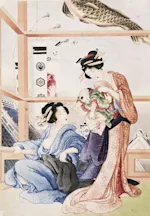 |
Back to Articles
SHARE
No comments yet