Exhibition/event has ended.

"Avant-Garde China: Twenty Years of Chinese Contemporary Art" Exhibition
The National Art Center, Tokyo


Finished
SHARE
In addition to its rapid economic growth, China has gained much attention not only for the Beijing Olympics, but also for its contemporary art scene, which has made waves across the world.
Since the period of reform and open-door policies dating from the 1970s, China saw new modes of expression emerge that were entirely different from socialist realism. Then, in 1979, the Star Painting Group held an exhibition that set a precedent for a new type of artistic activity whose focus was on the individual characteristics of each artist.
Around the mid-1980s, a variety of avant-garde groups formed all over China, leading to the famed "85 Art Movement". Against a backdrop of information flows from Western Europe, these groups of artists took on domestic social themes, expressing them through various media ranging from painting, sculpture, performance and installation.
At the beginning of the 1990s, a series of artists gained international attention through the art movements "political pop" and "cynical realism", after which more radical forms of art emerged. Thus, with accompanying globalization movements from 2000 onward, Chinese contemporary art has come to be recognized as a quintessential phenomenon that symbolized the opening up of the nation as well as its booming art market.
Showcased at this exhibition are works by both well-established and up-and-coming artists, reflecting 20 years of Chinese contemporary art history in their individual ways.
[Image: Fang Lijun "Series 2 No.3" (1992) oil on canvas, Fukuoka Asian Art Museum Collection]
Since the period of reform and open-door policies dating from the 1970s, China saw new modes of expression emerge that were entirely different from socialist realism. Then, in 1979, the Star Painting Group held an exhibition that set a precedent for a new type of artistic activity whose focus was on the individual characteristics of each artist.
Around the mid-1980s, a variety of avant-garde groups formed all over China, leading to the famed "85 Art Movement". Against a backdrop of information flows from Western Europe, these groups of artists took on domestic social themes, expressing them through various media ranging from painting, sculpture, performance and installation.
At the beginning of the 1990s, a series of artists gained international attention through the art movements "political pop" and "cynical realism", after which more radical forms of art emerged. Thus, with accompanying globalization movements from 2000 onward, Chinese contemporary art has come to be recognized as a quintessential phenomenon that symbolized the opening up of the nation as well as its booming art market.
Showcased at this exhibition are works by both well-established and up-and-coming artists, reflecting 20 years of Chinese contemporary art history in their individual ways.
[Image: Fang Lijun "Series 2 No.3" (1992) oil on canvas, Fukuoka Asian Art Museum Collection]
Schedule | Aug 20 (Wed) 2008-Oct 20 (Mon) 2008 Opening Hours Information
| ||||
|---|---|---|---|---|---|
| Fee | Adults ¥1000, University Students ¥500, High School Students & under and Person with Physical Disability Certificate (including 1 Attendant) Free | ||||
| Website | http://www.nact.jp/english/exhibitions/avant-garde_china.html | ||||
| Venue | The National Art Center, Tokyo http://www.nact.jp/english/ | ||||
| Location | 7-22-2 Roppongi, Minato-ku, Tokyo 106-8558 | ||||
| Access | Direct walk from exit 6 at Nogizaka Station on the Chiyoda line, 4 minute walk from exit 7 at Roppongi Station on the Hibiya or Toei Oedo line. | ||||
| Phone | 03-5777-8600 | ||||
| Related images | Click on the image to enlarge it 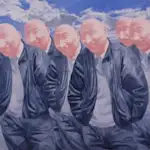 |
Back to Articles
SHARE
No comments yet