
Exhibition/event has ended.

Yoshitoshi Tsukioka "'Fuzoku Sanjuniso' and 'Tsuki Hyakushi'"
Ota Memorial Museum of Art


Finished
SHARE
Artists
Yoshitoshi Tsukioka
Tsukioka (Taiso) Yoshitoshi (1839-92) was an ukiyo-e artist from the late Edo period to the Meiji period. During this period of tumultuous transition, when Japan was by the West to open up to the world, Yoshitoshi became known as “the last ukiyo-e master”, producing many masterpieces marked by his sharp sense of individuality.
Yoshitoshi acquired his skills from Utagawa Kuniyoshi, who had been known for musha-e (warrior prints) and giga (comedy pictures). Later Yoshitoshi also became active in many genres such as musha-e, rekishi-ga (historical paintings) and bijin-ga (pictures of beautiful women). At his time, Yoshitoshi gained such great popularity that his art is considered to be the most representative of ukiyo-e art in the Meiji era. Signified by dynamic compositions, Yoshitoshi’s art was especially known for the expression of cruelty—also known as chimidoro-e or “bloodshed paintings” — and for his accurate depiction of the seductive female beauty. The charms of these timeless masterpieces have remained to captivate people even today.
In this exhibition we will present Yoshitoshi’s two most famous and popular series “Thirty-two Aspects of Women” and “One Hundred Views of the Moon”. These masterpieces were created towards the end of his career, and are believed to be fabulous representatives of his skills. We believe that the powerful artworks from Yoshitoshi’s latter days will reach the widest spectrum of audiences.
Yoshitoshi acquired his skills from Utagawa Kuniyoshi, who had been known for musha-e (warrior prints) and giga (comedy pictures). Later Yoshitoshi also became active in many genres such as musha-e, rekishi-ga (historical paintings) and bijin-ga (pictures of beautiful women). At his time, Yoshitoshi gained such great popularity that his art is considered to be the most representative of ukiyo-e art in the Meiji era. Signified by dynamic compositions, Yoshitoshi’s art was especially known for the expression of cruelty—also known as chimidoro-e or “bloodshed paintings” — and for his accurate depiction of the seductive female beauty. The charms of these timeless masterpieces have remained to captivate people even today.
In this exhibition we will present Yoshitoshi’s two most famous and popular series “Thirty-two Aspects of Women” and “One Hundred Views of the Moon”. These masterpieces were created towards the end of his career, and are believed to be fabulous representatives of his skills. We believe that the powerful artworks from Yoshitoshi’s latter days will reach the widest spectrum of audiences.
Schedule | May 1 (Fri) 2009-Jun 26 (Fri) 2009 Opening Hours Information
| ||||||
|---|---|---|---|---|---|---|---|
| Fee | |||||||
| Venue | Ota Memorial Museum of Art http://www.ukiyoe-ota-muse.jp/eng  | ||||||
| Location | 1-10-10 Jingumae, Shibuya-ku, Tokyo 150-0001 | ||||||
| Access | 1 minute walk from exit 5 at Meijijingu-mae Station on the Chiyoda and Fukutoshin lines, 3 minute walk from the Omotesando exit of Harajuku Station on the JR Yamanote line. | ||||||
| Phone | 050-5541-8600 (Hello Dial) | ||||||
| Related images | Click on the image to enlarge it 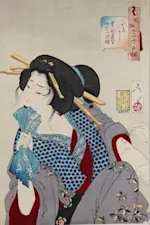 |
Back to Articles
SHARE
No comments yet