Yokohama Triennale 2008: Shinko Pier

To kick start its coverage of the Yokohama Triennale, TAB is bringing you a series of photo reports from a variety of locations in Yokohama to give you a glimpse inside this city-wide art extravaganza.

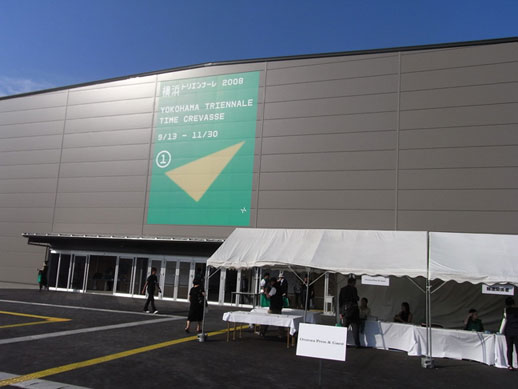
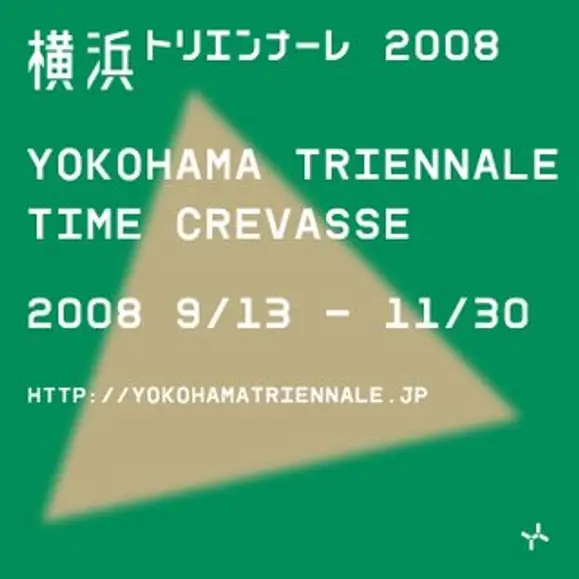
poster for Yokohama Triennale 2008 - Shinko Pier

Yokohama Triennale 2008 - Shinko Pier

at Shinko Pier, Yokohama
in the Yokohama, Kanagawa area
This event has ended - (2008-09-13 - 2008-11-30)

134 people bookmarked this.
33 people recommend this.
14 people reviewed this.

Shinko Pier Exhibition Hall, one of three main venues on the water.

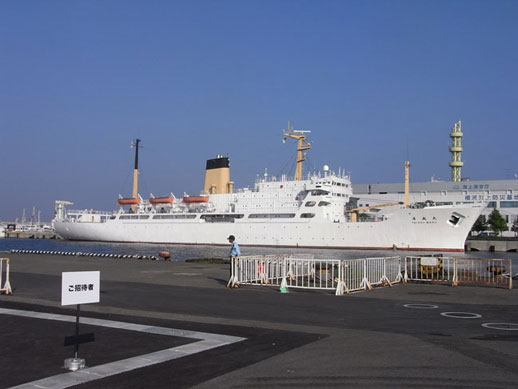
Yokohama remains an active port; this view was taken from the registration area at Shinko Pier.

Ei Arakawa and Mari Mukai's work

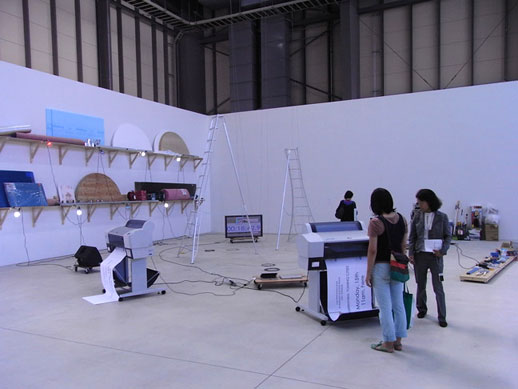
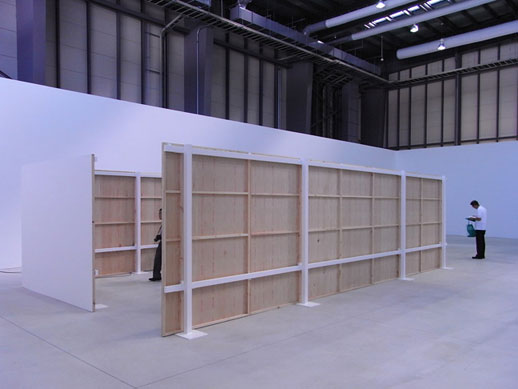
Somewhere here is Jonathan Meese's work. The whole space was divided by these makeshift walls; some work had a yet-to-be-installed feel, and many said they found it disorientating.

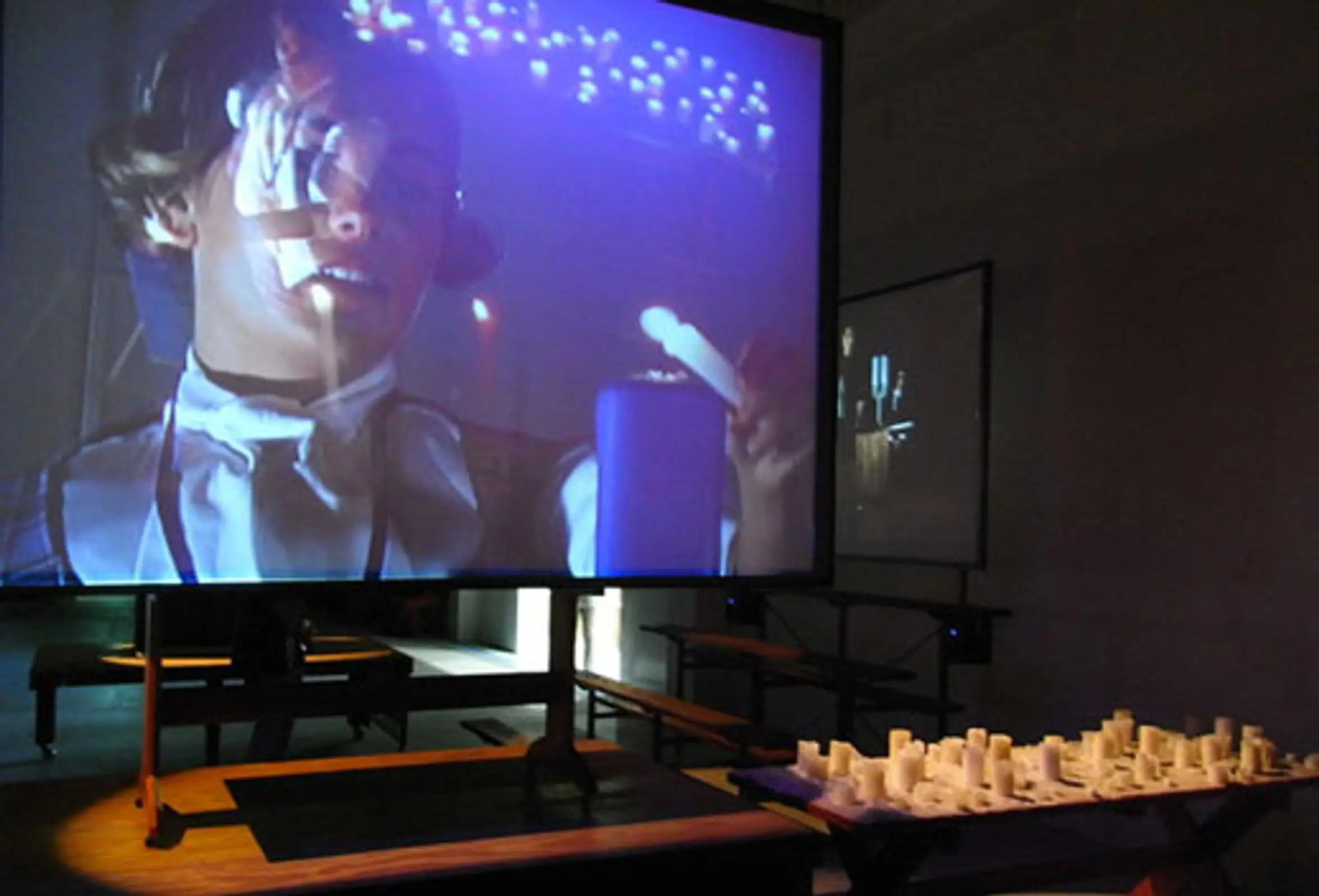
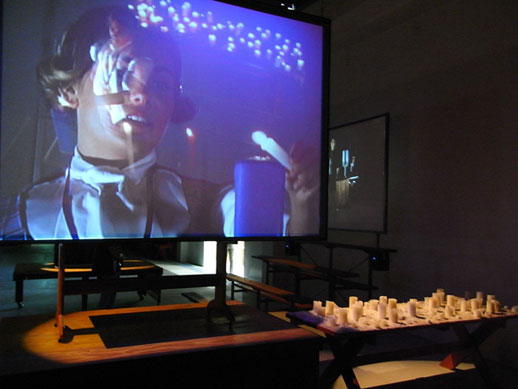
Mike Kelley: One of a number of works this year mixing installation, photography and projection.

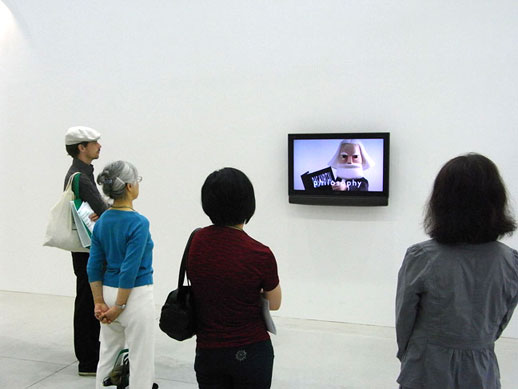
Pedro Reyes' ''Baby Marx'', an installation/animation featuring funny puppet-philospher-revolutionaries, proved popular.

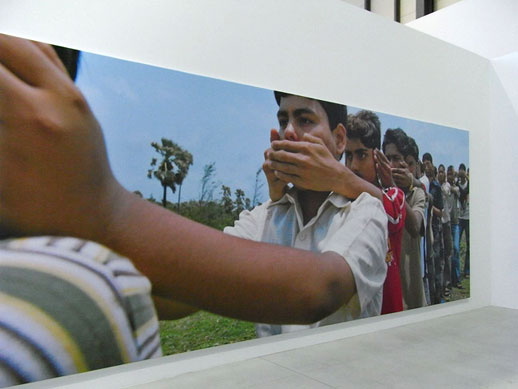
One of two installations by Shilpa Gupta this year, this one features a few wall-sized photos. Incidentally, I chatted to Gupta on the bus, happy to find that interesting art can be made by lovely people...

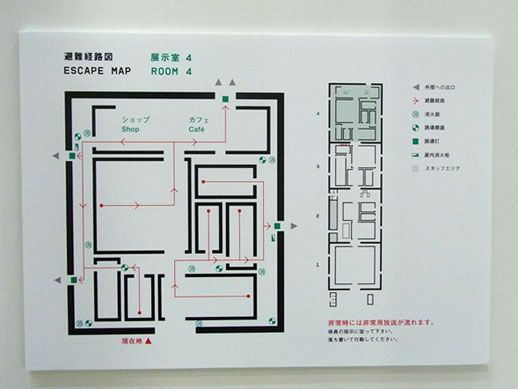
Vindication: any space that needs an ''escape map'' doesn't seem user friendly...

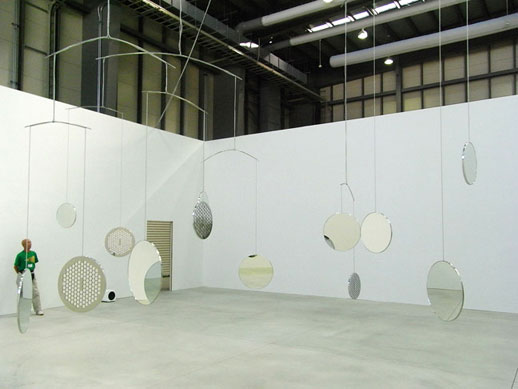
Cerith Wyn Evans' large work, a mobile of mirrors with hidden speakers; very intriguing to walk through.

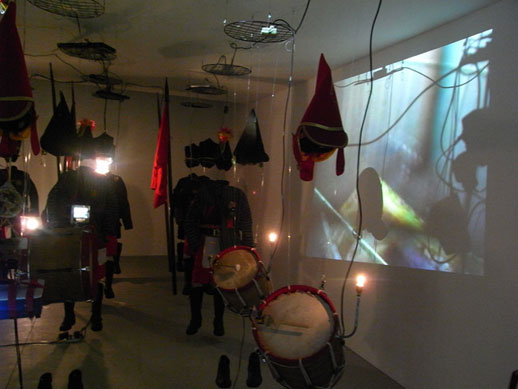
Kuswidananto (a.k.a Jompet) brought these 'hollow' soldiers to life with lights, projectors and various eerie automata.

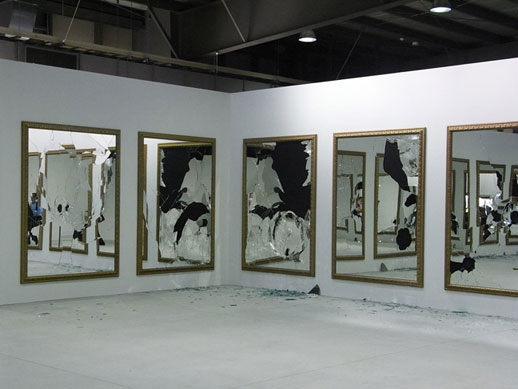
Michelangelo Pistoletto had a few issues installing his work... err, no: an imposing work of large, plush, smashed mirrors.

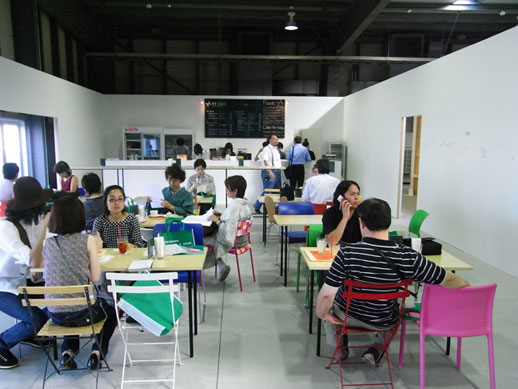
The art cafe at the end of the Shinko shed was already in full swing, with artists and preview early-birds in attendance.

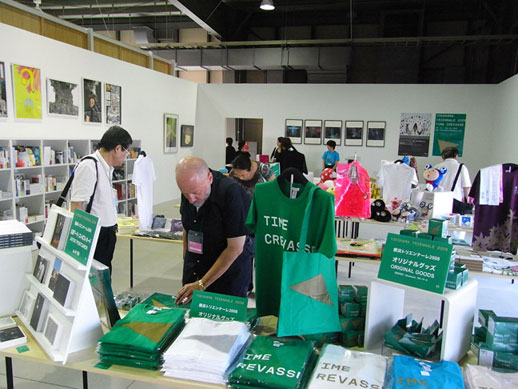
Just opposite is one of a number of temporary art shops in the triennale, this one is from the Mori Art Museum.

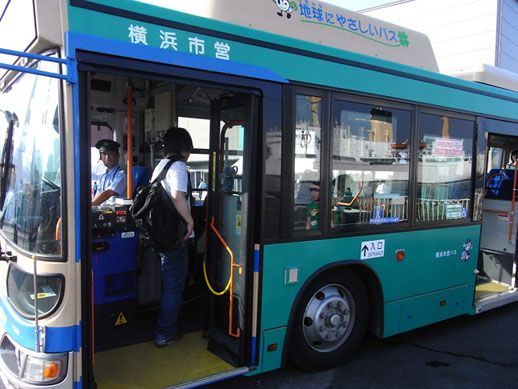
The main venues on the water are a reasonable walk away from each other, but buses also do a loop of all the main venues, including the Sankeien Garden, which is further away.

Olivier Krischer

Olivier Krischer. Olivier is a relative newcomer to Japan, but has been an outside observer for many years. While trying to concentrate on researching recent artistic exchanges between Japan and China, he instead often ends up seeing 'yet another' exhibition. He doesn’t like admitting it, but he harbours photographic aspirations, depending on the weather. He has long focused his interest on photomedia, issues surrounding modernity in Asia, as well as recent art from China, Korea and Japan. » See other writings

Comments

  1. Eva Shibuya
    2008-09-15

    Hi Oliver,
    Thanks for your picture report and comments on the Yokohama Triennale.
    The capture on picture Nr. 4 (Work of Jonathan Meese) read:
    “Somewhere in here…….left many disoriented”
    That’s a very polite way of putting it.
    Space is precious and very expensive in urban Japan.
    In light of the fact that Meese’s space
    is mainly used only for a one day performance, it felt like a cynical,
    careless and rude art comment from artist and organizers alike.
    I suggest the organizers fill the empty space with some other artwork, in mind comes something like a documentation of Makoto Aida’s simple and brilliant action/sculpture “A Palace for the Homeless” which, after all this years has lost non of its relevance as an art comment.
    By the way I missed Meese’s performance “Dr. NO-METABOLISM IN MORNINGGYM like SOLDIER=FLASH=BLUE de MING (BABYKINGKONG IS BACK IN FANTOMAS=GYM) thanks…. 1012-2012” Could someone pls. inform me if it was as empty as title and space make me suspect?
    And I would really be happy to hear the space gets finally filled with a visible, finished installation/art work – as befitting an art exhibition. When I want to see empty stages I will walk to a theater when there is no performance on.
    Otherwise I am in great favor of events like the Yokohama Triennale, which bring a much needed platform for “difficult” not readily saleable art to Japan.
    Eva

  2. Olivier
    2008-09-15

    !! CORRECTION !!

    Please note that as I found, to my dismay, the triennale buses do NOT go to the 4th, and furthest exhibition venue - Sankei Garden… for reasons which nobody could explain to me…. quite incredible really.
    Instead one needs to get off at Bashamichi and take a ‘normal’ bus to Sankeien.

  3. Kusagauma
    2008-09-17

    I too found Meese’s empty spot extremely annoying, especially as it was the very first room you came into. On Saturday, though, he actually he filled it - mostly with junk, I thought, but that of course is a matter of taste. Still, it’s better than Friday’s wasted space.

    The bus to Sankeien did run with hourly intervals on Friday, but on Friday only. Chartering a bus is expensive, I guess. Sankeien is very far away from the other venues (30 minutes, one way) but don’t miss it! I thought it was the best part of the show.

  4. The Bogside Artists of Ireland
    2009-05-29

    It is refreshing for us to see Yokohama take on tbe West’s monbopoly on what passes as important art. The West learnt much from Japan and without her modern Western art would scarcely exist. Japan’s influence via Impressionism, aesthetics and post-Impressionism cannot be understated.

About TABlog

TABlog's writers and video reporters deliver regular reviews, features and interviews to stimulate discussion about all sides of Tokyo's creative scene.

T-shirt shop

The views expressed on TABlog are those of the author and do not necessarily reflect those of their employers, or Tokyo Art Beat, or the Gadago NPO.

All content on this site is © their respective owner(s).
Tokyo Art Beat (2004 - 2009) - About - Contact - Privacy - Terms of Use