
Leaving the West, Turning East
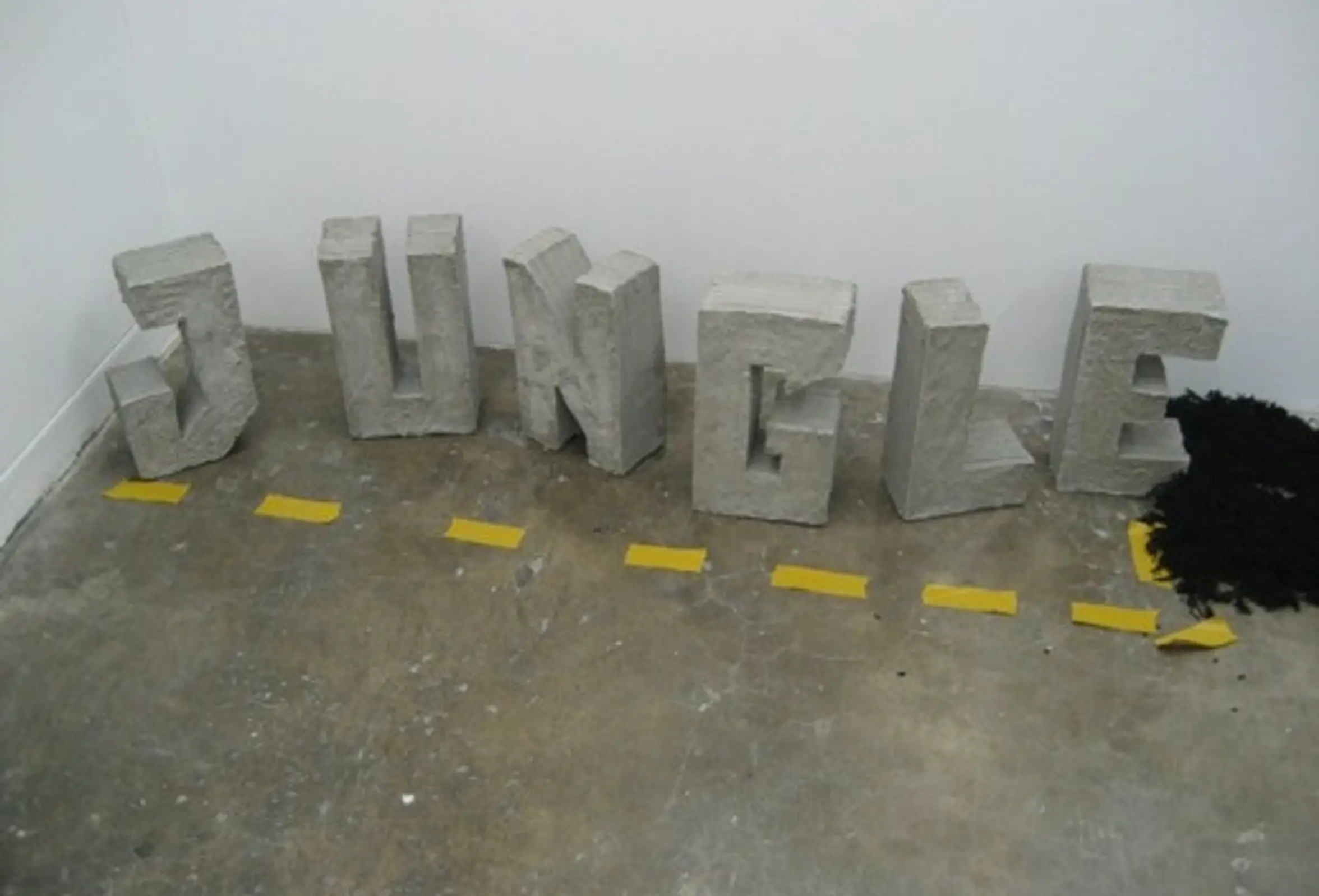


Vietnamese-American artist Richard Streitmatter-Tran tackles disparate strands of history and culture relating to the Mekong region that spans Vietnam, Cambodia, Thailand, Myanmar and Laos. Part of a recently inaugurated research project focusing on independent artist collectives and their spaces called Regional Code Asia, Tran’s recent projects include a five-ton sugar replica of a Burmese temple (created in collaboration with Cambodian artist Chaw Ei Thein for the Singapore Biennale 2008), an Asia Art Archive research project investigating media practices and infrastructure in the Mekong region, and ad-hoc events organized with the Saigon-based art collective Mogas Station. (One of its other members is Japan-born artist Jun Nguyen-Hatsushiba, who presented work related to another Mekong area project called ‘The Quiet in the Land’ at Mizuma Gallery in Tokyo in 2007.)
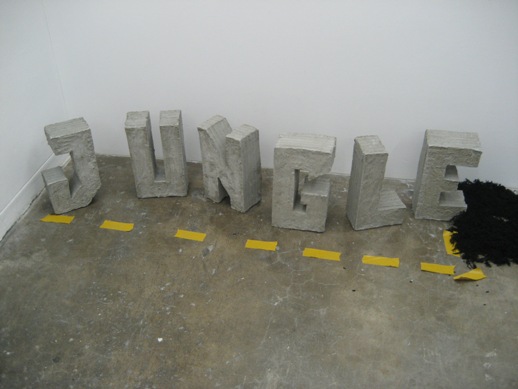
Traditional Burmese, Vietnamese and Cambodian motifs and tropes parachuted into a converted publishing warehouse in concrete Tokyo: ‘Where There Is Left, Let There Be Right’ gives viewers a whiff of the Mekong even while using mostly reconstructed ready-to-hand materials. You peer into a small aperture carved out of a cardboard “listening tree” to watch video footage of Mekong residents sailing down waterways (a traditional gesture of receptivity to embedded myths and history inspired in part by Tony Leung’s pilgrimage to a listening tree at the ruins of Angkor Wat in the final scene of Wong Kar Wai’s In The Mood For Love). In spite of its scrappy, low-budget aesthetic, the experience is transportative, recreating a moment of communion with a distant culture.
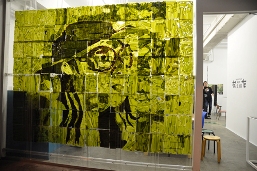 ‘L’amant Vert’ is a large collage of nori and wakame seaweed thickly swathed onto Kandada’s glass-walled entrance. It has a serene translucency from being backlit by the interior of the gallery. Named for Marguerite Duras’s autobiographical novel of her youth spent in colonial-era Saigon, the piece evokes both Vietnam’s somewhat ossified art education based on a classical French model, as well as the tentative beginnings of a more transnational aesthetic based on foreign-local inspirations and materials. (Elsewhere, Tran has photographed tableaux vivants of modern-day Vietnamese laborers in empty fields striking poses that mimic Jean-Francois Millet’s The Gleaners). This transnational sensibility extends to Tran’s ‘Pagoda for Ueno Wanderers’, a “model for an improvised architecture” inspired partly by the ad-hoc cardboard dwellings of homeless people seeking shelter in Ueno Park. Like these spontaneously cobbled-together structures, Tran’s own practice is mutable, mobile and process-oriented: he shuffles themes and motifs across borders, recreating culturally-specific phenomena in foreign contexts and customizing them each time with local references.
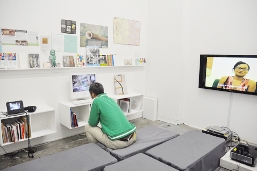
This border-crossing may come naturally for an artist who has carved out a practice that shuttles easily between different environments, but the works themselves sometimes run up against logistical issues. On display here is a copy of Vietnam’s first bilingual (Vietnamese/English) contemporary art publication, A.Art Magazine. Published using the production fee that Mogas Station received from the Singapore Biennale 2006, A.Art was created by a loose federation of associates with no permanent space. It took shape not as an underground samizdat-style pamphlet, but rather a commissioned project at an international media-driven art festival. In order to transport 5000 copies back to Vietnam, Mogas delivered the magazines via the Goethe Institut in Saigon, which conveniently granted the shipment diplomatic immunity from customs inspections. Distanced from both the restrictions and support systems of established art infrastructure, Mogas often sidesteps even the “independent art space” arrangement in favor of even more private initiatives run out of their homes. (Tran operates a lending library out of his house, loaning art books to so many students that he is considering getting a bar code scanner to keep track of how these subversive materials are circulating.) From its conception to publication and eventual “repatriation,” A.Art Magazine embodies the hidden mechanics and logistical blockages of art production and distribution in a regime of tightly regulated media censorship.

 0Posts
Darryl Jingwen Wee
Darryl Jingwen Wee