
Animal Masks, Animal Sculptures


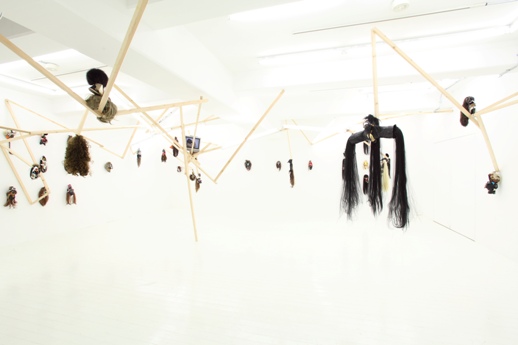
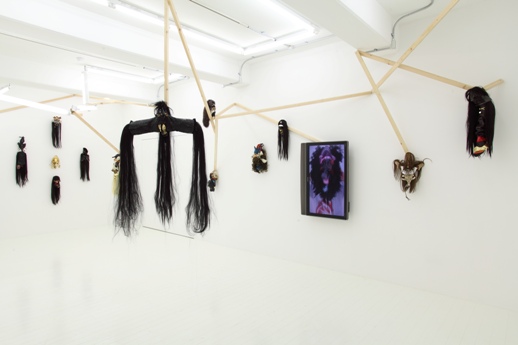
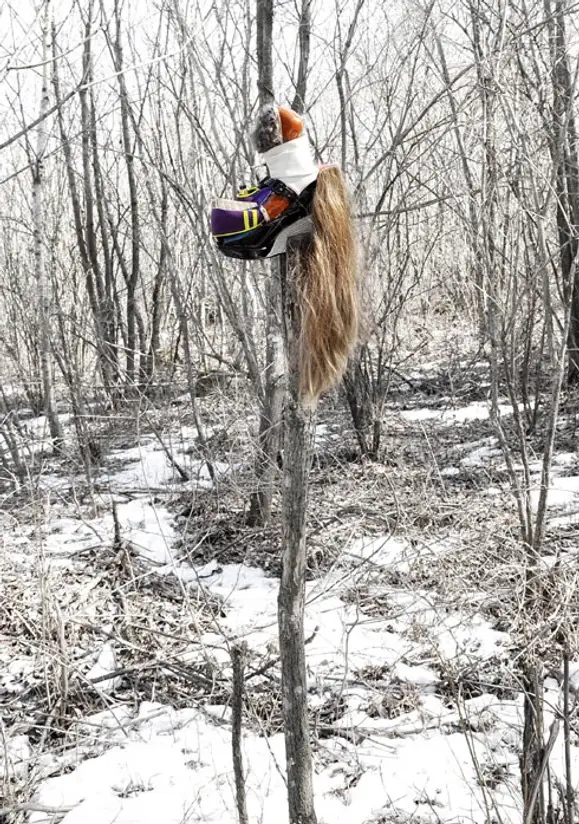
Nanzuka have started their new residency with an installation by Akiyoshi Mishima that can only be described as clinically sado-masochistic. The stark white walls of the gallery pierce through wooden beams arranged all over the ceiling, which appear to hang so low you have to stoop a little (in reality, perhaps only the case for tall gaijin). At various joints or at positions around the walls like the Ways of the Cross were several ‘masks’ – made out of shoes for the most part – which despite their material banality seemed ethnological, pseudo-Native American. Entangled in the wooden beams were also video screens depicting masked animal figures fornicating (albeit not even soft core). Wandering into the room was a nervous and queasy experience, the exhibition a heady mix of white-painted walls filtered through sex and leather.
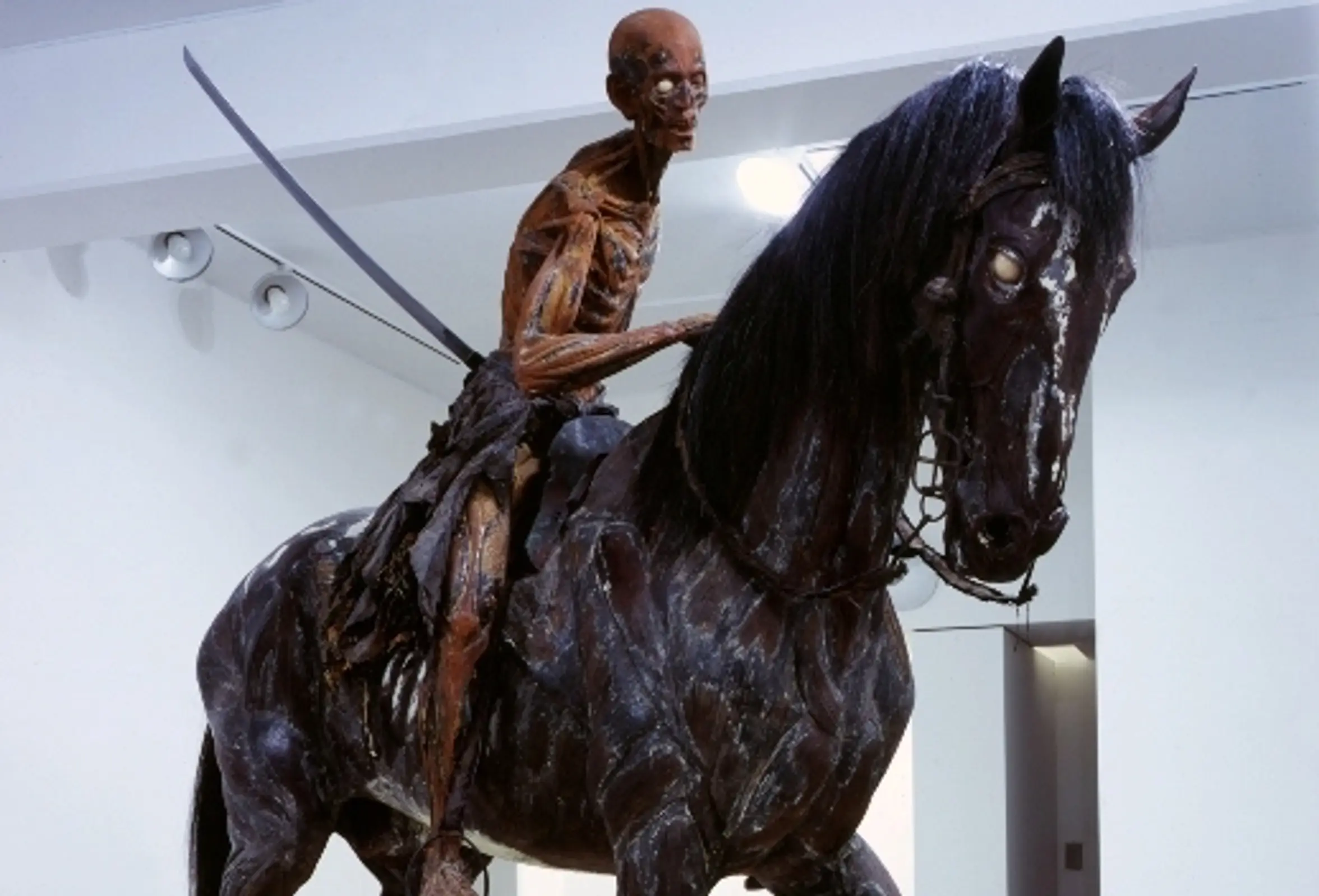
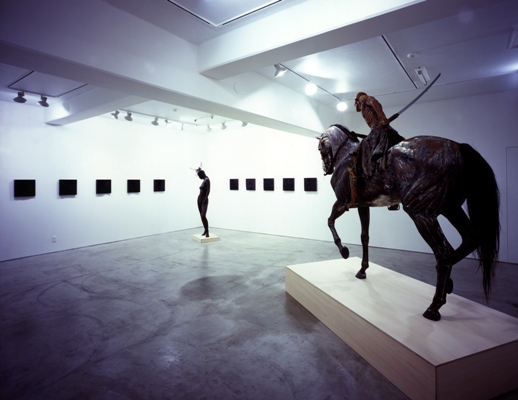
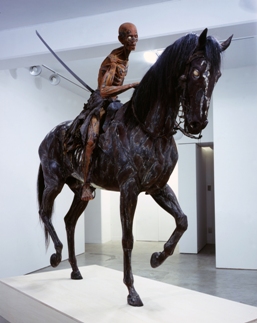 In the same building, Yamamoto Gendai’s latest exhibition is the alarmingly but obscurely named “SP4: ‘the specter’ in modern sculpture” by Motohiko Odani. It is dominated by a massive horse-rider sculpture, a work that appears to have trotted in from a travelling show of Dr. Gunther von Hagen’s “Body Worlds”. The rider carried an impressive sword. His eyes boggled out. His ferocity was arresting. People milled around this startling man and his beast, unsure whether to be impressed by the scale, the craftsmanship or scared by its sense of imminent attack.
The horse-rider is an archetypal motif in sculpture; how many parks contain such images of heroes and feted generals? But there was nothing grand or stately about this work; it was gothic and repellant. The artist has stated that his aim was to look again at the sculptural interpretation of bravery in equestrian figures. Indeed, the surface of the sculpture had been made to appear like it was rotting. It was like being in a white cube gallery with a Horseman of the Apocalypse, with the skeletal undead.
Turning away from the warrior you were immediately taken by another life-size sculpture, one whose tone and theme could not be more different. A beautiful nude of a woman stands, inconspicuously, unpretentiously alone. Seeming to have been snatched straight out of the Louvre, it was perhaps one of the most beautiful nude sculptures I had ever seen and certainly the best I had ever seen in Japan – and totally different to the usual works that Yamamoto Gendai offers (of which the ‘Horse Rider’ is quite representative).
The skin had some red swirls on it; the hair a large ornamental flower. But essentially this was an incredibly pure and honest sculpture. The press release claims the work to be a reinterpretation of the western “paean to human beauty” that is the nude, but far from subverting, this sculpture simply reinforces the paradigm. However, any failure in philosophy did not let down the work – and readers should head down to Shirokane for this sculpture alone.

 0Posts
William Andrews
William Andrews