Reading Dickinson in Aoyama
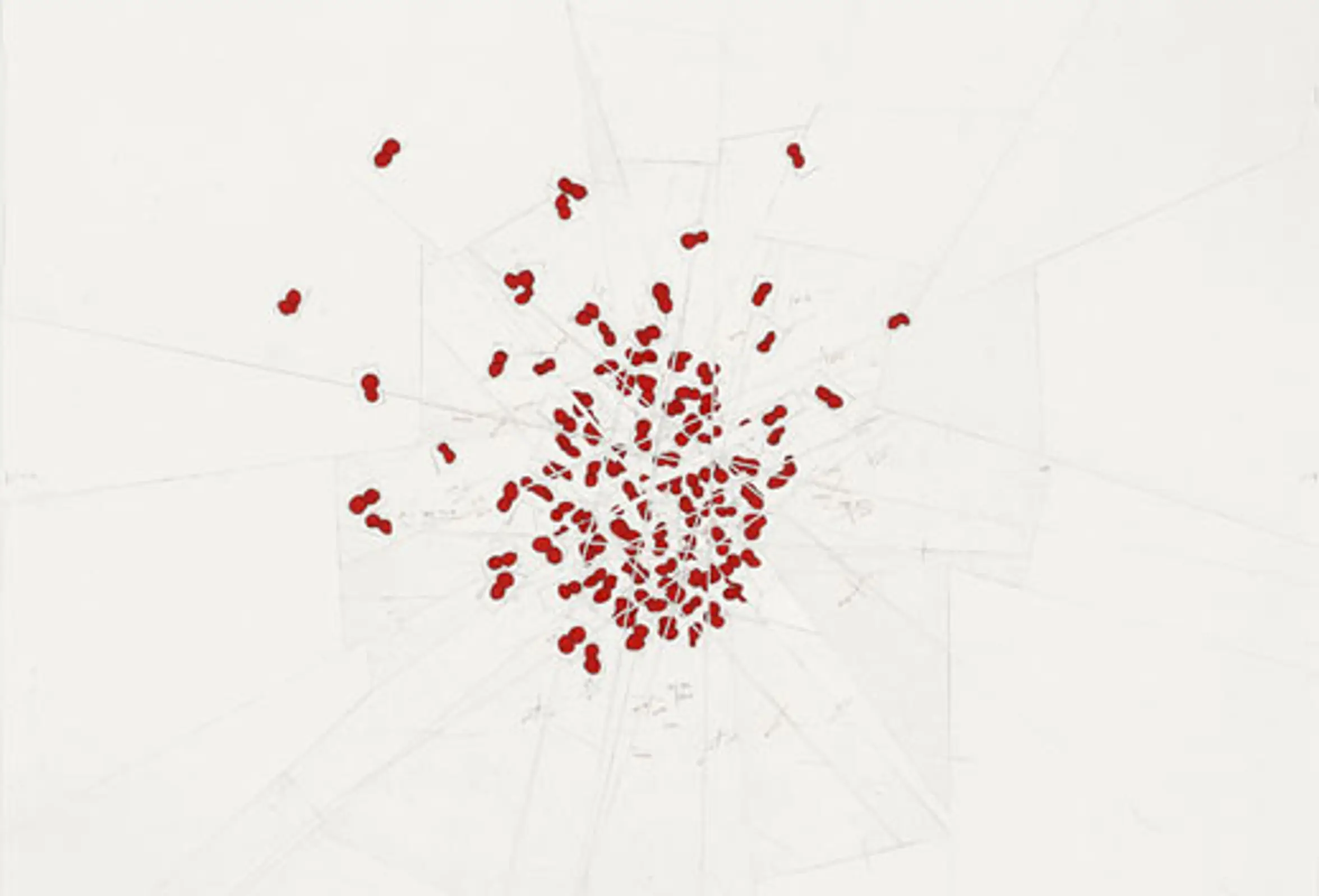


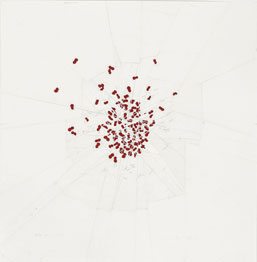
Following a number of major solo exhibitions worldwide, the Rat Hole Gallery in Aoyama is presenting a selection of American artist Roni Horn’s sculptures and drawings, on view until December 5, 2010.
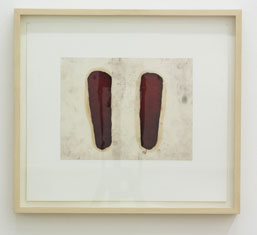
Many viewers may already be familiar with Horn’s sculpture, photography, series of books, and site-dependent work such as ‘Vatnasafn/Library of Water’ in Iceland. Yet this exhibition, displayed in a spare and strikingly beautiful space, highlights in particular Horn’s longstanding dedication to literature and language. In viewing pieces from the “White Dickinson” series, which she began in the Eighties, and a selection of pigment drawings from various points in Horn’s career, we are allowed access to a rich world of ideas regarding words, images, and the relationship between the two.
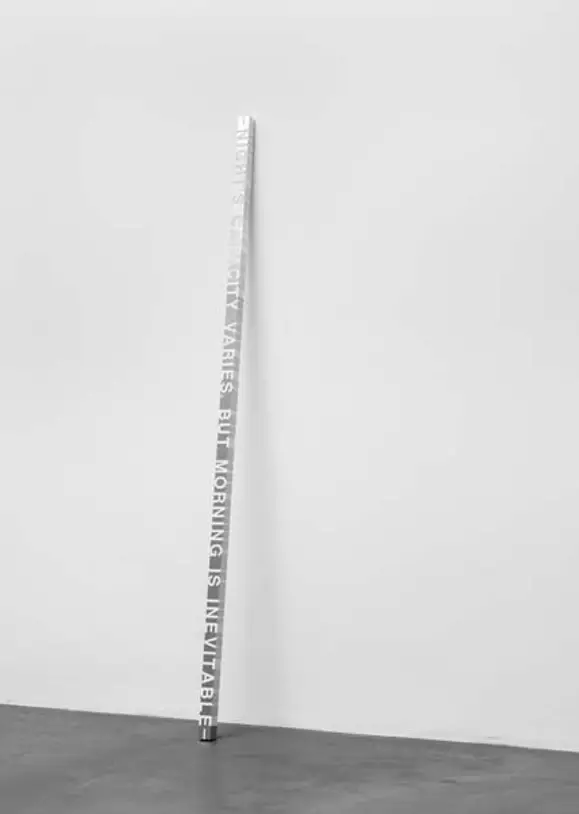
Nineteenth century American poet Emily Dickinson has inspired a number of famous artists across various disciplines through her poems and letters, including Roni Horn. The larger of the two rooms, with an entire wall of glass and beautiful wooden floorboards, features four of Horn’s works from the “White Dickinson” series (2007). Selecting phrases from the thousands of letters written by Dickinson to her friends over the course of her distinctively reclusive life, Horn then gives the phrases a physical embodiment by casting their solid white plastic letters in long, rectangular aluminum rods.
From the front and the opposite side, the viewer can read the phrase, for example, “EVERY SPARK IS NUMBERED”. From the other two sides, however, the letters appear as unrecognizable, abstract geometric forms in aluminum. In this way, as articulated by the Rat Hole Gallery, “in turning fragments of Dickinson’s writing in to solid objects, Horn explores how physical form can be given to language and at the same time, how language can construct alternate worlds which transport us from the physical reality that we live in.”
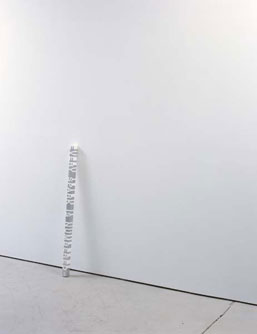
One of the things that make this body of work so special, as in so many other compelling works of art, is the degree of interaction and freedom it grants to the viewer. The work is at once inherently intimate to Horn and to Dickinson herself, yet it is also, in equal measure, unmarked territory for the viewer. We are simply invited to consider a phrase, and from there we can construct an infinite number of fictions and fantasies in response to the work.
Proving more of a complex meditation than an instant delight, the Roni Horn exhibit presents us with a vast range of compelling questions and concepts. “FAITH IS DOUBT”? And we’re sent on our way to construct own meanings.

 0Posts
Erika Raberg
Erika Raberg