
Exhibition/event has ended.

"Kumagusu's Forests: The Universe According to Minakata Kumagusu" Exhibition
Watari-um, The Watari Museum of Contemporary Art


Finished
SHARE
Artists
Minakata Kumagusu
A suspicious man wearing only a koshimaki (waistcloth). This is how this artist was photographed at the age of 43 standing in the forest close to Tanabe City, Wakayama Prefecture in 1910. Why has this photograph called the Rinchu Razou (nude in forest) remained?
The first part of this exhibition is entitled "Wandering the World." This artist left the Tokyo University Preparatory School when he was 19 years old and suddenly took off for America. This part of the exhibition follows the 14 years that this artist spent wandering through South America and Europe until he returned to Japan destitute at the age of 33.
The second part, "Kumagusu's Inner Universe" deals with dreams, the body, taboo theories and folk phenomena. New materials introducing a new side of this artist will be released.
The third part is "Life of the Woods." The results of this artist's biological research have been preserved in the form of numerous specimen samples including slime mold, seaweeds and insects. An atlas of 400 mushrooms will be on display, with the cooperation of the National Museum of Nature and Science. Film footage will also be screened.
This artist's work as a naturalist, folk culture specialist and botanist are well known. However, tracing his free way of living underscores the fact that his research was different from academia that is ruled by the authority of research. Perhaps he wanted to become one with nature, as in the photograph Rinchu Razou.
Please see museum website for details and other events. Talks and lectures are in Japanese.
The first part of this exhibition is entitled "Wandering the World." This artist left the Tokyo University Preparatory School when he was 19 years old and suddenly took off for America. This part of the exhibition follows the 14 years that this artist spent wandering through South America and Europe until he returned to Japan destitute at the age of 33.
The second part, "Kumagusu's Inner Universe" deals with dreams, the body, taboo theories and folk phenomena. New materials introducing a new side of this artist will be released.
The third part is "Life of the Woods." The results of this artist's biological research have been preserved in the form of numerous specimen samples including slime mold, seaweeds and insects. An atlas of 400 mushrooms will be on display, with the cooperation of the National Museum of Nature and Science. Film footage will also be screened.
This artist's work as a naturalist, folk culture specialist and botanist are well known. However, tracing his free way of living underscores the fact that his research was different from academia that is ruled by the authority of research. Perhaps he wanted to become one with nature, as in the photograph Rinchu Razou.
Please see museum website for details and other events. Talks and lectures are in Japanese.
Schedule | Oct 7 (Sun) 2007-Feb 3 (Sun) 2008 Opening Hours Information
| ||||||
|---|---|---|---|---|---|---|---|
| Fee | Passport entrance ticket can be used throughout the duration of the exhibition. | ||||||
| Website | http://www.watarium.co.jp/exhibition/0709kumagusu/0709kumagusu_en.html | ||||||
| Venue | Watari-um, The Watari Museum of Contemporary Art http://www.watarium.co.jp/ | ||||||
| Location | 3-7-6 Jingumae, Shibuya-ku, Tokyo 150-0001 | ||||||
| Access | 5 minute walk from exit 3 at Gaienmae Station on the Ginza line. 8 minute walk from exit A2 at Omotesando Station on the Ginza, Hanzomon and Chiyoda lines. | ||||||
| Phone | 03-3402-3001 | ||||||
| Related images | Click on the image to enlarge it 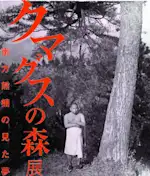 |
Back to Articles
SHARE
No comments yet