
Exhibition/event has ended.

Photographed Foreign Lands
JCII Photo Salon


Finished
SHARE
Artists
Kenkichi Yoshida, Yonosuke Natori, Hachiro Suzuki, Kineo Kuwabara, Kenichi Hayashi, Suekichi Akaba
Before the end of World War II in 1945, regions placed under Japanese rule after the enactment of the Imperial Constitution of Japan were referred to as "foreign lands." Even the puppet state of Manchukuo, heavily influenced by Japan, was commonly termed a foreign land. Interest in these territories increased after the Manchurian Incident in 1931, and there was active propaganda through photography, especially during the Sino-Japanese War that erupted in 1937.
This exhibition showcases the works of six photographers who visited these foreign lands, each with different motivations, offering their unique perspectives. Kenkichi Yoshida (1897-1982), who advocated for Pictorialism, covered Manchuria as a special correspondent for the magazine "Economic Knowledge" in August 1934. His works include scenes from Fengtian (now Shenyang), Xinjiang (now Changchun), and Harbin, showcasing 11 pieces featured in the magazine.
Photojournalist Yonosuke Natori (1910-1962) traveled to Manchuria via Korea and documented the journey to Germany for coverage of the Berlin Olympics in June 1936. The exhibition displays 11 works, including the Korean Shrine in Kyoto, the North Ryo in Fengtian, and passengers at Harbin Station, published in the German magazine "Die Dame."
Hachiro Suzuki (1900-1985), the editor-in-chief of "Camera Club," was influenced by the trend of the continent and went to Manchuria, creating 27 works featuring street scenes and people in Fengtian, Fushun, Xinjiang, Jilin, Harbin, Chengde, Beijing, and others, published in the magazine.
Amateur photographer Kineo Kuwabara (1913-2007) was part of a delegation of recommended artists sent in June 1940 as part of a joint project by eight photo magazines. He took 44 works, documenting street scenes, people, Japanese settlement villages in Lianjiangkou and Sendao, the Romonovka village in Yokoheiko, an elderly man riding a donkey in Yokoheiko, and street scenes in Port Arthur.
Information officer Kenichi Hayashi (1906-1980) visited Manchuria in March 1942 for events commemorating the tenth anniversary of the founding of Manchukuo. His works feature famous places in Fengtian and Xinjiang, street photographers in Harbin, a meeting with the commander of the Man-Mongol Development Youth Volunteer Corps, temples in Chengde, and the desert in Chifeng.
Suekichi Akaba (1910-1990), a painter who worked for Manchuria Denden, was sent to Inner Mongolia in June-July 1943 as part of a team to create mural paintings for the newly established Genghis Khan Mausoleum. His works include nomads on the grasslands, the Abaga Grand King's residence, people at the Beizimu, and stone Buddhas in Datong.
Out of the 162 exhibited works, 50 are being publicly shown for the first time. Each artist's individuality is reflected in their works, serving as a reflection on the era's demand for "national duty photography."
This exhibition showcases the works of six photographers who visited these foreign lands, each with different motivations, offering their unique perspectives. Kenkichi Yoshida (1897-1982), who advocated for Pictorialism, covered Manchuria as a special correspondent for the magazine "Economic Knowledge" in August 1934. His works include scenes from Fengtian (now Shenyang), Xinjiang (now Changchun), and Harbin, showcasing 11 pieces featured in the magazine.
Photojournalist Yonosuke Natori (1910-1962) traveled to Manchuria via Korea and documented the journey to Germany for coverage of the Berlin Olympics in June 1936. The exhibition displays 11 works, including the Korean Shrine in Kyoto, the North Ryo in Fengtian, and passengers at Harbin Station, published in the German magazine "Die Dame."
Hachiro Suzuki (1900-1985), the editor-in-chief of "Camera Club," was influenced by the trend of the continent and went to Manchuria, creating 27 works featuring street scenes and people in Fengtian, Fushun, Xinjiang, Jilin, Harbin, Chengde, Beijing, and others, published in the magazine.
Amateur photographer Kineo Kuwabara (1913-2007) was part of a delegation of recommended artists sent in June 1940 as part of a joint project by eight photo magazines. He took 44 works, documenting street scenes, people, Japanese settlement villages in Lianjiangkou and Sendao, the Romonovka village in Yokoheiko, an elderly man riding a donkey in Yokoheiko, and street scenes in Port Arthur.
Information officer Kenichi Hayashi (1906-1980) visited Manchuria in March 1942 for events commemorating the tenth anniversary of the founding of Manchukuo. His works feature famous places in Fengtian and Xinjiang, street photographers in Harbin, a meeting with the commander of the Man-Mongol Development Youth Volunteer Corps, temples in Chengde, and the desert in Chifeng.
Suekichi Akaba (1910-1990), a painter who worked for Manchuria Denden, was sent to Inner Mongolia in June-July 1943 as part of a team to create mural paintings for the newly established Genghis Khan Mausoleum. His works include nomads on the grasslands, the Abaga Grand King's residence, people at the Beizimu, and stone Buddhas in Datong.
Out of the 162 exhibited works, 50 are being publicly shown for the first time. Each artist's individuality is reflected in their works, serving as a reflection on the era's demand for "national duty photography."
Schedule | Nov 28 (Tue) 2023-Dec 24 (Sun) 2023 Opening Hours Information
| ||||
|---|---|---|---|---|---|
| Fee | Free | ||||
| Website | https://www.jcii-cameramuseum.jp/photosalon/2023/10/11/34156/ | ||||
| Venue | JCII Photo Salon https://www.jcii-cameramuseum.jp/photosalon/ | ||||
| Location | JCII Bldg., 25 Ichiban-cho, Chiyoda-ku, Tokyo 102-0082 | ||||
| Access | 5 minute walk from exit 4 at Hanzomon Station on the Hanzomon line, 11 minute walk from exit 3 at Kojimachi Station on the Yurakucho line, 17 minute walk from the Kojimachi exit of Yotsuya Station on the JR Chuo and Sobu lines. | ||||
| Related images | Click on the image to enlarge it 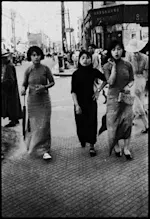 |
Back to Articles
SHARE
No comments yet