
Nezu Institute of Fine Arts
Museum in The Omotesando, Aoyama area
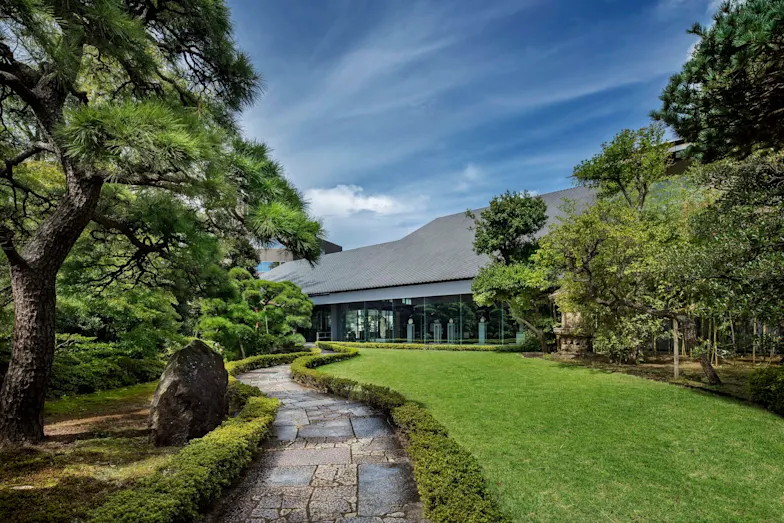
The industrialist and president of Tobu Railway, NEZU Kaichiro, Sr.(1860-1940) established a foundation in his will to preserve his personal collection. The museum opened at his private residence on this Aoyama site the following year,in 1941. Set in the spacious traditional-style garden with pond are several tea houses (chashitsu) because Kaichiro was an enthusiastic practitioner of 'the way of tea.'The Nezu Museum is considered especially strong in arts related to 'tea.'
Nezu Kaichiro's holdings of Japanese and other Asian pre-modern arts form the core of the museum collection. Today--thanks also to outstanding recent donations by several private collectors--it comprises more than 7,000 objects including calligraphy, painting, sculpture, ceramics, lacquer, metalwork, bamboo crafts and textiles. There are seven items designated as National Treasures, 87 Important Cultural Properties, and 97 works registered as Important Art Objects.
The museum's group of ancient Chinese bronzes is world famous. Other well-known works include Chinese Song/Yuan period paintings and calligraphy such as Fishing Village at Dusk by Muxi, and Quail attributed to LI Anzhong. Japanese religious paintings are well represented by such Buddhist works as Dainichi Nyorai (Mahavairocana) and the Kongokai (Diamond) Mandala, and the famed Shinto painting, Nachi Waterfall. The museum has extensive holdings of paintings and ceramics from after the fifteenth century and has become best known for the folding-screen painting Irises, by the seventeenth century Rimpa artist, Ogata Korin.
Kaichiro avidly collected hanging scrolls and utensils for tea gatherings. He adopted the tea name of Seizan, "Blue/Clear Mountain." Particularly fine examples of the tea aesthetic that he collected range from thirteenth century Chinese celadon flower vases, Japanese Ashiya type tea kettles and Seto tea caddies and incense containers, to Korean ido tea bowls. The Museum's commitment to sustain his legacy is reflected by the installation of a new chashitsu in the garden to supplement those available for use by tea afichiados today and in the future.
Current or Upcoming Events
» Browse the past events for this venue
Home Page
Opening hours
From 10:00 to 17:00
Closed on Mondays
Note:On a National holiday Monday the museum is open but closed on the following Tuesday.
Fee
Adults ¥1200, Students ¥1000


