Exhibition/event has ended.

Kaiseki Utensils - Season of the Furnace
Miho Museum


FinishedReservation Required
SHARE
*Please visit the official website for reservations and more information.
For the Japanese, hospitality meant giving a feast. The word "feast" literally means to make a horse run fast or to make a person run and to gather various ingredients to entertain guests. For those who had power, the feast was a way to show their power, so political banquet food evolved into a competition for luxury. The food may look great, but it is not very tasty.
However, in the Momoyama period (1573-1603), a cuisine with an idea that was in direct opposition to such banquet cuisine appeared with the establishment of the tea ceremony. This was the "kaiseki" of chanoyu. Kaiseki means "stone in the pocket". The term "kaiseki" originated from a tradition that Zen monks used to heat up a stone and put it in their pocket to quench their hunger during zazen (meditation), and is the name of a simple dish to enjoy tea. It was a new form of cooking that did not boast of a lavish menu, but rather a hearty, delicious, and fruitful meal.
Kaiseki can be characterized in several ways. There are several characteristics of kaiseki, such as bringing in freshly prepared dishes one at a time so that the guests can enjoy the dishes at their best, having the master himself serve the dishes and enjoy interacting with the guests, using familiar seasonal ingredients to suit the tastes of the guests instead of focusing on rare ingredients from far away, having just the right amount of food to fill the stomach even if the guests finish the dishes, and enjoying the dishes on vessels that are appropriate for the dishes. In addition, it is important to enjoy the dishes in the appropriate containers. It was Sen no Rikyu who started this style of cooking, and by the middle of the Edo period, the form had been further refined into the kaiseki we know today.
The founder of Miho Museum, Hideko Koyama, began practicing the tea ceremony when she was a young girl and believed that it was an advanced form of Japanese culture that nurtured basic human etiquette and common sense.
This exhibition features a selection of masterpieces from the collection of kaiseki utensils. Based on the tea ceremony diary of Yorakuin Konoe, the head of the Konoe family in the Edo period and one of the greatest tea masters of the aristocracy, we will also show how Kenzan and Japanese glassware were used in tea ceremonies of the time. In the last room of the exhibition, the large well tea bowl "Koichimonji" (formerly owned by Masuda Bun'o and Matsunaga Mian) from the museum's collection will be exhibited for the first time, and visitors can enjoy the combination of tea utensils with famous bowls by Koetsu and Kenzan.
For the Japanese, hospitality meant giving a feast. The word "feast" literally means to make a horse run fast or to make a person run and to gather various ingredients to entertain guests. For those who had power, the feast was a way to show their power, so political banquet food evolved into a competition for luxury. The food may look great, but it is not very tasty.
However, in the Momoyama period (1573-1603), a cuisine with an idea that was in direct opposition to such banquet cuisine appeared with the establishment of the tea ceremony. This was the "kaiseki" of chanoyu. Kaiseki means "stone in the pocket". The term "kaiseki" originated from a tradition that Zen monks used to heat up a stone and put it in their pocket to quench their hunger during zazen (meditation), and is the name of a simple dish to enjoy tea. It was a new form of cooking that did not boast of a lavish menu, but rather a hearty, delicious, and fruitful meal.
Kaiseki can be characterized in several ways. There are several characteristics of kaiseki, such as bringing in freshly prepared dishes one at a time so that the guests can enjoy the dishes at their best, having the master himself serve the dishes and enjoy interacting with the guests, using familiar seasonal ingredients to suit the tastes of the guests instead of focusing on rare ingredients from far away, having just the right amount of food to fill the stomach even if the guests finish the dishes, and enjoying the dishes on vessels that are appropriate for the dishes. In addition, it is important to enjoy the dishes in the appropriate containers. It was Sen no Rikyu who started this style of cooking, and by the middle of the Edo period, the form had been further refined into the kaiseki we know today.
The founder of Miho Museum, Hideko Koyama, began practicing the tea ceremony when she was a young girl and believed that it was an advanced form of Japanese culture that nurtured basic human etiquette and common sense.
This exhibition features a selection of masterpieces from the collection of kaiseki utensils. Based on the tea ceremony diary of Yorakuin Konoe, the head of the Konoe family in the Edo period and one of the greatest tea masters of the aristocracy, we will also show how Kenzan and Japanese glassware were used in tea ceremonies of the time. In the last room of the exhibition, the large well tea bowl "Koichimonji" (formerly owned by Masuda Bun'o and Matsunaga Mian) from the museum's collection will be exhibited for the first time, and visitors can enjoy the combination of tea utensils with famous bowls by Koetsu and Kenzan.
Schedule | Mar 19 (Sat) 2022-Aug 14 (Sun) 2022 Reservation RequiredOpening Hours Information
| ||||||
|---|---|---|---|---|---|---|---|
| Fee | Adults ¥1300; University and High School Students ¥1000; Junior High School Students and Under, Persons with Disability Certificates free. | ||||||
| Venue | Miho Museum http://www.miho.or.jp/en/  | ||||||
| Location | 300 Momodani, Tashiroshigaraki-cho, Koka-shi, Shiga 529-1814 | ||||||
| Access | From Ishiyama Station on the JR Biwako line, take the Teisan bus for 50 minutes and get off at Miho Museum. The venue is a short walk from there. | ||||||
| Phone | 0748-82-3411 | ||||||
| Related images | Click on the image to enlarge it 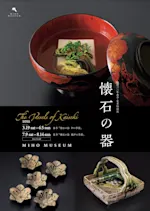 |
Back to Articles
SHARE
No comments yet