
Exhibition/event has ended.

Goro Kakei Exhibition
Taka Ishii Gallery


Finished
SHARE
Artists
Goro Kakei
Goro Kakei was a Japanese postwar sculptor who, from the 1950s onward, energetically continued to work freely in a variety of mediums and techniques, including oil paintings, drawings, etchings, and lithographs, with a focus on three-dimensional works. This exhibition, Kakei's first solo exhibition at the gallery, will feature sculptures and oil paintings created from the 1970s to the 2000s from his vast body of work, which he continued to produce until his later years.
In 1949, during the chaotic postwar period, Kakei moved from Shizuoka to Tokyo, where he encountered the sculptures of Katsu Kiuchi. As he later recalled, "It was the beginning of my life," and this encounter marked the beginning of Kakei's life as a sculptor. The following year, Kakei entered the sculpture department of Tokyo University of the Arts, where he began to seriously pursue sculpture.
In 1957, he was awarded the New Artist Prize at the 21st New Works Exhibition for "Annunciation," and subsequently produced many works inspired by the Christian faith, including "The Virgin Mary" (1958), "Job" (1961), and "The Apostles" (1962). For Kakei, who was baptized at the age of 18, creating works derived from the Bible was not only a means of interpreting the Bible but also an act of expressing his contemplations about the nature of human existence. Kakei did not follow the new trend of contemporary art in the 1960s, which saw the diversification of materials and the free expression of younger artists, but instead continued to pursue his unique figurative expression by focusing on the classical motif of "human beings" in his works.
Kakei was particularly attracted to Mexican sculpture, and from 1968, he went to Mexico for two years to teach at a university. After returning from Mexico, Kakei's expression of the human body shows a simplification of form due to a change in his awareness of the expression of the body, a diminishing of the primitive impression of the past, and a gradual shift away from Christian motifs. From the 1970s onward, Kakei continued to produce many outdoor sculptures that emphasized the volume of the body, but from 1984 to 1985, he produced the "Human Problem" series, which is characterized by the balance of the elongated body, with the limbs stretched wide, and the mass that had been seen in his earlier works being reduced. The "Human Problem" series is characterized by the balance of the elongated body with large, elongated limbs.
In the 1990s, after the death of his beloved mother, whom Kakei has used as a motif in his works many times, and after a long battle with a serious illness, he incorporated a richer sense of humanity and humor into his works. Kakei's work has been original and free from conventional artistic concepts.
In 1949, during the chaotic postwar period, Kakei moved from Shizuoka to Tokyo, where he encountered the sculptures of Katsu Kiuchi. As he later recalled, "It was the beginning of my life," and this encounter marked the beginning of Kakei's life as a sculptor. The following year, Kakei entered the sculpture department of Tokyo University of the Arts, where he began to seriously pursue sculpture.
In 1957, he was awarded the New Artist Prize at the 21st New Works Exhibition for "Annunciation," and subsequently produced many works inspired by the Christian faith, including "The Virgin Mary" (1958), "Job" (1961), and "The Apostles" (1962). For Kakei, who was baptized at the age of 18, creating works derived from the Bible was not only a means of interpreting the Bible but also an act of expressing his contemplations about the nature of human existence. Kakei did not follow the new trend of contemporary art in the 1960s, which saw the diversification of materials and the free expression of younger artists, but instead continued to pursue his unique figurative expression by focusing on the classical motif of "human beings" in his works.
Kakei was particularly attracted to Mexican sculpture, and from 1968, he went to Mexico for two years to teach at a university. After returning from Mexico, Kakei's expression of the human body shows a simplification of form due to a change in his awareness of the expression of the body, a diminishing of the primitive impression of the past, and a gradual shift away from Christian motifs. From the 1970s onward, Kakei continued to produce many outdoor sculptures that emphasized the volume of the body, but from 1984 to 1985, he produced the "Human Problem" series, which is characterized by the balance of the elongated body, with the limbs stretched wide, and the mass that had been seen in his earlier works being reduced. The "Human Problem" series is characterized by the balance of the elongated body with large, elongated limbs.
In the 1990s, after the death of his beloved mother, whom Kakei has used as a motif in his works many times, and after a long battle with a serious illness, he incorporated a richer sense of humanity and humor into his works. Kakei's work has been original and free from conventional artistic concepts.
Schedule | Feb 25 (Sat) 2023-Mar 25 (Sat) 2023 Opening Hours Information
| ||||
|---|---|---|---|---|---|
| Fee | Free | ||||
| Website | https://www.takaishiigallery.com/jp/archives/28446/ | ||||
| Venue | Taka Ishii Gallery http://www.takaishiigallery.com/ | ||||
| Location | 3F Complex665, 6-5-24 Roppongi, Minato-ku, Tokyo 106-0032 | ||||
| Access | 2 minute walk from exit 1b at Roppongi Station on the Hbiya or Toei Oedo line, 8 minute walk from exit 7 at Azabu-juban Station on the Nanboku or Toei Oedo line, 11 minute walk from exit 5 at Nogizaka Station on the Chiyoda line. | ||||
| Phone | 03-6434-7010 | ||||
| Related images | Click on the image to enlarge it 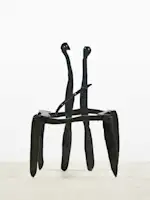 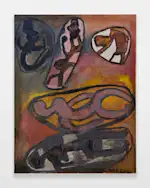 |
Back to Articles
SHARE
No comments yet