
Exhibition/event has ended.

Satobi and Miyabi
Hiratsuka Museum of Art


Finished
SHARE
Artists
Tetsugoro Yorozu, Ryusei Kishida, Haruhiko Yasuda, Silvia Minio-Paluello Yasuda, Yasuyoshi Kobayashi, Hiroshi Hamaya, Akiko Fujita et al.
This exhibition introduces a group of works created by the artists as they traveled back and forth between the city and the countryside.
The Shonan area, where the Hiratsuka Museum of Art is located, developed after the Meiji period (1868-1912), and as a neighborhood close to the city, it became a place for city dwellers to recuperate and enjoy the summer. Lured by the beautiful image of the coast, artists set up their studios in the area, many of them immigrants who were trying to escape from the anxiety and noise of urban life.
Many of these artists, including Tetsugoro Yorozu and Ryusei Kishida, were Shunyokai artists who created works in Shonan in the Taisho and early Showa periods. As they moved from city to region and from region to city, they found the original landscapes that were being lost in the cities and expressed them in their paintings.
This kind of gaze from the city to the countryside has existed since ancient times, and since the modern era, artists have sought "somewhere other than here" and found the ideal way of life in the surrounding areas of Japan or colonial areas. In the Taisho period (1912-1926), Michisei Kono found a mythical world in the landscape of his hometown, Nagano, and Hiroshi Hamaya covered the customs of Kuwatoriya, Niigata, and published the prototype of Japan in his collections "Snow Country" (1956) and "Japan Behind the Scenes" (1957). Hosho Kobayashi, a folklorist who began fieldwork with Taiwan's indigenous people as a national project in 1913, left his official role after completing his research and began painting to express the village as a utopia in his paintings. For them, the pursuit of an immaculate landscape is the basis of their creative activities.
Lastly, this exhibition will introduce the works of Akiko Fujita, a sculptor based in Hiratsuka City, who has continued to express the original landscapes that human beings should reclaim. In the 1970s, she created one of the world's largest pottery works, "Denawa" (1976-77), in Shonan, using the "field firing" method, in which clay is fired outdoors without using a kiln.
[Events]
1. Gallery Talk by Curator
Date: July 1 (Sat) and August 20 (Sun), 14:00-14:45
Venue: Hiratsuka Museum of Art Exhibition Room 2
No application required, ticket required.
2. Lecture "The Birth of Shonan"
Date: Saturday, July 29, 14:00-15:00
Lecturer: Toshiyuki Masubuchi (Professor, Graduate School of Policy Design, Hosei University)
Venue: Hiratsuka Museum of Art Museum Hall
Advance registration required.
Please check the official website for event details and application procedures.
The Shonan area, where the Hiratsuka Museum of Art is located, developed after the Meiji period (1868-1912), and as a neighborhood close to the city, it became a place for city dwellers to recuperate and enjoy the summer. Lured by the beautiful image of the coast, artists set up their studios in the area, many of them immigrants who were trying to escape from the anxiety and noise of urban life.
Many of these artists, including Tetsugoro Yorozu and Ryusei Kishida, were Shunyokai artists who created works in Shonan in the Taisho and early Showa periods. As they moved from city to region and from region to city, they found the original landscapes that were being lost in the cities and expressed them in their paintings.
This kind of gaze from the city to the countryside has existed since ancient times, and since the modern era, artists have sought "somewhere other than here" and found the ideal way of life in the surrounding areas of Japan or colonial areas. In the Taisho period (1912-1926), Michisei Kono found a mythical world in the landscape of his hometown, Nagano, and Hiroshi Hamaya covered the customs of Kuwatoriya, Niigata, and published the prototype of Japan in his collections "Snow Country" (1956) and "Japan Behind the Scenes" (1957). Hosho Kobayashi, a folklorist who began fieldwork with Taiwan's indigenous people as a national project in 1913, left his official role after completing his research and began painting to express the village as a utopia in his paintings. For them, the pursuit of an immaculate landscape is the basis of their creative activities.
Lastly, this exhibition will introduce the works of Akiko Fujita, a sculptor based in Hiratsuka City, who has continued to express the original landscapes that human beings should reclaim. In the 1970s, she created one of the world's largest pottery works, "Denawa" (1976-77), in Shonan, using the "field firing" method, in which clay is fired outdoors without using a kiln.
[Events]
1. Gallery Talk by Curator
Date: July 1 (Sat) and August 20 (Sun), 14:00-14:45
Venue: Hiratsuka Museum of Art Exhibition Room 2
No application required, ticket required.
2. Lecture "The Birth of Shonan"
Date: Saturday, July 29, 14:00-15:00
Lecturer: Toshiyuki Masubuchi (Professor, Graduate School of Policy Design, Hosei University)
Venue: Hiratsuka Museum of Art Museum Hall
Advance registration required.
Please check the official website for event details and application procedures.
Schedule | Jun 24 (Sat) 2023-Sep 3 (Sun) 2023 Opening Hours Information
| ||||
|---|---|---|---|---|---|
| Fee | Adults ¥200; University and High School Students ¥100; Junior High School Students and Under, Persons with Disability Certificates + 1 Companion free. | ||||
| Website | https://www.city.hiratsuka.kanagawa.jp/art-muse/20162006_00031.html | ||||
| Venue | Hiratsuka Museum of Art | ||||
| Location | 1-3-3 Nishiyawata, Hiratsuka-shi, Kanagawa 254-0073 | ||||
| Access | 20 minute walk from the North exit of Hiratsuka Station on the JR Tokaido line; From the North exit of JR Hiratsuka Station, take the Kanagawa Chuo Kotsu bus and get off at Bijutsukan Iriguchi. | ||||
| Phone | 0463-35-2111 | ||||
| Related images | Click on the image to enlarge it 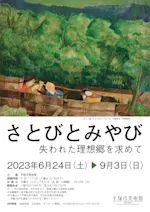 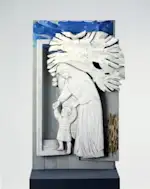 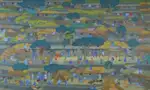 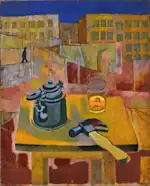 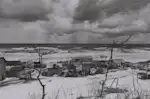 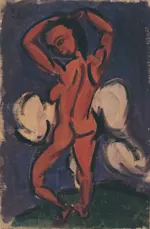 |
Back to Articles
SHARE
No comments yet