
Exhibition/event has ended.

Whiteout
Vacant Room


Finished
SHARE
Artists
Ayumi Okita, Nanary Sakamoto, Shion Takano
VACANT ROOM is pleased to present “Whiteout,” a group exhibition featuring works by Ayumi Okita, Nanary Sakamoto, and Shion Takano. Whiteout refers to an optical phenomenon in which incident light and reflected light confront each other with equal intensity, causing diffused white light to fall uniformly from all directions. As a result, visual contrast collapses and both sight and equilibrium become destabilized. Light ordinarily functions as a fundamental medium that renders objects visible; however, once its intensity exceeds a certain threshold, it deviates from its own function and reverses the very conditions that support visibility. This exhibition explores the various modalities of visibility that emerge at that threshold through the distinct practices of the three participating artists.
Ayumi Okita reinterprets the materiality and history of lacquer through references to the multilayered lacquer cultures of East and Southeast Asia. In her process, repeated cycles of application, curing, and polishing accumulate numerous layers of lacquer. Light does not immediately reflect off the surface; instead, it sinks once into the depths of the layers and rises softly again, producing a visual effect as though the surface itself were emitting light. This phenomenon resonates with the material’s distinctive chromatic shifts that unfold over several years, making visible the intimate relationship between light and material.
Okita is also attentive to the autonomy of lacquer, a medium derived from plant resin that responds independently of the maker’s intentions. By understanding this autonomy not as resistance but as a mediator between human and nature, she positions the act of painting as a form of “co-production” with natural processes—a perspective that unfolds into themes such as nature, femininity, boundaries, and becoming.
Nanary Sakamoto constructs paintings as “imaginary film stills” in which she casts herself as the protagonist. The depicted figures emerge as cinematic selves—reconfigured within the temporality of film—distinct from real bodies and from portraiture as mere representation. Her handling of light is marked by the saturated tones and strong directional sources reminiscent of Technicolor film. Variations in the light source and the stretching or shortening of shadows intervene in the image with a subtly displaced temporality, allowing the figure to hold multiple temporal layers at once. Through these slight delays and fluctuations of light, the fictional self appears as a “scene” illuminated within the painting. Her work simultaneously sustains the material presence of painted layers and the non-material tremors of a screen-like image. In this exhibition, Sakamoto’s practice reveals how painting can acquire an element of cinematicity through the manipulation of light and color, illuminating the potential of “cinematic time” latent within the pictorial plane.
Shion Takano creates oil paintings centered on portraiture. Identifying a shared particulate quality among painting’s materiality, her own bodily materiality, and the phenomenon of light, she reconceives light as a mediator that imparts subtle fluctuations not only to the contour and texture of the body but also to emotional states. Localised intensities of light and deep penumbrae dissolve the boundary between body and space—at times emphasizing the body’s surface, at other times erasing its contour entirely. Through these shifts, internal emotions are visualized as they permeate the layers of paint, and the figure emerges in multiple phases that exceed the mere reproduction of an actual body. In these works, the instability between identity and its image—between the real and the fictive—is gently revealed through light’s intervention.
Across these three practices, light engages with the stratified materiality, temporal structures, and bodily contours of the image, giving rise to subtle transformations articulated through each artist’s distinctive methods and formal approaches. Here, light is no longer an external condition that simply illuminates objects; rather, it enters the very foundations of the pictorial and bodily image, altering their formative processes from within. Such attentiveness to the “shifts in the conditions of perception” produced by the intervention of light forms the conceptual core of this exhibition.
Ayumi Okita reinterprets the materiality and history of lacquer through references to the multilayered lacquer cultures of East and Southeast Asia. In her process, repeated cycles of application, curing, and polishing accumulate numerous layers of lacquer. Light does not immediately reflect off the surface; instead, it sinks once into the depths of the layers and rises softly again, producing a visual effect as though the surface itself were emitting light. This phenomenon resonates with the material’s distinctive chromatic shifts that unfold over several years, making visible the intimate relationship between light and material.
Okita is also attentive to the autonomy of lacquer, a medium derived from plant resin that responds independently of the maker’s intentions. By understanding this autonomy not as resistance but as a mediator between human and nature, she positions the act of painting as a form of “co-production” with natural processes—a perspective that unfolds into themes such as nature, femininity, boundaries, and becoming.
Nanary Sakamoto constructs paintings as “imaginary film stills” in which she casts herself as the protagonist. The depicted figures emerge as cinematic selves—reconfigured within the temporality of film—distinct from real bodies and from portraiture as mere representation. Her handling of light is marked by the saturated tones and strong directional sources reminiscent of Technicolor film. Variations in the light source and the stretching or shortening of shadows intervene in the image with a subtly displaced temporality, allowing the figure to hold multiple temporal layers at once. Through these slight delays and fluctuations of light, the fictional self appears as a “scene” illuminated within the painting. Her work simultaneously sustains the material presence of painted layers and the non-material tremors of a screen-like image. In this exhibition, Sakamoto’s practice reveals how painting can acquire an element of cinematicity through the manipulation of light and color, illuminating the potential of “cinematic time” latent within the pictorial plane.
Shion Takano creates oil paintings centered on portraiture. Identifying a shared particulate quality among painting’s materiality, her own bodily materiality, and the phenomenon of light, she reconceives light as a mediator that imparts subtle fluctuations not only to the contour and texture of the body but also to emotional states. Localised intensities of light and deep penumbrae dissolve the boundary between body and space—at times emphasizing the body’s surface, at other times erasing its contour entirely. Through these shifts, internal emotions are visualized as they permeate the layers of paint, and the figure emerges in multiple phases that exceed the mere reproduction of an actual body. In these works, the instability between identity and its image—between the real and the fictive—is gently revealed through light’s intervention.
Across these three practices, light engages with the stratified materiality, temporal structures, and bodily contours of the image, giving rise to subtle transformations articulated through each artist’s distinctive methods and formal approaches. Here, light is no longer an external condition that simply illuminates objects; rather, it enters the very foundations of the pictorial and bodily image, altering their formative processes from within. Such attentiveness to the “shifts in the conditions of perception” produced by the intervention of light forms the conceptual core of this exhibition.
Schedule | Dec 20 (Sat) 2025-Feb 1 (Sun) 2026 Opening Hours Information
| ||||
|---|---|---|---|---|---|
| Fee | Free | ||||
| Website | https://vacant-room.com/exhibitions/whiteout | ||||
| Venue | Vacant Room https://vacant-room.com/ | ||||
| Location | B1F, 4-3ー6 Shibuya, Shibuya-ku, Tokyo 150₋0002 | ||||
| Access | 5 minute walk from exit B1 at Omotesando Station on the Ginza, Chiyoda and Hanzomon lines. 13 minute walk from JR Shibuya Station. | ||||
| Related images | Click on the image to enlarge it 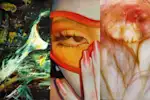 |
Back to Articles
SHARE
No comments yet