
Exhibition/event has ended.

140th Anniversary of Kotaro Takamura
Rokuzan Art Museum


Finished
SHARE
Artists
Kotaro Takamura
Kotaro Takamura was one of the most important close friends of Morie Ogiwara (1879-1910). After returning to Japan, the two men greatly contributed to the trend of modern Japanese sculpture, Ogiwara with his works and Takamura with his critiques, as the standard-bearer of Japanese Rodanism.
Takamura was an artist of great depth, not only as a sculptor working in clay, but also as a skilled woodcarver due to his origins as the eldest son of the woodcarver Koun Takamura, and as a man of letters (criticism, translation, poetry), as seen in his rich literary creations. He is widely known for his poems "Michidori" (1914) and "Lemon Lament" (1939), which are still loved by many people, but his enlightening criticism such as "The Green Sun" (1910), which exalts artistic freedom, and his editing and translation of "Rodin's Words" (1916), called the bible for Japanese sculptors, are also well known in Japan. He is highly regarded as a writer who greatly inspired the modern art world.
In 2016, in commemoration of the 60th anniversary of Takamura's death and the 130th anniversary of the birth of Chieko Takamura (1886-1938), the museum borrowed artwork materials from many related institutions to present a special exhibition on Takamura's sculpture and poetry. This time, the museum looks back on Takamura's art with a focus on the collection.
Takamura was an artist of great depth, not only as a sculptor working in clay, but also as a skilled woodcarver due to his origins as the eldest son of the woodcarver Koun Takamura, and as a man of letters (criticism, translation, poetry), as seen in his rich literary creations. He is widely known for his poems "Michidori" (1914) and "Lemon Lament" (1939), which are still loved by many people, but his enlightening criticism such as "The Green Sun" (1910), which exalts artistic freedom, and his editing and translation of "Rodin's Words" (1916), called the bible for Japanese sculptors, are also well known in Japan. He is highly regarded as a writer who greatly inspired the modern art world.
In 2016, in commemoration of the 60th anniversary of Takamura's death and the 130th anniversary of the birth of Chieko Takamura (1886-1938), the museum borrowed artwork materials from many related institutions to present a special exhibition on Takamura's sculpture and poetry. This time, the museum looks back on Takamura's art with a focus on the collection.
Schedule | Jul 22 (Sat) 2023-Sep 10 (Sun) 2023 Opening Hours Information
| ||||
|---|---|---|---|---|---|
| Fee | Adults ¥900, High School Students ¥300, Junior High and Elementary School Students ¥150, Persons with Disability Certificates Half price. | ||||
| Website | http://rokuzan.jp/生誕140周年-高村光太郎-展/ | ||||
| Venue | Rokuzan Art Museum http://rokuzan.jp/ | ||||
| Location | 5095-1 Hotaka, Azumino-shi, Nagano 399‐8303 | ||||
| Access | 7 minute walk from the North exit of Hotaka Station on the JR Oito line. | ||||
| Phone | 0263-82-2094 | ||||
| Related images | Click on the image to enlarge it 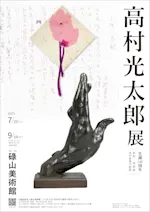 |
Back to Articles
SHARE
No comments yet