Exhibition/event has ended.

150th Anniversary of the Birth of Shuho Ikegami
Nerima Art Museum


Finished Discount
DiscountSHARE
Artists
Shuho Ikegami
Shuho Ikegami (1874–1944) was born in Takato Town (now Ina City), Kamiina District, Nagano Prefecture. In the 22nd year of the Meiji era (1889), he moved to Tokyo to seriously study painting. He became the first disciple and adopted son of Araki Kango, who was still relatively unknown at that time. From the 5th year of Taisho (1916), he won the prestigious selection at the Bunten (Ministry of Education Art Exhibition) for three consecutive years. He also played a significant role in the official art exhibitions, serving as a judge and receiving non-jury status at the Teiten (Imperial Exhibition), representing the traditional school within the official art world.
In comparison to the "Shin-ha" (New School) of Nihonga led by artists like Shunso Hishida (1874-1911), who were of the same age and also from Nagano Prefecture, works classified as "Kyu-ha" (Old School), including those by Ikegami, have received less attention in recent exhibitions. The recognition of these artists has been limited. Still, traditional school painters, including Ikegami, were appreciated as exhibition artists and acknowledged for their works on screens and fittings, which adorned residences and mansions as decorative arts.
In particular, Ikegami incorporated elements of thorough realism in his depictions and the atmospheric expressions explored by New School painters. He demonstrated a Nihonga expression that did not strictly adhere to tradition.
This exhibition, commemorating the 150th anniversary of Shuho Ikegami's birth, traces his life and representative works, critically examines his artistic career, and focuses on the artist labeled as part of the "Kyu-ha" from a new perspective.
In comparison to the "Shin-ha" (New School) of Nihonga led by artists like Shunso Hishida (1874-1911), who were of the same age and also from Nagano Prefecture, works classified as "Kyu-ha" (Old School), including those by Ikegami, have received less attention in recent exhibitions. The recognition of these artists has been limited. Still, traditional school painters, including Ikegami, were appreciated as exhibition artists and acknowledged for their works on screens and fittings, which adorned residences and mansions as decorative arts.
In particular, Ikegami incorporated elements of thorough realism in his depictions and the atmospheric expressions explored by New School painters. He demonstrated a Nihonga expression that did not strictly adhere to tradition.
This exhibition, commemorating the 150th anniversary of Shuho Ikegami's birth, traces his life and representative works, critically examines his artistic career, and focuses on the artist labeled as part of the "Kyu-ha" from a new perspective.
Schedule | Mar 16 (Sat) 2024-Apr 21 (Sun) 2024 Opening Hours Information
| ||||
|---|---|---|---|---|---|
| Fee | Adults ¥1000; University and High School Students, Age 65 to 74 ¥800; Junior High School Students and Under, Seniors 75 & Over free. | ||||
| MuPon | ¥100 off Up to 2 people Applicable to general public only, not valid with other discounts  Download the TAB app to get a discount on entry to this event. ※Paid subscriber only | ||||
| Website | https://www.neribun.or.jp/event/detail_m.cgi?id=202312141702545620 | ||||
| Venue | Nerima Art Museum http://www.neribun.or.jp/museum.html | ||||
| Location | 1-36-16 Nukui, Nerima-ku, Tokyo 176-0021 | ||||
| Access | 3 minute walk from Nakamurabashi Station on the Seibu Ikebukuro line. | ||||
| Phone | 03-3577-1821 | ||||
| Related images | Click on the image to enlarge it 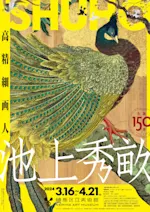 |
Traveling exhibition schedule
Back to Articles
SHARE
No comments yet