Exhibition/event has ended.

"Post-War Nihonga Japanese Painting from the Museum Collection" Exhibition
Museum of Modern Art, Kamakura


Finished
SHARE
Artists
Tamako Kataoka, Fuku Shouji, Shoukou Uemura, Houshun Yamaguchi, Eizou Kato, Gakuryou Nakamura, Harue Mochizuki, Shinsui Ito, Toshiko Mitani, Tatsuo Takayama, Eien Iwahashi et al.
The meaning of nihonga was put into question again immediately after World War II, between 1947 and 1949, partly due to the influx of western culture into the country accompanying Japan's defeat. Criticism that conventional nihonga expressions would not hold up in the world resulted in the Nihonga Metsubo (destruction) Theory. In this confusing wake, nihonga painters searched for a new nihonga style from various standpoints.
Artists such as Houshun Yamaguchi and Eizou Kato who participated in the Nitten exhibition aimed for the fusion of tradition and modernism and created a more modern nihonga world. Fuku Shouji and Eien Iwahashi of Japan Art Institute origins also incorporated a modern aesthetic sense into their classic modern nihonga styles. Tamako Kataoka who would forge a unique path in the realm of historic paintings also created nihonga filled with a local energy that had not been seen before. In this way, post-war nihonga artists have continued to paint the spiritual landscape of modern Japanese fusing tradition, innovation, and the outer and inner worlds. 26 works will be on display.
Artists such as Houshun Yamaguchi and Eizou Kato who participated in the Nitten exhibition aimed for the fusion of tradition and modernism and created a more modern nihonga world. Fuku Shouji and Eien Iwahashi of Japan Art Institute origins also incorporated a modern aesthetic sense into their classic modern nihonga styles. Tamako Kataoka who would forge a unique path in the realm of historic paintings also created nihonga filled with a local energy that had not been seen before. In this way, post-war nihonga artists have continued to paint the spiritual landscape of modern Japanese fusing tradition, innovation, and the outer and inner worlds. 26 works will be on display.
Schedule | Sep 29 (Sat) 2007-Dec 16 (Sun) 2007 Opening Hours Information
| ||||||
|---|---|---|---|---|---|---|---|
| Fee | Adults ¥250, Under 20 and University Students ¥150, High School Students and Below, 65 and Above Free and Handicapped Guests Free. | ||||||
| Venue | Museum of Modern Art, Kamakura http://www.moma.pref.kanagawa.jp/en/index.html  | ||||||
| Location | 2-1-53 Yukinoshita, Kamakura-shi, Kanagawa-ken 248-0005 | ||||||
| Access | 10 minutes walk from Kamakura station on the JR Yokosuka line. | ||||||
| Phone | 0467-22-5000 | ||||||
| Related images | Click on the image to enlarge it 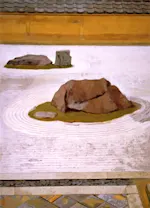 |
Back to Articles
SHARE
No comments yet