
Exhibition/event has ended.

"Four Great Banquet Tables of Catherine the Great from the State Hermitage Museum" Exhibition
Tokyo Metropolitan Teien Art Museum


Finished
SHARE
The age of Catherine the Great (1729-1796) was an experiment in the projection of the monarch's power, dignity and loftiness within the Russian imperial court. Ritualistic ways of doing things were strictly regulated by the codes of "Hermitage etiquette" that extended to the ruler's attire, food and accommodations, exerting a profound influence over the forms of behavior at the royal court. The evening banquets, in particular, were a venue that demanded the highest levels of cultural refinement. All of the elements that made up the banquet were each considered to be a component of a single work of art, and only the very finest quality and materials available at the time were deemed appropriate not only for the cuisine, but also the table settings, interior decorations and attire of the guests. For her special guests, Catherine commissioned custom-made tableware from the royal kilns of various Western European nations, lending a touch of extravagant beauty to the dining tables. These banquets, which made ostentatious use of sparkling white porcelain - an extraordinarily valuable material at the time - was also a prime occasion to flaunt the wealth and power of the female monarch.
This exhibition introduces audiences to the life of the Russian Imperial court under Catherine the Great, featuring four collections of tableware from the collection of the Hermitage Museum in St Petersburg that include such treasures as the Berlin Dessert Service from the royal kilns in Berlin, and the Cameo Sevres commissioned for Catherine's lover the Prince Potemkin from the kilns at Sevres, France.
Various related events and lectures are also scheduled (Japanese only). See website for details.
This exhibition introduces audiences to the life of the Russian Imperial court under Catherine the Great, featuring four collections of tableware from the collection of the Hermitage Museum in St Petersburg that include such treasures as the Berlin Dessert Service from the royal kilns in Berlin, and the Cameo Sevres commissioned for Catherine's lover the Prince Potemkin from the kilns at Sevres, France.
Various related events and lectures are also scheduled (Japanese only). See website for details.
Schedule | Apr 16 (Thu) 2009-Jul 5 (Sun) 2009 Opening Hours Information
| ||||
|---|---|---|---|---|---|
| Fee | Adults ¥1000, University Students ¥800, High, Middle and Elementary School Students and 65 and over ¥500 | ||||
| Venue | Tokyo Metropolitan Teien Art Museum https://www.teien-art-museum.ne.jp/en/  | ||||
| Location | 5-21-9 Shirokanedai, Minato-ku, Tokyo 108-0071 | ||||
| Access | 6 minute walk from exit 1 at Shirokanedai Station on the Toei Mita or Namboku line, 7 minute walk from the East exit of Meguro Station on the JR Yamanote line, 7 minute walk from the Main exit of Meguro Station on the Tokyu Meguro line. | ||||
| Phone | 050-5541-8600 (Hello Dial) | ||||
| Related images | Click on the image to enlarge it 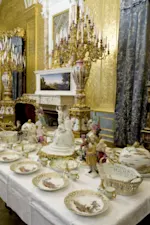 |
Back to Articles
SHARE
No comments yet