
Exhibition/event has ended.

"Genealogy of Famous Actors -Kabuki in the Late Edo Period, the Meiji Period and the Present-" Exhibition
Ota Memorial Museum of Art


Finished
SHARE
The fact that the Kabuki Theater (kabuki-za) at Ginza will be reconstructed after the performance in next April is well known. Kabuki, one of the Japanese traditional performing arts still holds many fans. Kabuki is said to be one of the Japanese traditional performing arts.
Not only beginners of kabuki but also people who appreciate it for a long time may have a simple question in mind: how much of kabuki in the Edo period has been transmitted to present kabuki?
The answer exists in nishiki-e (multi-colored prints) of the Edo period because we can find kabuki actor’s name that have been passed on to the present.
The theme of this exhibition is about figures of kabuki actors who were active in the late Edo and Meiji periods. Ichikawa Danjūrō Ⅸ and Onoe Kikugorō Ⅴ. etc tried to find the new form of kabuki in the wave of the Meiji Restoration while having succeeded the traditional kabuki of the Edo period. These kabuki actors who gained enormous popularity were often depicted in many pieces of nishiki-e at that time and many photos of the stage and portraits still remain.
In this exhibition, we will introduce the works of yakusha-e (portraits of kabuki actors) by Utagawa ToyokuniⅢ, Toyohara Kunichika, Utagwa Yoshitora and Tsukioka (Taiso) Yoshitoshi, amongst others.
Not only beginners of kabuki but also people who appreciate it for a long time may have a simple question in mind: how much of kabuki in the Edo period has been transmitted to present kabuki?
The answer exists in nishiki-e (multi-colored prints) of the Edo period because we can find kabuki actor’s name that have been passed on to the present.
The theme of this exhibition is about figures of kabuki actors who were active in the late Edo and Meiji periods. Ichikawa Danjūrō Ⅸ and Onoe Kikugorō Ⅴ. etc tried to find the new form of kabuki in the wave of the Meiji Restoration while having succeeded the traditional kabuki of the Edo period. These kabuki actors who gained enormous popularity were often depicted in many pieces of nishiki-e at that time and many photos of the stage and portraits still remain.
In this exhibition, we will introduce the works of yakusha-e (portraits of kabuki actors) by Utagawa ToyokuniⅢ, Toyohara Kunichika, Utagwa Yoshitora and Tsukioka (Taiso) Yoshitoshi, amongst others.
Schedule | Sep 1 (Tue) 2009-Sep 26 (Sat) 2009 Opening Hours Information
| ||||||
|---|---|---|---|---|---|---|---|
| Fee | |||||||
| Website | http://www.ukiyoe-ota-muse.jp/H2109%20kabuki%20genealogy-E.html | ||||||
| Venue | Ota Memorial Museum of Art http://www.ukiyoe-ota-muse.jp/eng | ||||||
| Location | 1-10-10 Jingumae, Shibuya-ku, Tokyo 150-0001 | ||||||
| Access | 1 minute walk from exit 5 at Meijijingu-mae Station on the Chiyoda and Fukutoshin lines, 3 minute walk from the Omotesando exit of Harajuku Station on the JR Yamanote line. | ||||||
| Phone | 050-5541-8600 (Hello Dial) | ||||||
| Related images | Click on the image to enlarge it 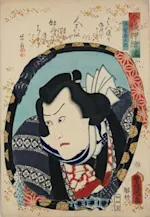 |
Back to Articles
SHARE
No comments yet