
Exhibition/event has ended.

"Meiji Era Sculpture: Ragusa and Rokuzan Ogiwara" Exhibition
The University Art Museum - Tokyo University of the Arts


Finished
SHARE
Artists
Vincenzo Ragusa, Rokuzan Ogiwara
In this exhibition, our museum will focus on two sculptors, Vincenzo Ragusa (1841-1927) and Rokuzan Ogiwara (Morie, 1879-1910), and will attempt to consider problems related to the art of sculpting during the Meiji era.
Italian sculptor Ragusa was invited to the Kobu Bijutsu Gakko (Technical Art School), established in 1876. He introduced Japan to the techniques of Western sculpture for the first time, working tirelessly to lay the foundations of modern Japanese sculpture until he returned to Italy in 1882.
After Ragusa died in 1933, his wife Tama Kiyohara donated his works created in Japan and Italy to the Tokyo Fine Art School. These works constitute valuable evidence of how Western sculpture gained acceptance in Japan during the early Meiji era. This exhibition will focus not only on Ragusa’s sculptures, but also the art education in the Kobu Bijutsu Gakko.
Rokuzan Ogiwara studied at Academy Julian in Paris and returned to Japan in 1908. He worked for a few years until he died in 1910, and his works inaugurated new trends in modern Japanese sculpture.
Divided into two parts, this exhibition showcases the work of two of Japan's representative Meiji-era sculptors.
Italian sculptor Ragusa was invited to the Kobu Bijutsu Gakko (Technical Art School), established in 1876. He introduced Japan to the techniques of Western sculpture for the first time, working tirelessly to lay the foundations of modern Japanese sculpture until he returned to Italy in 1882.
After Ragusa died in 1933, his wife Tama Kiyohara donated his works created in Japan and Italy to the Tokyo Fine Art School. These works constitute valuable evidence of how Western sculpture gained acceptance in Japan during the early Meiji era. This exhibition will focus not only on Ragusa’s sculptures, but also the art education in the Kobu Bijutsu Gakko.
Rokuzan Ogiwara studied at Academy Julian in Paris and returned to Japan in 1908. He worked for a few years until he died in 1910, and his works inaugurated new trends in modern Japanese sculpture.
Divided into two parts, this exhibition showcases the work of two of Japan's representative Meiji-era sculptors.
Schedule | Oct 23 (Sat) 2010-Dec 5 (Sun) 2010 Opening Hours Information
| ||
|---|---|---|---|
| Fee | Adults ¥600, University & High School Students ¥400, Junior High School Students and under Free | ||
| Venue | The University Art Museum - Tokyo University of the Arts https://museum.geidai.ac.jp/en/  | ||
| Location | 12-8 Ueno Park, Taito-ku, Tokyo 110-8714 | ||
| Access | 10 minute walk from exit 1 at Nezu Station on the Chiyoda line, 10 minute walk from the Koen exit of JR Ueno Station, 15 minute walk from the Main exit of Keisei Ueno Station on the Keisei line. | ||
| Phone | 050-5541-8600 (Hello Dial) | ||
| Related images | Click on the image to enlarge it 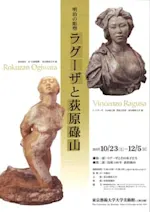 |
Back to Articles
SHARE
No comments yet