Exhibition/event has ended.

Hideo Hagiwara Exhibition
Kichijoji Art Museum


Finished
SHARE
Artists
Hideo Hagiwara
After graduating from the oil painting department of Tokyo Fine Arts School, Hideo Hagiwara joined the Takamizawa Mokuhanga Company, where he learned much about ukiyo-e and other woodblock prints. After the second world war, he worked mainly in oil painting, but when he was 40, he contracted tuberculosis and was forced to live a life of recuperation. During his life, he made a woodblock print of a New Year's card, which led him to printmaking, and then to a shift from realism to abstraction. In doing so, Hagiwara, who originally worked in oil painting, always had the notion of expression in oil painting at the root of his work. Believing that prints are less likely to produce the depth of space than oil paintings, he set out to somehow express the deep space of oil paintings in prints using woodblock printing techniques. In the beginning, he worked based on the techniques he learned at a woodblock printing company, but gradually he began to feel inadequate due to the limitations that existed in woodblock printing. However, Hagiwara used these limitations to his advantage and expanded his expression of woodblock prints by creating a succession of unique techniques, such as a plate-making method in which veneers and other materials are attached to the woodblocks, intaglio printing of woodblocks that were generally made with letterpresses, and double-sided rubbing, in which colors are blotted out from the reverse side of the paper. Hagiwara was one of the leading artists in the postwar Japanese printmaking world, winning numerous awards at international and domestic printmaking exhibitions.
In this exhibition, Hagiwara's "Starry Moonlit Night" series and "Nebula" series, among his abstract works with various geometric motifs such as zeros and crosses scattered over multiple layers of colored surfaces, will be introduced, along with his works on the theme of stars and space.
In this exhibition, Hagiwara's "Starry Moonlit Night" series and "Nebula" series, among his abstract works with various geometric motifs such as zeros and crosses scattered over multiple layers of colored surfaces, will be introduced, along with his works on the theme of stars and space.
Schedule | Jun 16 (Thu) 2022-Nov 13 (Sun) 2022 Opening Hours Information
| ||||||
|---|---|---|---|---|---|---|---|
| Fee | Adults ¥100; Elementary School Students and Under free; Seniors 65 & Over, Persons with Disability Certificates free. | ||||||
| Website | https://www.musashino.or.jp/museum/1002006/1003367/1003585.html | ||||||
| Venue | Kichijoji Art Museum | ||||||
| Location | 7F FF Bldg., 1-8-16 Kichijoji Honcho, Musashino-shi, Tokyo 180-0004 | ||||||
| Access | 3 minute walk from the North exit of Kichijoji Station on the JR Chuo and Sobu lines or Keio Inokashira line. | ||||||
| Phone | 0422-22-0385 | ||||||
| Related images | Click on the image to enlarge it 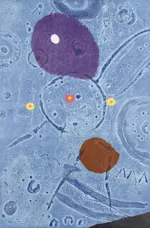 |
Back to Articles
SHARE
No comments yet