
Exhibition/event has ended.
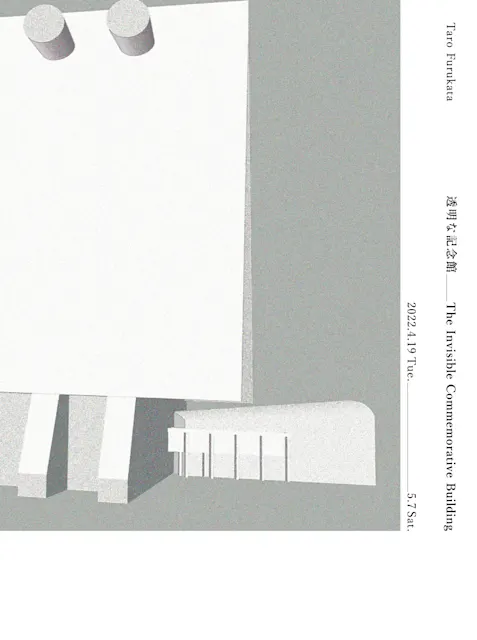
Taro Furukawa "The Invisible Memorial Hall"
The Pool


Finished
SHARE
Artists
Taro Furukawa
In his work in Hiroshima and Germany, Taro Furukawa has often produced artworks that reveal a sense of identity in a particular place. His new work "The Invisible Commemorative Building" (2022), which is also the title of this exhibition, focuses on the origins of the architectural plan for Hiroshima Peace Memorial Park.
This work is a three-dimensional composite of the central building of The Greater East Asia Co-Prosperity Sphere Memorial Hall, which was planned by architect Kenzo Tange in 1942 but never realized, and the Hiroshima Peace Memorial Museum, which was built by Tange after the war. The overlaying of the past, present, and future of Hiroshima through an installation of drawings and video works centered on the "Invisible Memorial Hall" will not only represent memories fading into oblivion, but will also expose the precarity of social systems around the world. Furukata's work is meant to provide an opportunity to consider how to face the next era, at a time when pandemics and international turmoil have highlighted “the uncertainty of how correct we are.”
This work is a three-dimensional composite of the central building of The Greater East Asia Co-Prosperity Sphere Memorial Hall, which was planned by architect Kenzo Tange in 1942 but never realized, and the Hiroshima Peace Memorial Museum, which was built by Tange after the war. The overlaying of the past, present, and future of Hiroshima through an installation of drawings and video works centered on the "Invisible Memorial Hall" will not only represent memories fading into oblivion, but will also expose the precarity of social systems around the world. Furukata's work is meant to provide an opportunity to consider how to face the next era, at a time when pandemics and international turmoil have highlighted “the uncertainty of how correct we are.”
Schedule | Apr 19 (Tue) 2022-May 7 (Sat) 2022 Opening Hours Information
| ||||
|---|---|---|---|---|---|
| Fee | Free | ||||
| Website | https://www.the-pool.info/exhibitions/697/ | ||||
| Venue | The Pool | ||||
| Location | 2-13-18 Higashi-Sendamachi, Naka-ku, Hiroshima-shi, Hiroshima 730-0053 | ||||
| Access | From the Shinkansen exit of JR Hiroshima Station, take the bus and get off at Miyukibashi. The venue is 1 minute walk from there. From Hondori Station on the Astram Subway line, take the Streetcar and get off at Miyukibashi. | ||||
| Phone | 082-909-2843 | ||||
| Related images | Click on the image to enlarge it  |
Back to Articles
SHARE
No comments yet