
Exhibition/event has ended.

Tsuneo Enari + Ken Domon "Hiroshima-Nagasaki"
Sakata City Museum of Art


Finished
SHARE
Artists
Tsuneo Enari, Ken Domon
In 1957, Ken Domon visited Hiroshima to photograph the devastation of the atomic bombing. The following year, Domon published a collection of his photographs entitled "Hiroshima" after witnessing firsthand the horrific scenes of the atomic bomb survivors, who were still suffering from fresh wounds 12 years after the war, and the harsh conditions of surgery.
The following year, Domon published a book of photographs titled "Hiroshima," which received a great response both in Japan and abroad. One photographer who was greatly influenced by this work was Tsuneo Enari, who was in his early 20s at the time. Enari later set his work in the context of the "Showa era of war" and began to deal with a variety of subjects. During that time, he always had his heart set on the A-bombed cities. In 1985, 40 years after the end of the war, he entered Hiroshima for the first time and has continued in-depth reporting and photography to this day. After continually asking himself how he could become a photographer of the "atomic bombing," in his 2019 book, "Hibakusha: Hiroshima-Nagasaki: Proof of Life," he has thoroughly and conclusively depicted only "objects" such as artifacts and remains of the A-bombed cities. Domon and Enari's depictions of the atomic bombing at different times and with different techniques, from their respective perspectives, heavily emphasize the horror of the bombing and the desire for peace.
Seventy-seven years have passed since the atomic bombings, and war continues to ravage the world. The hope is that the two photographers' perspectives in this exhibition will encourage viewers to reconsider war and peace.
The following year, Domon published a book of photographs titled "Hiroshima," which received a great response both in Japan and abroad. One photographer who was greatly influenced by this work was Tsuneo Enari, who was in his early 20s at the time. Enari later set his work in the context of the "Showa era of war" and began to deal with a variety of subjects. During that time, he always had his heart set on the A-bombed cities. In 1985, 40 years after the end of the war, he entered Hiroshima for the first time and has continued in-depth reporting and photography to this day. After continually asking himself how he could become a photographer of the "atomic bombing," in his 2019 book, "Hibakusha: Hiroshima-Nagasaki: Proof of Life," he has thoroughly and conclusively depicted only "objects" such as artifacts and remains of the A-bombed cities. Domon and Enari's depictions of the atomic bombing at different times and with different techniques, from their respective perspectives, heavily emphasize the horror of the bombing and the desire for peace.
Seventy-seven years have passed since the atomic bombings, and war continues to ravage the world. The hope is that the two photographers' perspectives in this exhibition will encourage viewers to reconsider war and peace.
Schedule | Sep 3 (Sat) 2022-Oct 16 (Sun) 2022 Opening Hours Information
| ||||
|---|---|---|---|---|---|
| Fee | Adults ¥900, High School Students ¥450, Junior High School Students and Under free. | ||||
| Website | https://www.sakata-art-museum.jp/events/event/hutatunomanazasiten | ||||
| Venue | Sakata City Museum of Art https://www.sakata-art-museum.jp | ||||
| Location | 3-17-95 Iimoriyama, Sakata-shi, Yamagata 998-0055 | ||||
| Access | From Sakata Station on the JR Uetsu Main line, take the Runrun bus towards Dewayuushinkan / Bijutsukan, and get off at Sakatashi Bijutsukan / Dewayuushinkan. The venue is 1 minute walk from there. | ||||
| Phone | 0234-31-0095 | ||||
| Related images | Click on the image to enlarge it 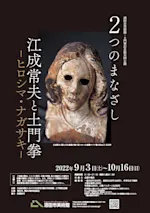 |
Back to Articles
SHARE
No comments yet