
Exhibition/event has ended.

35th Anniversary Special Exhibition: Early Imari and Joseon Ceramics
Toguri Museum of Art


Finished
SHARE
In the 1610s, techniques from the Korean peninsula were introduced to Japan, giving birth to Imariyaki, Japan's first domestically produced porcelain. Among them, the simple style of the early period is called "Early Imari." Toru Toguri (1926-2007), the founder of the Toguri Museum of Art, set a goal of "becoming the number one collector of Ko-Imari porcelain in Japan."
At a time when the preference for "appreciating ceramics" was for neat works and the emphasis on color painting was strong, Toguri also energetically collected early Imari porcelains, such as underglaze blue and white porcelain, that were full of flavor and showed the handprints of the potters. In this way, he built up a substantial collection of Hizen porcelain that would allow a full view of the Edo period over a period of about 20 years from around the 1960s.
In this exhibition, which is the closing of the special exhibition commemorating the 35th anniversary of the museum, the charm of early Imari, the "starting point" of Ko-Imari, will be showcased with about 80 works. In addition, approximately 30 pieces from Toguri's collection of Korean ceramics will be brought together for the first time in 15 years.
At a time when the preference for "appreciating ceramics" was for neat works and the emphasis on color painting was strong, Toguri also energetically collected early Imari porcelains, such as underglaze blue and white porcelain, that were full of flavor and showed the handprints of the potters. In this way, he built up a substantial collection of Hizen porcelain that would allow a full view of the Edo period over a period of about 20 years from around the 1960s.
In this exhibition, which is the closing of the special exhibition commemorating the 35th anniversary of the museum, the charm of early Imari, the "starting point" of Ko-Imari, will be showcased with about 80 works. In addition, approximately 30 pieces from Toguri's collection of Korean ceramics will be brought together for the first time in 15 years.
Schedule | Jan 15 (Sun) 2023-Mar 26 (Sun) 2023 Opening Hours Information
| ||||||
|---|---|---|---|---|---|---|---|
| Fee | Adults ¥1200, University and High School Students ¥500, Junior High School Students and Under free. | ||||||
| Venue | Toguri Museum of Art http://www.toguri-museum.or.jp  | ||||||
| Location | 1-11-3 Shoto, Shibuya-ku, Tokyo 150-0046 | ||||||
| Access | 10 minute walk from the North exit of Shinsen Station on the Keio Inokashira line, 10 minute walk from the Hachiko exit of JR Shibuya Station. | ||||||
| Phone | 03-3465-0070 | ||||||
| Related images | Click on the image to enlarge it 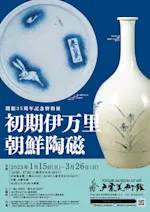 |
Back to Articles
SHARE
No comments yet