Exhibition/event has ended.

A Festival of Blossoms and Feathers - Umi-Mori’s Enchanting Flower-and-Bird Prints
Umi-Mori Art Museum


Finished
SHARE
Ukiyo-e, born in the early modern period, originally focused on themes such as portraits of beautiful women and actors. However, in the mid-19th century, a genre of bird and flower prints, themed around flowers and birds, was established and continued to develop thereafter. Bird and flower prints, depicting seasonal flowers alongside birds, insects, and fish, have long been an important subject in Japanese art.
During the Edo period, Chinese painting manuals from the Ming and Qing dynasties, which contained paintings and theories by painters, were brought to Japan, greatly influencing Japanese art, including ukiyo-e. Bird and flower prints were no exception, incorporating the achievements of practical studies such as botany and natural history that were thriving at the time, and experienced remarkable development. Particularly, the bird and flower prints by the ukiyo-e artist Hiroshige Utagawa (1797-1858) gained tremendous popularity with their dignified style. Many works were created, making him a representative figure of bird and flower prints in the Edo period, and influencing subsequent works significantly.
Entering the Meiji period, prominent figures in the Kyoto art world, such as Meiji-era painter Bairei Kono (1844-1895), produced numerous instructional drawing books for art education and published design collections for various export crafts, discovering new roles beyond mere appreciation. Additionally, the success of Koson Ohara (1877-1945), who employed completely different expression methods from traditional bird and flower prints represented by Utagawa, opened up new avenues for modern bird and flower prints. Ohara's work was initially created for the overseas market and received acclaim from Western countries.
This exhibition focuses on ukiyo-e prints, painting manuals, and instructional drawing books from the early modern period to the modern era, introducing the bird and flower prints from the Umimori Collection. It will showcase Utagawa's representative bird and flower prints from the Edo period, Kono's works on numerous bird and flower drawing manuals, and Ohara's modern bird and flower prints from the Meiji and Taisho periods, along with various painting manuals from each era.
During the Edo period, Chinese painting manuals from the Ming and Qing dynasties, which contained paintings and theories by painters, were brought to Japan, greatly influencing Japanese art, including ukiyo-e. Bird and flower prints were no exception, incorporating the achievements of practical studies such as botany and natural history that were thriving at the time, and experienced remarkable development. Particularly, the bird and flower prints by the ukiyo-e artist Hiroshige Utagawa (1797-1858) gained tremendous popularity with their dignified style. Many works were created, making him a representative figure of bird and flower prints in the Edo period, and influencing subsequent works significantly.
Entering the Meiji period, prominent figures in the Kyoto art world, such as Meiji-era painter Bairei Kono (1844-1895), produced numerous instructional drawing books for art education and published design collections for various export crafts, discovering new roles beyond mere appreciation. Additionally, the success of Koson Ohara (1877-1945), who employed completely different expression methods from traditional bird and flower prints represented by Utagawa, opened up new avenues for modern bird and flower prints. Ohara's work was initially created for the overseas market and received acclaim from Western countries.
This exhibition focuses on ukiyo-e prints, painting manuals, and instructional drawing books from the early modern period to the modern era, introducing the bird and flower prints from the Umimori Collection. It will showcase Utagawa's representative bird and flower prints from the Edo period, Kono's works on numerous bird and flower drawing manuals, and Ohara's modern bird and flower prints from the Meiji and Taisho periods, along with various painting manuals from each era.
Schedule | Jun 1 (Sat) 2024-Jul 15 (Mon) 2024 Opening Hours Information
| ||||
|---|---|---|---|---|---|
| Fee | Adults ¥1000; University and High School Students ¥500; Junior High School Students and Under free. | ||||
| Website | https://www.umam.jp/exhibition/百花百鳥―うみもり・うるわしの花鳥版画―/ | ||||
| Venue | Umi-Mori Art Museum https://www.umam.jp/en/ | ||||
| Location | 10701 Kamegaoka, Ohno, Hatsukaichi-shi, Hiroshima 739-0481 | ||||
| Access | 12 minutes by taxi from Ajina Station on the JR Sanyo Main line. | ||||
| Phone | 0829-56-3221 | ||||
| Related images | Click on the image to enlarge it 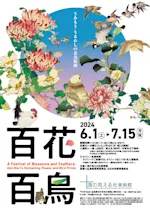 |
Back to Articles
SHARE
No comments yet