
Exhibition/event has ended.

Andes World Reflected in Potteries Part Ⅱ - Southern Peru
Tenri University Sankokan Museum


Finished
SHARE
When people hear about the "ancient Andes" in Japan, many would likely think of the Inca Empire. However, in the central Andean region, which includes parts of Peru and Bolivia, a remarkably diverse array of ancient cultures flourished. Temples began to be constructed around 3000 BCE in the ancient Andes, but the appearance of pottery around 1800 BCE was surprisingly late compared to other regions of the world. Nevertheless, various types of pottery were produced in different areas.
These ancient Andean pottery pieces were highly valued archaeologically by museums in Europe and the Americas in the late 19th century. This led to the production of forgeries. When these forgeries were further recognized as art objects by collectors of ancient art in the 1950s, the production of forgeries became even more widespread.
This exhibition is a sequel to the 86th special exhibition held in 2021, "The Andean World Through Pottery - Northern Peru." Therefore, focusing on ancient cultures that thrived across southern Peru and Bolivia, both genuine and forged pottery and wooden objects will be displayed simultaneously. Through this, visitors can experience the worldview of that time and see how these objects are being reproduced in contemporary Peruvian society in a context different from the ancient one. Additionally, with the cooperation of the Nasca Research Institute at Yamagata University and the Yamagata University Museum, the latest research findings on the Nasca ground drawings and the current state of conservation efforts will be introduced.
Through this exhibition, visitors can appreciate the diverse forms of pottery and wooden objects from the southern regions of Peru and understand the reality of cultural heritage in contemporary Peruvian society.
These ancient Andean pottery pieces were highly valued archaeologically by museums in Europe and the Americas in the late 19th century. This led to the production of forgeries. When these forgeries were further recognized as art objects by collectors of ancient art in the 1950s, the production of forgeries became even more widespread.
This exhibition is a sequel to the 86th special exhibition held in 2021, "The Andean World Through Pottery - Northern Peru." Therefore, focusing on ancient cultures that thrived across southern Peru and Bolivia, both genuine and forged pottery and wooden objects will be displayed simultaneously. Through this, visitors can experience the worldview of that time and see how these objects are being reproduced in contemporary Peruvian society in a context different from the ancient one. Additionally, with the cooperation of the Nasca Research Institute at Yamagata University and the Yamagata University Museum, the latest research findings on the Nasca ground drawings and the current state of conservation efforts will be introduced.
Through this exhibition, visitors can appreciate the diverse forms of pottery and wooden objects from the southern regions of Peru and understand the reality of cultural heritage in contemporary Peruvian society.
Schedule | Apr 17 (Wed) 2024-Jun 3 (Mon) 2024 Opening Hours Information
| ||||
|---|---|---|---|---|---|
| Fee | Adults ¥500; High School, Junior High and Elementary School Students ¥300; Persons with Disability Certificates + 1 Companion free. | ||||
| Website | https://www.sankokan.jp/news_and_information/ex_sp/sp095.html | ||||
| Venue | Tenri University Sankokan Museum https://www.sankokan.jp/english | ||||
| Location | 250 Morimedo-cho, Tenri-shi, Nara 632-8540 | ||||
| Access | 20 minute walk from Tenri Station on the JR Sakurai or Kintetsu Tenri line. | ||||
| Phone | 0743-63-8414 | ||||
| Related images | Click on the image to enlarge it 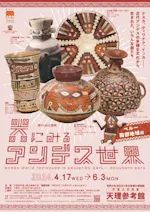 |
Back to Articles
SHARE
No comments yet