
Exhibition/event has ended.

Archaeology of Dwellings Around the Hearth in Snow Country
"Najomon" Jomon Period Museum


Finished
SHARE
Since the Jomon period, people have been living in houses, forming villages, and gathering around fires. This exhibition will introduce various "dwellings" revealed through excavation surveys, such as the stone arrangements from the Paleolithic period, the remains of pit dwellings from the Jomon and Heian periods.
It is speculated that humanity first encountered "fire" through natural combustion phenomena. The indirect use of fire led to the accumulation of knowledge about its effects. These effects include illuminating darkness, warming the body, and cooking food, which are the three major effects of "fire." Over time, humanity learned to start fires as a skill and mastered controlling them. Alternatively, it can be inferred from the findings of contemporary social anthropology that humans gained the power to "change heat, light, and objects" by receiving fire from spirits in nature, and they may have revered fire and recognized it as the "spirit of fire." People began to light fires within a certain area or enclose them with stones. The origin of the "irori" (hearth) in dwellings dates back to the ancient Paleolithic period. During the Jomon period, hearths were installed inside residences, whereas in the Paleolithic period, fires were lit outdoors in movable tents.
During his travels in Akiyama Village, Bokushi Suzuki stayed at the Ichiemon Fukuhara family's residence in Koakazawa, where he described a "large hearth measuring five shaku square" in the living room, depicting the scene of a long piece of wood being burned in a woodblock print. In this region, which experiences heavy snowfall for over 100 days a year, people have adapted by building houses capable of withstanding the weight of snow and securing fuel for winter fires.
The social significance of "gathering around fire" in human history is important. Who gathers around the fire and in what arrangement? In today's nuclear families where the opportunity for communal gathering around the fire has diminished, and individuals prefer isolated spaces with personal heating and information ownership, it would be beneficial to contemplate the social significance and meaning of "fire" through this exhibition.
It is speculated that humanity first encountered "fire" through natural combustion phenomena. The indirect use of fire led to the accumulation of knowledge about its effects. These effects include illuminating darkness, warming the body, and cooking food, which are the three major effects of "fire." Over time, humanity learned to start fires as a skill and mastered controlling them. Alternatively, it can be inferred from the findings of contemporary social anthropology that humans gained the power to "change heat, light, and objects" by receiving fire from spirits in nature, and they may have revered fire and recognized it as the "spirit of fire." People began to light fires within a certain area or enclose them with stones. The origin of the "irori" (hearth) in dwellings dates back to the ancient Paleolithic period. During the Jomon period, hearths were installed inside residences, whereas in the Paleolithic period, fires were lit outdoors in movable tents.
During his travels in Akiyama Village, Bokushi Suzuki stayed at the Ichiemon Fukuhara family's residence in Koakazawa, where he described a "large hearth measuring five shaku square" in the living room, depicting the scene of a long piece of wood being burned in a woodblock print. In this region, which experiences heavy snowfall for over 100 days a year, people have adapted by building houses capable of withstanding the weight of snow and securing fuel for winter fires.
The social significance of "gathering around fire" in human history is important. Who gathers around the fire and in what arrangement? In today's nuclear families where the opportunity for communal gathering around the fire has diminished, and individuals prefer isolated spaces with personal heating and information ownership, it would be beneficial to contemplate the social significance and meaning of "fire" through this exhibition.
Schedule | Apr 27 (Sat) 2024-May 26 (Sun) 2024 Opening Hours Information
| ||||
|---|---|---|---|---|---|
| Fee | Free | ||||
| Website | https://www.najomon.com/page_kikaku/index.php?id=1710368925 | ||||
| Venue | "Najomon" Jomon Period Museum https://www.najomon.com/page_top/ | ||||
| Location | 83 Shimofunato, Tsunanmachi, Nakauonuma-gun, Niigata 949-8201 | ||||
| Access | From Echigo Yuzawa Station on the JR Joetsu line, take the bus towards Morimiyanohara for 50 minutes and get off at Unokikamiguchi. The venue is 10 minute walk from there. | ||||
| Phone | 025-765-5511 | ||||
| Related images | Click on the image to enlarge it 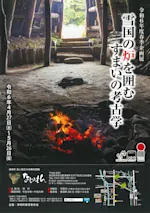 |
Back to Articles
SHARE
No comments yet