
Exhibition/event has ended.

Charcoal Equipment
Chado Research Center, Kyoto


Finished
SHARE
"Charcoal Equipment" refers to the tools required for adding charcoal to a brazier or hearth, and adjusting the fire and hot water conditions. These tools include "sumitori" (charcoal container), "haboki" (feather broom), "kan" (metal piece for handling charcoal), "hibashi" (fire chopsticks), "kogo" (incense container), "kama-shiki" (kettle rest), "haiki" (ash container), "haisaji" (ash spoon), and more. Depending on the differences between a brazier and a hearth, as well as the preferences in the Japanese tea ceremony, practitioners have enjoyed combining these tools in various ways. As indicated in the Rikyu Nanashu (seven rules of Rikyū), the teaching "charcoal should be like boiling water" has been passed down as one of the essential principles for entertaining guests, reflecting the host's expertise.
Originally, the series of actions for boiling water in the kettle was a behind-the-scenes preparation task, not meant to be observed by guests. However, when hosts started bringing out charcoal equipment and adding charcoal in front of guests, attention began to be drawn to these tools that were previously hidden from view. As a result, various charcoal equipment with elaborate designs were discovered in tandem with the development of the Japanese tea ceremony.
In this exhibition, the differences between charcoal equipment for braziers and hearths, seasonal combinations, the favorite items of successive heads of the Urasenke school, and more will be showcased. Additionally, the history of tea and charcoal will be explored, and visitors will have the opportunity to view related tea utensils and materials related to special charcoal for tea ceremonies, known as "dōgu sumi" (equipment charcoal). Take this chance to delve into the profound world of charcoal equipment.
First Period: January 7 (Sunday) to February 18 (Sunday)
Second Period: February 21 (Wednesday) to March 31 (Sunday)
Originally, the series of actions for boiling water in the kettle was a behind-the-scenes preparation task, not meant to be observed by guests. However, when hosts started bringing out charcoal equipment and adding charcoal in front of guests, attention began to be drawn to these tools that were previously hidden from view. As a result, various charcoal equipment with elaborate designs were discovered in tandem with the development of the Japanese tea ceremony.
In this exhibition, the differences between charcoal equipment for braziers and hearths, seasonal combinations, the favorite items of successive heads of the Urasenke school, and more will be showcased. Additionally, the history of tea and charcoal will be explored, and visitors will have the opportunity to view related tea utensils and materials related to special charcoal for tea ceremonies, known as "dōgu sumi" (equipment charcoal). Take this chance to delve into the profound world of charcoal equipment.
First Period: January 7 (Sunday) to February 18 (Sunday)
Second Period: February 21 (Wednesday) to March 31 (Sunday)
Schedule | Jan 7 (Sun) 2024-Mar 31 (Sun) 2024 Opening Hours Information
| ||||
|---|---|---|---|---|---|
| Fee | Adults ¥700, University Students ¥400, High School and Junior High School Students ¥300, Elementary School Students and Under free. | ||||
| Venue | Chado Research Center, Kyoto https://www.urasenke.or.jp/textc/gallery/museum/  | ||||
| Location | 682 Teranouchitate-cho, Kamigyo-ku, Kyoto-shi, Kyoto 602-0073 | ||||
| Access | 15 minute walk from exit 1 at Kuramaguchi Station on the Karasuma subway line; From Nijojo-mae Station on the Tozai subway line, take the #9 or #12 Kyoto city bus and get off at Horikawateranouchi. The venue is 1 minute walk from there. | ||||
| Related images | Click on the image to enlarge it 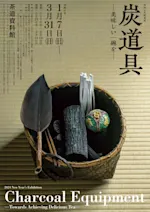 |
Back to Articles
SHARE
No comments yet