
Exhibition/event has ended.

Drawing on Stone - The Stories of Lithographs and Their Makers
The Museum of Modern Art, Wakayama


Finished
SHARE
Artists
Shouichi Ida, Odilon Redon, Henri Jean Théodore Fantin-Latour, Paul Klee, Kazuma Oda, Masanari Murai, Hideo Yoshihara et al.
Printmaking is broadly divided into relief, intaglio, stippling, and planography, with lithography being a type of planography. In other types of printing, the plate is engraved or perforated to create an uneven surface, but in lithography, the plate remains flat and is made by taking advantage of the repelling properties of water and oil. Although it may seem strange compared to other printing methods, the offset printing method, which is used for general printing, was developed from the lithograph.
The lithograph was invented by Alois Zenefelder in Munich at the end of the 18th century and was perfected around 1798 as a "chemical printing technique" that spread throughout Europe. The process was called lithography because it used natural limestone as the plate material. Initially used for the practical printing of music scores and maps, the technique was adopted by artists in the 19th century to produce prints. One of the most revolutionary aspects of lithography among printmaking techniques was its ability to print without the need for an engraver to leave any traces of his or her work on the plate. Using litho-crayons for plate making and Indian ink applied to pens and brushes, the artists pursued rich expression through the delicate and free touch of hand drawing and the soft smudging of watercolor. Collaboration with a printmaking studio that possesses superior plate-making and printing techniques has also been very fruitful.
Lithographic presses were first introduced to Japan in 1860. A Prussian envoy presented a set of printing presses to the shogunate. During the Meiji period (1868-1912), lithographic printing was introduced to Japan by instructors from Europe and the United States, and various types of practical printed materials were produced and disseminated. Later, lithographers began to be taught at art schools and other institutions, and some of them became active in national and international exhibitions.
This exhibition will introduce the fascination of lithography as well as its history, focusing on the museum's collection of prints from East and West, including masterpieces by Munch and Redon, Kazuma Oda's "Tokyo Landscape" and "Osaka Landscape," and contemporary works.
The lithograph was invented by Alois Zenefelder in Munich at the end of the 18th century and was perfected around 1798 as a "chemical printing technique" that spread throughout Europe. The process was called lithography because it used natural limestone as the plate material. Initially used for the practical printing of music scores and maps, the technique was adopted by artists in the 19th century to produce prints. One of the most revolutionary aspects of lithography among printmaking techniques was its ability to print without the need for an engraver to leave any traces of his or her work on the plate. Using litho-crayons for plate making and Indian ink applied to pens and brushes, the artists pursued rich expression through the delicate and free touch of hand drawing and the soft smudging of watercolor. Collaboration with a printmaking studio that possesses superior plate-making and printing techniques has also been very fruitful.
Lithographic presses were first introduced to Japan in 1860. A Prussian envoy presented a set of printing presses to the shogunate. During the Meiji period (1868-1912), lithographic printing was introduced to Japan by instructors from Europe and the United States, and various types of practical printed materials were produced and disseminated. Later, lithographers began to be taught at art schools and other institutions, and some of them became active in national and international exhibitions.
This exhibition will introduce the fascination of lithography as well as its history, focusing on the museum's collection of prints from East and West, including masterpieces by Munch and Redon, Kazuma Oda's "Tokyo Landscape" and "Osaka Landscape," and contemporary works.
Schedule | Apr 22 (Sat) 2023-Jul 2 (Sun) 2023 Opening Hours Information
| ||||
|---|---|---|---|---|---|
| Fee | Adults ¥520, University Students ¥300, High School Students and Under free. | ||||
| Website | https://www.momaw.jp/exhibit/2023lithography/ | ||||
| Venue | The Museum of Modern Art, Wakayama https://www.momaw.jp/language/english/ | ||||
| Location | 1-4-14 Fukiage Wakayama-shi, Wakayama 640-8137 | ||||
| Access | From Wakayamashi Station on the Nankai line, take the bus and get off at Kencho-mae. The venue is 3 minute walk from there. From the Central exit of Wakayama Station on the Hanwa or JR Kisei Main line, take the bus and get off at Kenchomae. The venue is 3 minute walk from there. | ||||
| Phone | 073-436-8690 | ||||
| Related images | Click on the image to enlarge it 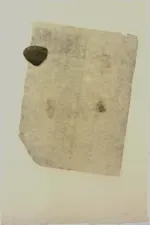 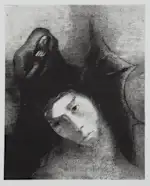 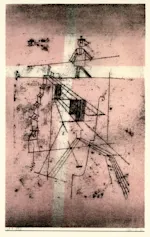  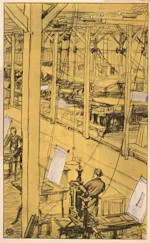 |
Back to Articles
SHARE
No comments yet