Exhibition/event has ended.

Edo Style Depicted in Ukiyo-e
Kobe Fashion Museum


Finished
SHARE
Artists
Toyokuni Utagawa, Hiroshige Utagawa, Kunisada Utagawa, Yoshitoshi Tsukioka et al.
Ukiyo-e began in the late 17th century and remained a representative art form of the Edo period, widely supported by the general public until the Meiji period (1868-1912).
In the early days, ukiyo-e mainly consisted of pictures of beautiful women and actors, but it reached its first peak in the Kansei period (the latter half of the 18th century), known for the success of Utamaro and Sharaku.
In the Bunka-Bunsei period (early 19th century), Edo's population expanded to one million, and as the culture matured, a variety of subjects appeared in ukiyo-e to attract the attention of the general public. For example, it was during this period that landscape paintings emerged against the backdrop of the travel boom, as well as subjects that overlap with our contemporary concerns, such as travel, food, and hobbies.
This exhibition focuses on the various booms that fascinated the Edo people of the time, as well as the many amusements that accompanied them in their daily lives (travel, make-up, pets, gourmet food, gardening, etc.).
The exhibition features ukiyo-e paintings by Utamaro Kitagawa, Hokusai Katsushika, Hiroshige Utagawa, Toyokuni Utagawa, Kunisada, and others who represented the late ukiyo-e world.
Food samples reproducing dishes of the time and panels introducing trivia about life in Edo will help visitors to understand the lifestyles of Edo children.
In the early days, ukiyo-e mainly consisted of pictures of beautiful women and actors, but it reached its first peak in the Kansei period (the latter half of the 18th century), known for the success of Utamaro and Sharaku.
In the Bunka-Bunsei period (early 19th century), Edo's population expanded to one million, and as the culture matured, a variety of subjects appeared in ukiyo-e to attract the attention of the general public. For example, it was during this period that landscape paintings emerged against the backdrop of the travel boom, as well as subjects that overlap with our contemporary concerns, such as travel, food, and hobbies.
This exhibition focuses on the various booms that fascinated the Edo people of the time, as well as the many amusements that accompanied them in their daily lives (travel, make-up, pets, gourmet food, gardening, etc.).
The exhibition features ukiyo-e paintings by Utamaro Kitagawa, Hokusai Katsushika, Hiroshige Utagawa, Toyokuni Utagawa, Kunisada, and others who represented the late ukiyo-e world.
Food samples reproducing dishes of the time and panels introducing trivia about life in Edo will help visitors to understand the lifestyles of Edo children.
Schedule | Jul 8 (Sat) 2023-Aug 27 (Sun) 2023 Opening Hours Information
| ||||
|---|---|---|---|---|---|
| Fee | Adults ¥1000; University Students, Seniors 65 & Over ¥500; High School Students and Under free. | ||||
| Website | https://www.fashionmuseum.jp/special/hananooedolife/?page=0 | ||||
| Venue | Kobe Fashion Museum https://www.fashionmuseum.jp/english/ | ||||
| Location | 2-9-1 Koyo-cho Naka, Higashi Nada-ku, Kobe-shi, Hyogo 658-0032 | ||||
| Access | 1 minute walk from Island Center Station on the Rokko Island line. | ||||
| Phone | 078-858-0055 | ||||
| Related images | Click on the image to enlarge it 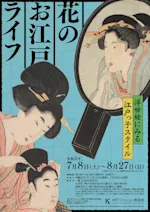 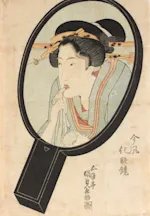 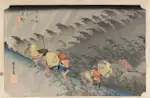 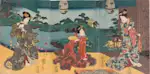 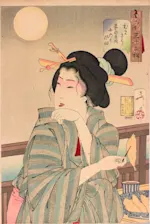 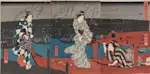 |
Traveling exhibition schedule
Back to Articles
SHARE
No comments yet