
Exhibition/event has ended.

Exhibition of Tea Ceremony Utensils: Shitsurai in the Tearoom – Seasonal Themes and Aesthetics
Kuwayama Art Museum


Finished
SHARE
"Shitsurai" originated in the Heian period, when rooms were decorated with furnishings for special occasions such as banquets. In the medieval period, a ceremonial alcove display emerged, where paintings were hung on an oshiita (the precursor to the modern tokonoma), and candlesticks, incense burners, and vases were arranged. In the early days of chanoyu (the Japanese tea ceremony), the practice of alcove decoration was refined, and even after the transition to wabi-cha, the custom of decorating the alcove with a hanging scroll and flowers was preserved.
This tea ceremony utensils exhibition envisions four tea gatherings: a "Memorial Tea Gathering" to remember the deceased, a "Celebratory Tea Gathering for an 88th Birthday," a "Lingering Tea Gathering" in October, where the last of the tea from a tea jar is used up to enjoy the subdued atmosphere, and a "First Tea of the Year Gathering" in November, also known as the "Kuchikiri Tea Gathering," where the seal of a tea jar filled with new tea is broken.
In addition to the themes of each tea gathering, the exhibition will feature a selection of tea utensils suited to the season and the size of the tea rooms, both large and small. There will be furnishings appropriate for each gathering.
This tea ceremony utensils exhibition envisions four tea gatherings: a "Memorial Tea Gathering" to remember the deceased, a "Celebratory Tea Gathering for an 88th Birthday," a "Lingering Tea Gathering" in October, where the last of the tea from a tea jar is used up to enjoy the subdued atmosphere, and a "First Tea of the Year Gathering" in November, also known as the "Kuchikiri Tea Gathering," where the seal of a tea jar filled with new tea is broken.
In addition to the themes of each tea gathering, the exhibition will feature a selection of tea utensils suited to the season and the size of the tea rooms, both large and small. There will be furnishings appropriate for each gathering.
Schedule | Sep 7 (Sat) 2024-Dec 8 (Sun) 2024 Opening Hours Information
| ||||
|---|---|---|---|---|---|
| Fee | Adults ¥800; University, High School and Junior High School Students ¥500 | ||||
| Venue | Kuwayama Art Museum http://www.kuwayama-museum.jp  | ||||
| Location | 2-12 Yamanaka-cho, Showa-ku, Nagoya-shi, Aichi 466-0828 | ||||
| Access | 8 minute walk from exit 2 at Kawana Station on the Tsurumai subway line. | ||||
| Phone | 0527635188 | ||||
| Related images | Click on the image to enlarge it 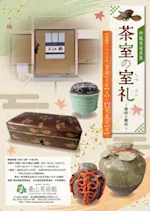 |
Back to Articles
SHARE
No comments yet