Exhibition/event has ended.
From Kiyochika to Hasui: Ukiyo-e and Shin-Hanga Woodblock Prints from the Smithsonian’s National Museum of Asian Art
 Discount


 2Posts
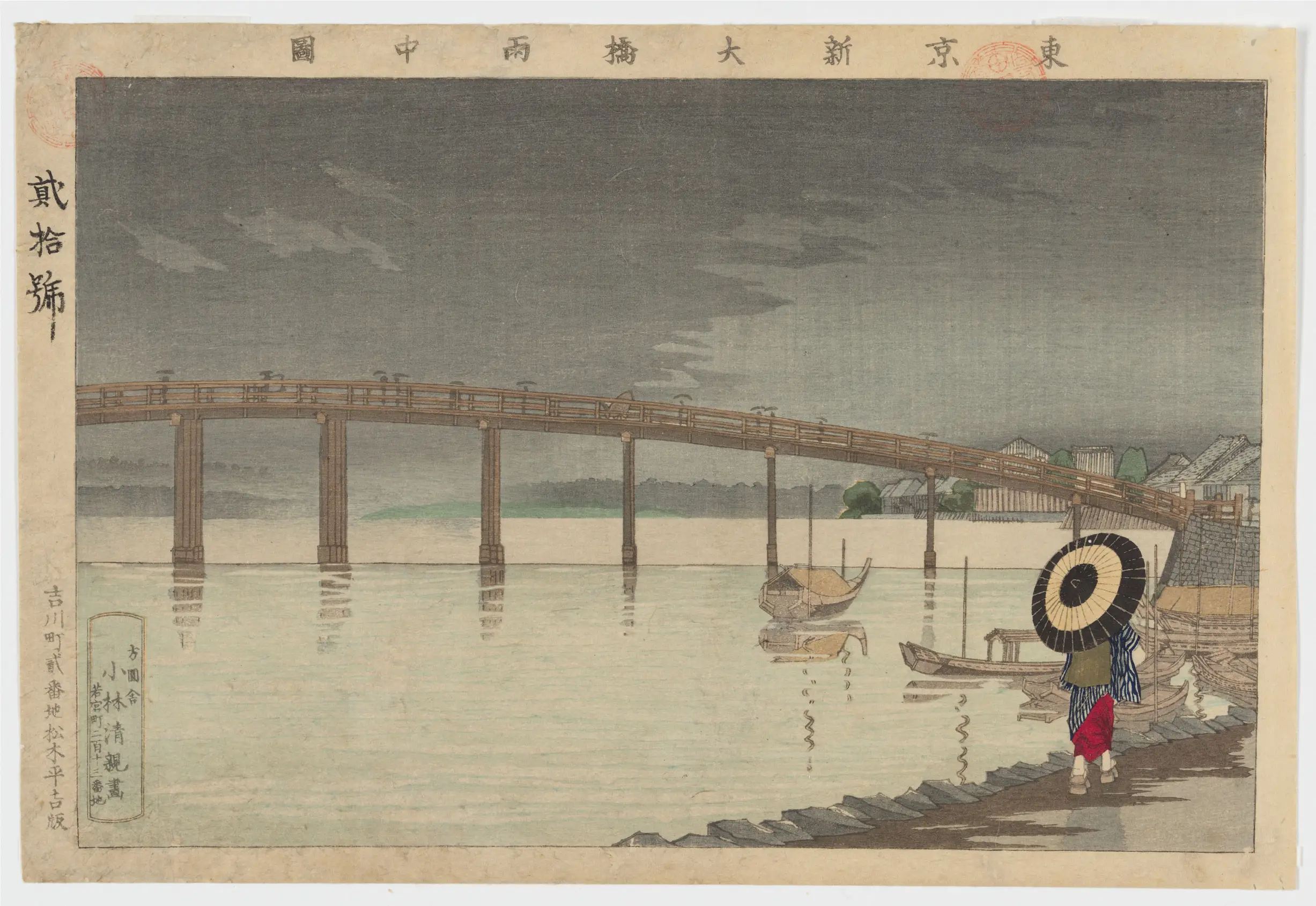
Kobayashi Kiyochika, one of the last ukiyo-e artists, began producing "Famous Places of Tokyo" in 1876 (Meiji 9), which brought about a major revolution in landscape prints of the Meiji period. His works, which depict the expressions of twilight and the appearance of light sparkling in the darkness, are called "light paintings," and their deep shadows capture the atmosphere of Edo. This perspective overlaps with the sentimentality of people who missed the disappearance of Edo's customs and the desire of photography to record them, and it distinguishes itself from the modernization-style paintings of contemporary ukiyo-e artists, who used lustrous colors to optimistically capture the city undergoing transformation as a result of the modernization movement.
Shin-hanga, which aimed to revive ukiyo-e at the end of the Meiji period, sought to discover new Japanese landscapes by inheriting not only the techniques but also the sentiment that Kiyochika and others had sought to capture in their paintings. This exhibition traces the history of landscape prints from Kiyochika to Yoshida Hiroshi and Kawase Hasui through works from the Robert O. Muller Collection at the Smithsonian National Museum of Asian Art in the United States.
Shin-hanga, which aimed to revive ukiyo-e at the end of the Meiji period, sought to discover new Japanese landscapes by inheriting not only the techniques but also the sentiment that Kiyochika and others had sought to capture in their paintings. This exhibition traces the history of landscape prints from Kiyochika to Yoshida Hiroshi and Kawase Hasui through works from the Robert O. Muller Collection at the Smithsonian National Museum of Asian Art in the United States.
Schedule | Feb 19 (Thu) 2026-May 24 (Sun) 2026 Opening Hours Information
| ||||
|---|---|---|---|---|---|
| Fee | Adults ¥2300, University Students ¥1300, High School Students ¥1000, Persons with Disability Certificates + 1 Companion free. | ||||
| MuPon | ¥100 off Up to 1 people For adults, students. No other discounts.  Download the TAB app to get a discount on entry to this event. ※Paid subscriber only | ||||
| Website | https://mimt.jp/ex_sp/shin-hanga/ | ||||
| Venue | Mitsubishi Ichigokan Museum, Tokyo http://mimt.jp/english/index.html | ||||
| Address | 2-6-2 Marunouchi, Chiyoda-ku, Tokyo 100-0005 | ||||
| Access | 3 minute walk from exit 1 at Nijubashimae Station on the Chiyoda line, 5 minute walk from the Marunouchi South exit of JR Tokyo Station, 5 minute walk from the Kokusai Forum exit of JR Yurakucho Station. |




kz
4
にけ
5