
Exhibition/event has ended.

Glenn Ligon Exhibition
Oscaar Mouligne


Finished
SHARE
Artists
Glenn Ligon
For this exhibition, which marks a decade since the artist’s work was first shown in Japan, Glenn Ligon will premiere two new bodies of work: Static paintings and a series of untitled drawings on Kozo paper. These works, which draw upon legacies of classical art and writing, modern painting, and conceptual art, are created using the artistic technique of rubbing, manifesting a distinctive physicality with different forms and materials and varying degrees of legibility, and ultimately, abstraction. Both series employ excerpts of text from James Baldwin’s 1953 essay “Stranger in the Village,” which recounts the author’s experience in a small village in Switzerland, where for many he was the first Black man they had ever seen. Ligon’s iconic use of Baldwin’s text alludes to historical, political, and social concerns with race relations and national identity in present-day America.
In his Static paintings, Ligon stenciled Baldwin’s text in white oil stick on a gesso ground, then rubbed black oil stick on the top surface of the letters. With repeated stencils and overlapping layers, the letters are increasingly smudged and illegible, creating different degrees of abstraction based on the artist’s “interventions.” Coal dust is also used in some of the works, as with most of the artist’s Stranger paintings, which the artist began in 1997.
The term “static” can refer to the absence of a coherent transmission signal on a radio or television and the resulting “noise.” Ligon’s new Static paintings appear at first glance to evoke a visual representation of such noise, but the forms that emerge on the canvas cohere into a striking composition that builds upon the idea of “improvisational abstraction,” which is central to the artist’s practice.
For his new series of drawings, Ligon has again used the technique of rubbing, a method that can be traced back to ancient art; described as frottage by Surrealist artist Max Ernst, it was regarded as “a way to probe the subconscious mind.” To create these works, the artist rubbed carbon and graphite on Kozo paper across different Stranger paintings. This process of “translation” between the two “surfaces”– the canvas and paper- together with the physical gestures of rubbing, create a constant oscillation between legibility and abstraction, accident and intention, conscious and subconscious. Such themes recur throughout the artist’s practice and are also evident in numerous sources of inspiration ranging from the works of Henri Michaux, Norman Lewis, and Jean Dubuffet, to Chinese ink rubbings, asemic writing, and concrete poetry.
Another work in the exhibition that looks to Baldwin’s text and recontextualizes it, is the new diptych painting Redacted. Ligon has crossed out each letter with an ‘X’ to create a pattern of multiplicity, but one that gradually departs from the formal structure of repetition. In addition to rendering the composition increasingly illegible and abstract, the letter/symbol ‘X’ evokes multiple meanings: the unknown; the act of correction; or a political act, for example, when Malcolm Little changed his name to Malcolm X. The intense physical presence of the artist’s hands in the works are signified by gestural interventions that prod the viewer to engage in the present moment as well as reflect on past histories.
In his Static paintings, Ligon stenciled Baldwin’s text in white oil stick on a gesso ground, then rubbed black oil stick on the top surface of the letters. With repeated stencils and overlapping layers, the letters are increasingly smudged and illegible, creating different degrees of abstraction based on the artist’s “interventions.” Coal dust is also used in some of the works, as with most of the artist’s Stranger paintings, which the artist began in 1997.
The term “static” can refer to the absence of a coherent transmission signal on a radio or television and the resulting “noise.” Ligon’s new Static paintings appear at first glance to evoke a visual representation of such noise, but the forms that emerge on the canvas cohere into a striking composition that builds upon the idea of “improvisational abstraction,” which is central to the artist’s practice.
For his new series of drawings, Ligon has again used the technique of rubbing, a method that can be traced back to ancient art; described as frottage by Surrealist artist Max Ernst, it was regarded as “a way to probe the subconscious mind.” To create these works, the artist rubbed carbon and graphite on Kozo paper across different Stranger paintings. This process of “translation” between the two “surfaces”– the canvas and paper- together with the physical gestures of rubbing, create a constant oscillation between legibility and abstraction, accident and intention, conscious and subconscious. Such themes recur throughout the artist’s practice and are also evident in numerous sources of inspiration ranging from the works of Henri Michaux, Norman Lewis, and Jean Dubuffet, to Chinese ink rubbings, asemic writing, and concrete poetry.
Another work in the exhibition that looks to Baldwin’s text and recontextualizes it, is the new diptych painting Redacted. Ligon has crossed out each letter with an ‘X’ to create a pattern of multiplicity, but one that gradually departs from the formal structure of repetition. In addition to rendering the composition increasingly illegible and abstract, the letter/symbol ‘X’ evokes multiple meanings: the unknown; the act of correction; or a political act, for example, when Malcolm Little changed his name to Malcolm X. The intense physical presence of the artist’s hands in the works are signified by gestural interventions that prod the viewer to engage in the present moment as well as reflect on past histories.
Schedule | Nov 25 (Sat) 2023-Feb 24 (Sat) 2024 Opening Hours Information
Opening Reception Nov 25 (Sat) 2023 17:00 - 19:00 | ||||
|---|---|---|---|---|---|
| Fee | Free | ||||
| Website | https://oscaarmouligne.com/exhibitions/glennligon/ | ||||
| Venue | Oscaar Mouligne https://oscaarmouligne.com/ | ||||
| Location | 1 Murasakino Higashino-cho, Kita-ku, Kyoto-shi, Kyoto 603-8232 | ||||
| Access | From Kitaoji Station on the Karasuma subway line, take the Kyoto city bus and get off at Kenkunjinja-mae. The venue is 1 minute walk from there. | ||||
| Related images | Click on the image to enlarge it 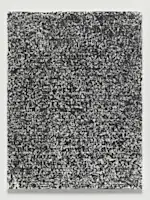 |
Back to Articles
SHARE
No comments yet