
Graphic Cube – Theater Posters From the DNP Graphic Design Archives Collection
Kyoto ddd Gallery


Starts 6/12
SHARE
Artists
Kan Akita, Kiyoshi Awazu, Ryoichi Enomoto, Osamu Fukushima, Katsuhiko Hibino, Koga Hirano, Kaoru Kasai, Luba Lukova, Holger Matthies, Masayoshi Nakajo et al.
The Graphic Cube series of exhibitions focuses on posters in the DNP Graphic Design Archives collection. By comparing the multifaceted nature of graphic design to a cube, the exhibition aims to capture the relationship between graphic design and the objects it represents, between the objects portrayed, and the relationship between the objects and the viewer, from multiple angles and in three dimensions. This exhibition, the second in the series, focuses on posters for the performing arts, including theater, dance, and opera.
Contemporary poster design dates back to France and the latter half of the 19th century. The discovery of lithographic techniques at the end of the 18th century made multicolored posters possible, and brightly colored printed posters adorned the streets of belle époque Paris. The role of many of these posters was to advertise theaters and stage performances. The performing arts were, therefore, a driving force behind contemporary poster design.
The performing arts are a temporal form of art, in that they involve the passage of a certain amount of time during which the varied elements of physical expression, music, stagecraft, lighting, and more are brought together. This essential quality is supported by their nature as something that is both a one-off and simultaneously a merging of forms. The question for designers, therefore, is how to properly condense and visualize that kind of experience on a two-dimensional surface. To do so, they must understand the world of the piece they are advertising, analyze it, and reconstruct it, ultimately producing a new expression. The events that take place upon the stage are constantly subject to change, and so a single audience member can probably only view each moment from a limited perspective. Posters, though, require that fluid, irreversible experience to be fixed in place by means of elements such as symbolic imagery, layout techniques, or typography. For designers, they came to represent a creative attempt to do so and to craft a visual expression based on an amalgamation of a story, subject, sense of space, and energy.
The development of recording technologies and video media have gradually made it easier to relive performing arts experiences unbound by time or place. In our modern age, where we can consume various types of temporal arts like these on an everyday basis, posters are no longer just a medium for spreading awareness, they record a memory of a piece of art, and lead people to their next experience. As a result, their significance is being reconsidered. We hope that this exhibition will act to provoke visitors to take a new look at the relationship between the history and essential qualities of graphic design and the performing arts.
Contemporary poster design dates back to France and the latter half of the 19th century. The discovery of lithographic techniques at the end of the 18th century made multicolored posters possible, and brightly colored printed posters adorned the streets of belle époque Paris. The role of many of these posters was to advertise theaters and stage performances. The performing arts were, therefore, a driving force behind contemporary poster design.
The performing arts are a temporal form of art, in that they involve the passage of a certain amount of time during which the varied elements of physical expression, music, stagecraft, lighting, and more are brought together. This essential quality is supported by their nature as something that is both a one-off and simultaneously a merging of forms. The question for designers, therefore, is how to properly condense and visualize that kind of experience on a two-dimensional surface. To do so, they must understand the world of the piece they are advertising, analyze it, and reconstruct it, ultimately producing a new expression. The events that take place upon the stage are constantly subject to change, and so a single audience member can probably only view each moment from a limited perspective. Posters, though, require that fluid, irreversible experience to be fixed in place by means of elements such as symbolic imagery, layout techniques, or typography. For designers, they came to represent a creative attempt to do so and to craft a visual expression based on an amalgamation of a story, subject, sense of space, and energy.
The development of recording technologies and video media have gradually made it easier to relive performing arts experiences unbound by time or place. In our modern age, where we can consume various types of temporal arts like these on an everyday basis, posters are no longer just a medium for spreading awareness, they record a memory of a piece of art, and lead people to their next experience. As a result, their significance is being reconsidered. We hope that this exhibition will act to provoke visitors to take a new look at the relationship between the history and essential qualities of graphic design and the performing arts.
Schedule | Jun 12 (Fri) 2026-Aug 19 (Wed) 2026 Opening Hours Information
| ||||
|---|---|---|---|---|---|
| Fee | Free | ||||
| Website | https://www.dnpfcp.jp/CGI/gallery/schedule/detail.cgi?l=2&t=2&seq=00000857 | ||||
| Venue | Kyoto ddd Gallery https://www.dnpfcp.jp/gallery/ddd_e/ | ||||
| Location | 3F Cocon Karasuma, 620 Suiginya-cho, Shimogyo-ku, Kyoto-shi, Kyoto 600-8411 | ||||
| Access | Direct walk from exit 2 at Shijo Station on the Karasuma subway line, Direct walk from exit 23 at Karasuma Station on the Hankyu line. | ||||
| Phone | 075-871-1480 | ||||
| Related images | Click on the image to enlarge it 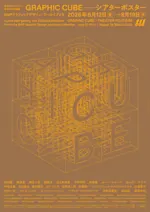 |
Back to Articles
SHARE
No comments yet