Exhibition/event has ended.

Immersive Museum Tokyo Vol. 3 Impressionism & Japonism
Bellesalle Shinjuku Minamiguchi


Finished
SHARE
The third installment of the Immersive Museum series, following "Impressionism" and "Post-Impressionism," is "Impressionism and Ukiyo-e." It is widely known that the new style of Impressionism, which brought about a revolution in Western painting, was influenced by Japanese ukiyo-e.
Ukiyo-e, woodblock prints mass-produced for the general public, featured many talented artists such as Hokusai Katsushika, Hiroshige Utagawa, and Kuniyoshi Utagawa. These prints depicted lively scenes of everyday life and natural landscapes, with bold layouts, angles, and vivid colors achieved through multi-color printing. Unlike traditional Western religious paintings, ukiyo-e were created in a different context and crossed the seas to spark a Japonism boom in Paris.
Monet and Degas incorporated the essence of ukiyo-e into their paintings, leading the Impressionist movement while reworking and adapting these influences. Post-Impressionists like Gauguin, who advocated for Synthetism, Cézanne, who paved the way for Cubism, and Van Gogh, who developed his unique style, frequently referenced ukiyo-e. In other words, one could argue that the development of Western painting from Impressionism to the present day has been significantly influenced by ukiyo-e.
In an era when information was limited, these two art forms connected across the seas. The immersive narrative that delves into the perspectives of Japanese ukiyo-e artists and Parisian painters promises to offer a new and unique art experience.
Ukiyo-e, woodblock prints mass-produced for the general public, featured many talented artists such as Hokusai Katsushika, Hiroshige Utagawa, and Kuniyoshi Utagawa. These prints depicted lively scenes of everyday life and natural landscapes, with bold layouts, angles, and vivid colors achieved through multi-color printing. Unlike traditional Western religious paintings, ukiyo-e were created in a different context and crossed the seas to spark a Japonism boom in Paris.
Monet and Degas incorporated the essence of ukiyo-e into their paintings, leading the Impressionist movement while reworking and adapting these influences. Post-Impressionists like Gauguin, who advocated for Synthetism, Cézanne, who paved the way for Cubism, and Van Gogh, who developed his unique style, frequently referenced ukiyo-e. In other words, one could argue that the development of Western painting from Impressionism to the present day has been significantly influenced by ukiyo-e.
In an era when information was limited, these two art forms connected across the seas. The immersive narrative that delves into the perspectives of Japanese ukiyo-e artists and Parisian painters promises to offer a new and unique art experience.
Schedule | Jul 10 (Wed) 2024-Oct 29 (Tue) 2024 Opening Hours Information
| ||
|---|---|---|---|
| Fee | [M-F] Adults (18+): ¥2500, Uni. & Vocational: ¥2000, High & Junior HS: ¥1500, Elem. School & younger: Free [Wknd & HOL] Adults (18 and over): 2700 yen, Uni. & Vocational: 2200 yen, High & Junior HS: ¥1700 *August 13-15 wknd & HOL rates apply. | ||
| Website | https://immersive-museum.jp/tokyo/ | ||
| Venue | Bellesalle Shinjuku Minamiguchi https://www.bellesalle.co.jp/shisetsu/shinjuku/bs_shinjuku-minamiguchi/ | ||
| Location | 3F/4F, 5-31-11 Sendagaya, Shibuya-ku, Tokyo 151-0051 | ||
| Access | 4 minute walk from the New South exit of JR Shinjuku Station. | ||
| Related images | Click on the image to enlarge it 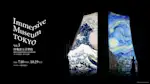 |
Back to Articles
SHARE
No comments yet