
Exhibition/event has ended.

Light and Wind in Brittany
Toyohashi City Museum of Art and History


Finished
SHARE
Brittany is a region located on a peninsula jutting out into the sea in the northwest of France. From the Campér Museum, located at the western tip of this area, paintings depicting the landscape and people of Brittany have arrived. One of the highlights of this exhibition is the opportunity to experience its rich natural environment and unique culture through the artworks.
During the Middle Ages, the Celtic Breton people migrated from the British Isles to this region and established an independent country. Even after being incorporated into the Kingdom of France, they continued to preserve their ancient traditions. With the development of the railway network in the 19th and 20th centuries, interest in distant places grew. Brittany, with its rugged coastline and wilderness, was home to modest inhabitants who maintained their distinct customs. Many painters, fascinated by the scenery different from the modernized Paris, gathered in Brittany.
Born in Paris, Theodore Gudin visited Belle-Île, which means "beautiful island" in French and depicted the powerful waves crashing against the coast. Similarly, Alexandre Séje chose rocky wilderness as his subject.
In Brittany, each region has its distinctive folk costumes. The "coiffe," a type of head covering, is one of them, and Pierre de Belay portrayed a woman wearing a "coiffe" similar to a chef's hat.
This region is important in the history of modern art, as it was where Paul Gauguin and others formed the Pont-Aven School. In this exhibition, not only works from this group but also powerful salon paintings and pieces from the "Bandes Noires" (Black Band), known for their black-themed works, are on display, offering a glimpse into various painting styles.
During the Middle Ages, the Celtic Breton people migrated from the British Isles to this region and established an independent country. Even after being incorporated into the Kingdom of France, they continued to preserve their ancient traditions. With the development of the railway network in the 19th and 20th centuries, interest in distant places grew. Brittany, with its rugged coastline and wilderness, was home to modest inhabitants who maintained their distinct customs. Many painters, fascinated by the scenery different from the modernized Paris, gathered in Brittany.
Born in Paris, Theodore Gudin visited Belle-Île, which means "beautiful island" in French and depicted the powerful waves crashing against the coast. Similarly, Alexandre Séje chose rocky wilderness as his subject.
In Brittany, each region has its distinctive folk costumes. The "coiffe," a type of head covering, is one of them, and Pierre de Belay portrayed a woman wearing a "coiffe" similar to a chef's hat.
This region is important in the history of modern art, as it was where Paul Gauguin and others formed the Pont-Aven School. In this exhibition, not only works from this group but also powerful salon paintings and pieces from the "Bandes Noires" (Black Band), known for their black-themed works, are on display, offering a glimpse into various painting styles.
Schedule | Mar 1 (Fri) 2024-Apr 7 (Sun) 2024 Opening Hours Information
| ||||
|---|---|---|---|---|---|
| Fee | Adults ¥1200; High School, Junior High and Elementary School Students ¥600 | ||||
| Website | https://toyohashi-bihaku.jp/bihaku03/brittany/ | ||||
| Venue | Toyohashi City Museum of Art and History https://toyohashi-bihaku.jp/toyohashi-city-museum-art-and-history/ | ||||
| Location | 3-1 Imahashi-cho, Toyohashi-shi, Aici 440-0801 | ||||
| Access | From the South exit of JR Toyohashi Station, take the Streetcar and gets off at Toyohashi-Koen-mae Station. The venue is 3 minute walk from there. | ||||
| Related images | Click on the image to enlarge it 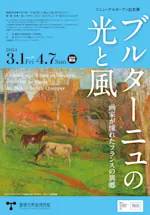 |
Traveling exhibition schedule
Back to Articles
SHARE
No comments yet