Exhibition/event has ended.

Minoru Kawabata: Between Color and Form — Tokyo / New York
Ichion Contemporary


Finished
SHARE
Artists
Minoru Kawabata
ICHION CONTEMPORARY is pleased to present an exhibition of Minoru Kawabata(1911 – 2001) , a Japanese painter who established a distinctive artistic vision while working in New York at the height of Abstract Expressionism, standing at the intersection of Eastern and Western art. Born in Tokyo, Kawabata studied oil painting under Fujishima Takeji at the Tokyo School of Fine Arts. In 1939 he traveled to Paris, but with the outbreak of the Second World War he was forced to relocate to New York, and in 1941 to return to Japan. This experience of living through war and displacement left a lasting imprint on his work, instilling in it both tension and originality.
In postwar Japan, Kawabata moved away from figuration to explore the fundamental relationship between color and form. In 1953 he co-founded the Japan Abstract Art Club with Jirō Yoshihara and others, and in 1956 participated in the seminal exhibition World: Art Today organized by Michel Tapié. These activities positioned him as a central figure in the postwar avant-garde and connected Japanese abstraction to international currents.
Returning to the United States in 1958, Kawabata based himself in New York, where Abstract Expressionism was in full bloom. He signed with Betty Parsons Gallery—known for launching Jackson Pollock and other leading figures—and received awards at the Guggenheim International Exhibition, gaining international recognition. Absorbing the scale and materiality of American painting while maintaining a Japanese sensibility for brushwork and spatial nuance, Kawabata created a unique artistic language that bridged cultural boundaries.
This exhibition surveys his practice from the late 1950s to the 1990s, tracing experiments in calligraphic stroke, explorations of large-scale compositional structures, the integration of color and form in the 1970s, and the refined visual language of his later years. Throughout, his work reveals a lifelong pursuit of the possibilities that lie “between color and form,” offering an experience that appeals not only to the intellect but also to intuition and the senses.Kawabata’ s oeuvre stands as the achievement of a Japanese artist who lived through war yet forged his own language on the international stage. We hope this exhibition will allow visitors to rediscover the significance of his art.
In postwar Japan, Kawabata moved away from figuration to explore the fundamental relationship between color and form. In 1953 he co-founded the Japan Abstract Art Club with Jirō Yoshihara and others, and in 1956 participated in the seminal exhibition World: Art Today organized by Michel Tapié. These activities positioned him as a central figure in the postwar avant-garde and connected Japanese abstraction to international currents.
Returning to the United States in 1958, Kawabata based himself in New York, where Abstract Expressionism was in full bloom. He signed with Betty Parsons Gallery—known for launching Jackson Pollock and other leading figures—and received awards at the Guggenheim International Exhibition, gaining international recognition. Absorbing the scale and materiality of American painting while maintaining a Japanese sensibility for brushwork and spatial nuance, Kawabata created a unique artistic language that bridged cultural boundaries.
This exhibition surveys his practice from the late 1950s to the 1990s, tracing experiments in calligraphic stroke, explorations of large-scale compositional structures, the integration of color and form in the 1970s, and the refined visual language of his later years. Throughout, his work reveals a lifelong pursuit of the possibilities that lie “between color and form,” offering an experience that appeals not only to the intellect but also to intuition and the senses.Kawabata’ s oeuvre stands as the achievement of a Japanese artist who lived through war yet forged his own language on the international stage. We hope this exhibition will allow visitors to rediscover the significance of his art.
Schedule | Sep 16 (Tue) 2025-Oct 31 (Fri) 2025 Opening Hours Information
| ||||
|---|---|---|---|---|---|
| Fee | Free | ||||
| Venue | Ichion Contemporary https://ichion-contemporary.com/  | ||||
| Location | 9-7 Nozaki-cho, Kita-ku, Osaka-shi, Osaka 530-0055 | ||||
| Access | 6 minute walk from exit 5 at Ogimachi Station on the Sakaisuji subway line, 8 minute walk from exit 4 at Higashi-umeda Station on the Tanimachi subway line, 10 minute walk from JR Osaka Station. | ||||
| Phone | 06-6364-1111 | ||||
| Related images | Click on the image to enlarge it 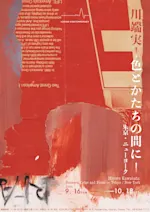 |
Back to Articles
SHARE
No comments yet