

Myth, Allegory, and Celebration: Print Works and the Courts of Italy from the Renaissance to the Baroque
National Museum Of Western Art, Tokyo


Starts 6/30
SHARE
Amid renewed interest in classical antiquity, under the influence of humanism, depictions of deities from Greek and Roman mythology began to permeate the court culture of Renaissance Italy. As classical stories from the past were given a humanistic reading and reinterpreted, they took on allegorical and political overtones, particularly in the context of court rituals. Using approximately 50 prints from the museum’s collection, this exhibition examines the treatment of mythological and allegorical imagery and the role of visual records of court celebrations from the Renaissance to the Baroque.
As copper-plate printing gained ground in Italy in the second half of the 15th century, images of ancient myths and symbolic subjects began to circulate widely. During the next century, prints based on works by Raphael and other Renaissance masters enjoyed great popularity, especially in Rome. Many compositions assumed a familiarity with mythological references and allegorical themes and were primarily targeted at viewers and collectors versed in humanist culture. The engraver Marcantonio Raimondi was a leader in the field.
At the same time, decorative prints produced for residential interiors were adopted by artists and craftsmen as visual references, and the medium took on the important role of recording court celebrations. In Medici Florence, prints of festive scenes combining images of the monarch, coats of arms, and mythological and allegorical themes proclaimed the splendor of court culture and the city’s vigor—visual means of spreading the word to other royal courts.
The exhibition’s secular imagery created within the intellectual and aesthetic currents of Italian court culture includes: early copper engravings featuring classical motifs; works by Andrea Mantegna inspired by ancient sculpture; reproductive prints, decorative patterns, and designs for crafts developed in Rome and Mantua; and depictions of celebrations by Jacques Callot and other court artists. Visitors are invited to observe how mythology, allegory, and celebration intertwine and unfold in these print works.
As copper-plate printing gained ground in Italy in the second half of the 15th century, images of ancient myths and symbolic subjects began to circulate widely. During the next century, prints based on works by Raphael and other Renaissance masters enjoyed great popularity, especially in Rome. Many compositions assumed a familiarity with mythological references and allegorical themes and were primarily targeted at viewers and collectors versed in humanist culture. The engraver Marcantonio Raimondi was a leader in the field.
At the same time, decorative prints produced for residential interiors were adopted by artists and craftsmen as visual references, and the medium took on the important role of recording court celebrations. In Medici Florence, prints of festive scenes combining images of the monarch, coats of arms, and mythological and allegorical themes proclaimed the splendor of court culture and the city’s vigor—visual means of spreading the word to other royal courts.
The exhibition’s secular imagery created within the intellectual and aesthetic currents of Italian court culture includes: early copper engravings featuring classical motifs; works by Andrea Mantegna inspired by ancient sculpture; reproductive prints, decorative patterns, and designs for crafts developed in Rome and Mantua; and depictions of celebrations by Jacques Callot and other court artists. Visitors are invited to observe how mythology, allegory, and celebration intertwine and unfold in these print works.
Schedule | Jun 30 (Tue) 2026-Oct 12 (Mon) 2026 Opening Hours Information
| ||||
|---|---|---|---|---|---|
| Fee | Adults ¥500; University Students ¥250; High School Students and Under, Seniors 65 & Over, Persons with Disability Certificates + 1 Companion free. | ||||
| Website | https://www.nmwa.go.jp/en/exhibitions/2026italy.html | ||||
| Venue | National Museum Of Western Art, Tokyo https://www.nmwa.go.jp/en/ | ||||
| Location | 7-7 Ueno-Koen, Taito-ku, Tokyo 110-0007 | ||||
| Access | 1 minute walk from the Koen exit of JR Ueno Station, 7 minute walk from the Main exit of Keisei Ueno Station on the Keisei line. | ||||
| Phone | 050-5541-8600 (Hello Dial) | ||||
| Related images | Click on the image to enlarge it 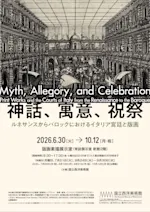 |
Back to Articles
SHARE
No comments yet