
Exhibition/event has ended.

Taro Okamoto in Tokoname 1952 : The Tile Murals and Ceramic Sculpture that Began in Tokoname in 1952
INAX Museums


Finished
SHARE
Artists
Taro Okamoto
The year 1952 was an important year for Taro Okamoto and ceramics, and the town of Tokoname.
Okamoto encountered ceramic tile in 1951 when he remodeled the bathroom and kitchen of his home in Setagaya, Tokyo. The next year Okamoto, although known as an oil painter, traveled to Tokoname to create works using colorful industrial mosaic tiles, which he then showed in major exhibitions. These works were quite surprising to his audience, both art critics and the general public, and Okamoto's new work began to attract attention.
A huge mosaic tile mural titled "Creation" by Okamoto was installed in the underground passage at Takashimaya Department Store in Nihombashi, Tokyo. This was a pioneering work of "public art" in Japan, exposing common people to art daily.
1952 was also the year in which Okamoto first applied himself to creating works of ceramic sculpture. The year before, he had been greatly impressed by Jomon earthenware at the Tokyo National Museum, publishing a magazine article called "Thoughts on Jomon Earthenware." In 1952 he created three works, each titled "Face." These were ceramic sculptures of human figures with their arms spread out, prescient of the "Tower of the Sun" he created 18 years later for the Osaka Expo. One of these works now marks the grave of Taro's father, Ippei.
This exhibition focuses on the year 1952 in Okamoto's career, introducing works he created that year at the Ina Seito (present-day LIXIL) factory in Tokoname.
Okamoto encountered ceramic tile in 1951 when he remodeled the bathroom and kitchen of his home in Setagaya, Tokyo. The next year Okamoto, although known as an oil painter, traveled to Tokoname to create works using colorful industrial mosaic tiles, which he then showed in major exhibitions. These works were quite surprising to his audience, both art critics and the general public, and Okamoto's new work began to attract attention.
A huge mosaic tile mural titled "Creation" by Okamoto was installed in the underground passage at Takashimaya Department Store in Nihombashi, Tokyo. This was a pioneering work of "public art" in Japan, exposing common people to art daily.
1952 was also the year in which Okamoto first applied himself to creating works of ceramic sculpture. The year before, he had been greatly impressed by Jomon earthenware at the Tokyo National Museum, publishing a magazine article called "Thoughts on Jomon Earthenware." In 1952 he created three works, each titled "Face." These were ceramic sculptures of human figures with their arms spread out, prescient of the "Tower of the Sun" he created 18 years later for the Osaka Expo. One of these works now marks the grave of Taro's father, Ippei.
This exhibition focuses on the year 1952 in Okamoto's career, introducing works he created that year at the Ina Seito (present-day LIXIL) factory in Tokoname.
Schedule | Jan 14 (Sat) 2023-Mar 14 (Tue) 2023 Opening Hours Information
| ||||
|---|---|---|---|---|---|
| Fee | Adults ¥700, University and High School Students ¥500, Junior High and Elementary School Students ¥250 | ||||
| Website | https://livingculture.lixil.com/en/topics/ilm/tarookamoto-tokoname1952/ | ||||
| Venue | INAX Museums https://livingculture.lixil.com/en/ilm/ | ||||
| Location | 1-130 Okuei-cho, Tokoname-shi, Aichi 479-8586 | ||||
| Access | From Tokoname Station on the Meitetsu Tokoname and Kuko lines, take the Chita bus towards Chita Handa Station and get off at INAX Museums. The venue is 2 minute walk from there. | ||||
| Phone | 0569-34-8282 | ||||
| Related images | Click on the image to enlarge it 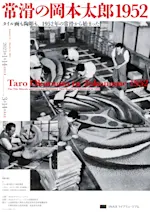 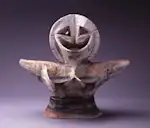 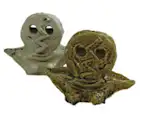  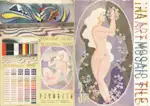 |
Back to Articles
SHARE
No comments yet