
Exhibition/event has ended.

The Camera on Two Legs - Issei Suda: Landscapes of Japan, Margins of the City
Fujifilm Square


Finished
SHARE
Artists
Issei Suda
Issei Suda (1940–2019) is internationally acclaimed for snapshots that capture an offbeat world concealed inside everyday life. His photographic expression has a strong impact on the viewer with its matter-of-fact yet mysterious exploration of things in a body of work that includes the early masterpiece Fushi Kaden. Even after he passed away in 2019, a series of posthumous photo exhibitions and publications have opened up opportunities to reevaluate his work at home and abroad.
This exhibition presents about thirty newly printed color photographs carefully selected from Suda's 1986 exhibition, Landscape of Japan, Margins of the City, at the Fuji Photo Salon Professional Space (Ginza, Tokyo), the predecessor of Fujifilm Square. An unsung masterpiece, the exhibition features mysterious scenes across Japan from his own Kanda neighborhood in Tokyo to Ueno and Asakusa, as well as Karuizawa and Hakone. The images were captured between 1982 and 1986 using a 6x6 medium format camera loaded with color-positive film.
What Suda saw through his lens in each of these places is not the usual beautiful landscape, but unremarkable sights and moments that have been pushed to the margins. However, the images that he picked out are filled with a sense of tension that appears to expose the reverse side of familiar things, the true nature concealed deep within. At the same time, the images reveal the essence of photography as an expression of personal visual experience.
Thinking about photography around the clock, Suda kept taking pictures as he walked the streets, never letting go of his camera even for an instant, shamelessly and reflexively pressing the shutter. He did not look like a professional photographer, but like someone possessed by photography, someone whose whole body had become a camera. He had become “a camera on two legs.”
Venue: Photo History Museum
This exhibition presents about thirty newly printed color photographs carefully selected from Suda's 1986 exhibition, Landscape of Japan, Margins of the City, at the Fuji Photo Salon Professional Space (Ginza, Tokyo), the predecessor of Fujifilm Square. An unsung masterpiece, the exhibition features mysterious scenes across Japan from his own Kanda neighborhood in Tokyo to Ueno and Asakusa, as well as Karuizawa and Hakone. The images were captured between 1982 and 1986 using a 6x6 medium format camera loaded with color-positive film.
What Suda saw through his lens in each of these places is not the usual beautiful landscape, but unremarkable sights and moments that have been pushed to the margins. However, the images that he picked out are filled with a sense of tension that appears to expose the reverse side of familiar things, the true nature concealed deep within. At the same time, the images reveal the essence of photography as an expression of personal visual experience.
Thinking about photography around the clock, Suda kept taking pictures as he walked the streets, never letting go of his camera even for an instant, shamelessly and reflexively pressing the shutter. He did not look like a professional photographer, but like someone possessed by photography, someone whose whole body had become a camera. He had become “a camera on two legs.”
Venue: Photo History Museum
Schedule | Sep 29 (Thu) 2022-Dec 28 (Wed) 2022 Opening Hours Information
| ||||
|---|---|---|---|---|---|
| Fee | Free | ||||
| Website | https://fujifilmsquare.jp/en/exhibition/220929_05.html | ||||
| Venue | Fujifilm Square http://fujifilmsquare.jp/en/ | ||||
| Location | 1F West, Tokyo Midtown, 9-7-3 Akasaka, Minato-ku, Tokyo 107-0052 | ||||
| Access | Direct walk from exit 8 at Roppongi Station on the Toei Oedo or Hibiya line, 5 minute walk from exit 3 at Nogizaka Station on the Chiyoda line. | ||||
| Phone | 03-6271-3350 | ||||
| Related images | Click on the image to enlarge it 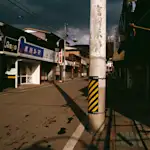 |
Back to Articles
SHARE
No comments yet