
Exhibition/event has ended.

The Finest of Kutani Reds - The Exquisite World of Miyamotoya Kiln and Master Painter, Iidaya Hachiroemon
Tomakomai City Museum


Finished
SHARE
Kutani Reds refer to a style of Kutani ware characterized by intricate red and gold detailed painting, giving it a vibrant and luxurious appearance. The technique of Kutani Reds, which originated from Song Dynasty China, was introduced to Japan during the Edo period. In Kutani ware, the Red style evolved through the early Edo period's Old Kutani and was perfected at the Miyamoto kiln of the Saiko Kutani (revitalized Kutani), established in Kaga City, Ishikawa Prefecture (1832–1859). The Miyamoto kiln's elaborate and splendid Aka-e pieces eventually led to the birth and development of export Kutani ware, known worldwide during the Meiji period as "Japan Kutani."
Miyamoto kiln's Kutani Reds are distinguished by "aka-e saibyō" (meticulous red painting) using a dark, blood-like red (commonly called "chi-aka") for detailed patterns and employing overglaze enamels other than red along with gold decoration. Some designs were inspired by motifs from "Fangshi Mopu," a Chinese ink motif collection from the Ming Dynasty, showcasing the potters' skill and cultured expression. Particularly, the chief painter, Hachiroemon Iidaya (1801–1848), was renowned for his exceptional aka-e saibyō technique, which led to the Miyamoto kiln also being known as "Iidaya kiln."
Due to the lengthy time required for their creation, Miyamoto kiln's works are extremely rare, and they have never been collectively exhibited nationwide. This exhibition, with the cooperation of the Ishikawa Prefecture Kutani Ware Art Museum, focuses on the precious works of the Miyamoto kiln's painter Hachiroemon Iidaya, offering a glimpse into the splendid world of late Edo period "Kutani Reds."
Miyamoto kiln's Kutani Reds are distinguished by "aka-e saibyō" (meticulous red painting) using a dark, blood-like red (commonly called "chi-aka") for detailed patterns and employing overglaze enamels other than red along with gold decoration. Some designs were inspired by motifs from "Fangshi Mopu," a Chinese ink motif collection from the Ming Dynasty, showcasing the potters' skill and cultured expression. Particularly, the chief painter, Hachiroemon Iidaya (1801–1848), was renowned for his exceptional aka-e saibyō technique, which led to the Miyamoto kiln also being known as "Iidaya kiln."
Due to the lengthy time required for their creation, Miyamoto kiln's works are extremely rare, and they have never been collectively exhibited nationwide. This exhibition, with the cooperation of the Ishikawa Prefecture Kutani Ware Art Museum, focuses on the precious works of the Miyamoto kiln's painter Hachiroemon Iidaya, offering a glimpse into the splendid world of late Edo period "Kutani Reds."
Schedule | Jun 29 (Sat) 2024-Aug 25 (Sun) 2024 Opening Hours Information
| ||||
|---|---|---|---|---|---|
| Fee | Adults ¥600, University and High School Students ¥400, Junior High School Students and Under free. | ||||
| Website | https://www.city.tomakomai.hokkaido.jp/hakubutsukan/tenrankai/akae.html | ||||
| Venue | Tomakomai City Museum https://www.city.tomakomai.hokkaido.jp/hakubutsukan/ | ||||
| Location | 3-9-7 Suehiro-cho, Tomakomai-shi, Hokkaido 053-0011 | ||||
| Access | 20 minute walk from the South exit of Tomakomai Station on the Muroran Main and Hidaka Main lines; From the South exit of JR Tomakomai Station, take the Hokkaido Chuo bus and get off at Idemitsu Culture Park. The venue is 5 minute walk from there. | ||||
| Phone | 0144-35-2550 | ||||
| Related images | Click on the image to enlarge it 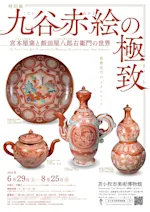 |
Back to Articles
SHARE
No comments yet