
Things and the Body
National Museum of Japanese History


Until May 31
SHARE
A wide variety of forms and shapes emerged in the prehistoric societies of the Japanese archipelago, spanning the Jomon, Yayoi, and Kofun periods. Everyday tools and symbolic objects alike had their shapes, colors, and sizes determined by their relationship with the human body. This is true of Jomon pottery and clay figurines, as well as the ornaments of the Kofun period.
In recent years, the mutual influence between people and objects has attracted attention. This understanding views objects as influencing and changing through the interaction of people and objects, while people create objects, and objects shape people's actions and minds. However, simply appreciating objects does not go beyond the understanding that they are creations of human hands.
Therefore, we will create an exhibition utilizing 3D data, providing a space that allows access to objects with a physical sensation close to that of the past. We have prepared exhibitions with themes such as "Giving form to the invisible," "The world of vessels," and "Armor and the body." Why this shape? Why these colors? Why this size? We want to approach these questions through the physical sensations of the people who "create" and "use" these objects.
Furthermore, objects that endure through the ages allow future generations to recognize the past and influence their actions and consciousness. We will also introduce other roles of objects, such as mementos, memorials, and tributes.
The aim of this exhibition is to explore various "objects" throughout history in relation to the human "body." It is positioned as a place to experience the research efforts and results that explore the interrelationship between form and human consciousness and behavior.
In recent years, the mutual influence between people and objects has attracted attention. This understanding views objects as influencing and changing through the interaction of people and objects, while people create objects, and objects shape people's actions and minds. However, simply appreciating objects does not go beyond the understanding that they are creations of human hands.
Therefore, we will create an exhibition utilizing 3D data, providing a space that allows access to objects with a physical sensation close to that of the past. We have prepared exhibitions with themes such as "Giving form to the invisible," "The world of vessels," and "Armor and the body." Why this shape? Why these colors? Why this size? We want to approach these questions through the physical sensations of the people who "create" and "use" these objects.
Furthermore, objects that endure through the ages allow future generations to recognize the past and influence their actions and consciousness. We will also introduce other roles of objects, such as mementos, memorials, and tributes.
The aim of this exhibition is to explore various "objects" throughout history in relation to the human "body." It is positioned as a place to experience the research efforts and results that explore the interrelationship between form and human consciousness and behavior.
Schedule Now in session | Apr 21 (Tue) 2026-May 31 (Sun) 2026 27 days left Opening Hours Information
| ||||
|---|---|---|---|---|---|
| Fee | Adults ¥900; University Students ¥500; High School Students and Under, Persons with Disability Certificates + Companion free. | ||||
| Website | https://www.rekihaku.ac.jp/event/2026_exhibitions_tokushu_mono.html | ||||
| Venue | National Museum of Japanese History https://www.rekihaku.ac.jp/english | ||||
| Location | 117 Jonai-cho, Sakura-shi, Chiba 285-8502 | ||||
| Access | 15 minute walk from the South exit of Keisei Sakura Station on the Keisei Main line; From the South exit of JR Sakura Station, take the Chiba Green bus towards Tamachi Shako and get off at National Museum of History and Folklore. The venue is near from there. | ||||
| Phone | 050-5541-8600 (Hello Dial) | ||||
| Related images | Click on the image to enlarge it 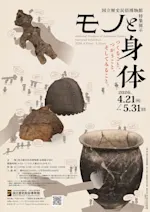 |
Back to Articles
SHARE
No comments yet