Exhibition/event has ended.

Collection Reflection and Inversion
Toyota Municipal Museum of Art


Finished
SHARE
Artists
Giuseppe Penone, Tadasu Yamamoto, Kazuo Okazaki, Hiroshi Sugimoto, Lee Ufan et al.
Reflection of light is an essential phenomenon for seeing. This is because the colors and textures of objects (that do not emit light themselves) are actually the result of differences in the way they are reflected. Works of art are no exception. Different materials and techniques produce different reflections of light, giving the work a variety of expressions. Mirrors, a prime example of light-reflecting objects, have been used in artwork since ancient times. Mirrors in paintings reflect the artist's image and surroundings, and when used as a material for artwork, mirrors bring the viewer and the surrounding environment into the work. Metaphorically, a work of art can also be compared to a mirror in the sense that it reveals the state of the world.
On the other hand, there are also works such as castings, prints, and photographs, which are presented to us through a process of inversion of form, figure, or image. Such works have a definite presence, but at the same time, they also point to things that are not present or things that once were. Depending on your point of view, it could be said that presence and absence are paired. Or, by inverting the viewpoints of front and back, figure and ground, emptiness and reality, micro and macro, the work may open the viewer's imagination to areas normally overlooked.
Michelangelo Pistoletto uses mirrors in his works to reflect the viewer's image, and Kazuo Okazaki inverts the shape of things and ideas. Giuseppe Penone, who confronts nature and the body and makes extensive use of reflections and inversions, and others will exhibit works, primarily sculptures and photographs, that question the nature of making and seeing.
On the other hand, there are also works such as castings, prints, and photographs, which are presented to us through a process of inversion of form, figure, or image. Such works have a definite presence, but at the same time, they also point to things that are not present or things that once were. Depending on your point of view, it could be said that presence and absence are paired. Or, by inverting the viewpoints of front and back, figure and ground, emptiness and reality, micro and macro, the work may open the viewer's imagination to areas normally overlooked.
Michelangelo Pistoletto uses mirrors in his works to reflect the viewer's image, and Kazuo Okazaki inverts the shape of things and ideas. Giuseppe Penone, who confronts nature and the body and makes extensive use of reflections and inversions, and others will exhibit works, primarily sculptures and photographs, that question the nature of making and seeing.
Schedule | Oct 15 (Sat) 2022-Jan 29 (Sun) 2023 Opening Hours Information
| ||||
|---|---|---|---|---|---|
| Fee | Adults ¥300, University and High School Students ¥200, Junior High School Students and Under free. | ||||
| Website | https://www.museum.toyota.aichi.jp/en/exhibition/collection-reflection-and-inversion/ | ||||
| Venue | Toyota Municipal Museum of Art https://www.museum.toyota.aichi.jp/en/?en | ||||
| Location | 8-5-1 Kozakahonmachi, Toyota-shi, Aichi 471-0034 | ||||
| Access | 15 minute walk from the East exit of Toyotashi Station on the Meitetsu Toyota line, 15 minute walk from Shin-toyota Station on the Aichi Loop line. | ||||
| Phone | 0565-34-6610 | ||||
| Related images | Click on the image to enlarge it  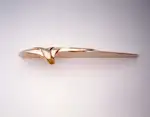 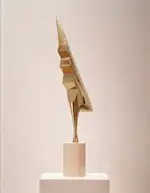  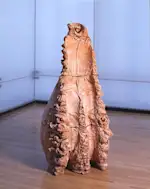 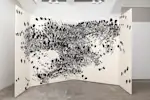 |
Back to Articles
SHARE
No comments yet