

Osamu Mori "Giga"
Parcel


Until Aug 23
SHARE
Artists
Osamu Mori
Kilobytes were once considered large. Then came megabytes, gigabytes, and now, few people can truly grasp whether even a terabyte is "large" with any visceral sense of scale. While the units of measurement continue to be updated, the tangible sensation of "immensity" is quietly slipping away. The word "giga" no longer signifies vastness; it is merely consumed as an everyday metric. In this era of automated replication and endless multiplication, a similar paralysis afflicts our sense of beauty and form. It is from this very inquiry that sculptor Osamu Mori’s new solo exhibition, "giga", departs.
One of the defining characteristics of Mori’s practice lies in his improvisation and his profound engagement with materiality. If Western sculpture attempts to extract the body from the outside as an "object" of expression, and Eastern Buddhist sculpture attempts to raise the body from the inside as a spiritual medium (yorishiro), for Mori, the body is neither. It is something that is carved and revealed only in direct resonance with the natural shapes and characteristics inherent in the material. Starting from the medium's existing form and mass, his process gradually twists and subverts pre-established harmonies as it moves toward the final piece, yielding entirely unique forms for every work. Furthermore, Mori has continually questioned the nature of scale itself, creating pieces ranging from palm-sized objects to massive works approaching four meters in height. As the artist states: "The relationship between humanity and every era manifests as 'scale.' 'Scale' is an element that connects human sensation with the contemporary world." In 2024, he issued his "Gigantification Manifesto" (Kyodaika Sengen) during his solo exhibition at the Rokuzan Art Museum in Nagano,
and he is currently undertaking the production of works exceeding five meters.
This exhibition will unveil his largest work to date. Utilizing more than twenty pieces of timber from trees over 100 years old,
this new sculpture—crafted to dimensions approaching those of the Statue of Liberty situated in Odaiba—serves as the
culmination of the series initiated by his manifesto. The (American-style) Statue of Liberty, which exists in multiple official and unofficial iterations worldwide, embodies "freedom" through its crown, torch, shackles, and tablet. Yet, the goddess herself remains nameless, standing with a stoic, expressionless face. This statue—which anyone can replicate simply by imitating its costume and symbols—can be seen as a symbol for the confusion of beauty in an age where the boundaries between original and copy have dissolved. This state of being connects fundamentally with Mori’s practice, which continues to question the essence of form through the lens of his "Gigantification Manifesto."
In addition to the monumental wood carving, the exhibition will concurrently feature new works exploring the theme of the "uncopyable accumulation of time." These pieces utilize materials carrying their own distinct histories, including anomalous
wood, stalactites, and lead-based metalworks. In an era where uniform beauty no longer exists and all forms endlessly multiply, Mori re-interrogates the core of his medium: "What is beauty, who is it for, and how is it demonstrated?"
One of the defining characteristics of Mori’s practice lies in his improvisation and his profound engagement with materiality. If Western sculpture attempts to extract the body from the outside as an "object" of expression, and Eastern Buddhist sculpture attempts to raise the body from the inside as a spiritual medium (yorishiro), for Mori, the body is neither. It is something that is carved and revealed only in direct resonance with the natural shapes and characteristics inherent in the material. Starting from the medium's existing form and mass, his process gradually twists and subverts pre-established harmonies as it moves toward the final piece, yielding entirely unique forms for every work. Furthermore, Mori has continually questioned the nature of scale itself, creating pieces ranging from palm-sized objects to massive works approaching four meters in height. As the artist states: "The relationship between humanity and every era manifests as 'scale.' 'Scale' is an element that connects human sensation with the contemporary world." In 2024, he issued his "Gigantification Manifesto" (Kyodaika Sengen) during his solo exhibition at the Rokuzan Art Museum in Nagano,
and he is currently undertaking the production of works exceeding five meters.
This exhibition will unveil his largest work to date. Utilizing more than twenty pieces of timber from trees over 100 years old,
this new sculpture—crafted to dimensions approaching those of the Statue of Liberty situated in Odaiba—serves as the
culmination of the series initiated by his manifesto. The (American-style) Statue of Liberty, which exists in multiple official and unofficial iterations worldwide, embodies "freedom" through its crown, torch, shackles, and tablet. Yet, the goddess herself remains nameless, standing with a stoic, expressionless face. This statue—which anyone can replicate simply by imitating its costume and symbols—can be seen as a symbol for the confusion of beauty in an age where the boundaries between original and copy have dissolved. This state of being connects fundamentally with Mori’s practice, which continues to question the essence of form through the lens of his "Gigantification Manifesto."
In addition to the monumental wood carving, the exhibition will concurrently feature new works exploring the theme of the "uncopyable accumulation of time." These pieces utilize materials carrying their own distinct histories, including anomalous
wood, stalactites, and lead-based metalworks. In an era where uniform beauty no longer exists and all forms endlessly multiply, Mori re-interrogates the core of his medium: "What is beauty, who is it for, and how is it demonstrated?"
Schedule Now in session | Jul 11 (Sat) 2026-Aug 23 (Sun) 2026 8 days left Opening Hours Information
Opening Reception Jul 10 (Fri) 2026 18:00 - 21:00 | ||||
|---|---|---|---|---|---|
| Fee | Free | ||||
| Website | https://parceltokyo.jp/exhibition/giga/ | ||||
| Venue | Parcel http://parceltokyo.jp/ | ||||
| Location | 1F DDD hotel, 2-2-1 Nihombashi, Bakurocho, Chuo-ku, Tokyo 103-0002 | ||||
| Access | 1 minute walk from exit C4 at Bakurocho Station on the JR Sobu line, 5 minute walk from the East exit of Asakusa-bashi Station on the JR Chuo Sobu line, 5 minute walk from exit A2 at Asakusa-bashi Station on the Toei Asakusa line. | ||||
| Related images | Click on the image to enlarge it 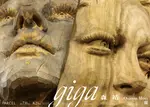 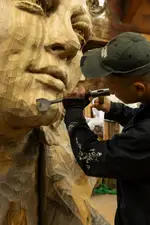 |
Back to Articles
SHARE
homei