
Exhibition/event has ended.

Paris 1900 avec Toulouse-Lautrec et la Belle Epoque
Oita Art Museum


Finished
SHARE
Artists
Henri de Toulouse-Lautrec
"The Belle Époque" ("Beautiful Era", "Golden Age"). It was a period from the late 19th century to the early 20th century when Paris, against the backdrop of technological innovation and economic development, grew into one of the world's leading metropolises, shining brightly as the "City of Light" and the "City of Art", radiating glamorous and captivating charm. During the milestone of the century, the 1900 World's Fair, Paris reached the peak of celebration, where modernization advanced with the spread of electricity, including the introduction of the subway and moving sidewalks. People indulged in a modern life adorned with entertainment and popular culture, with the screening of films, and the opening of dance halls and music halls.
One of the artists who symbolized the hedonistic atmosphere of Paris at that time was Henri de Toulouse-Lautrec (1864-1901). Born into an aristocratic family, Toulouse-Lautrec frequented the nightlife of Montmartre in Paris, where he depicted people gathering in cabarets and dance halls with sharp observation and precise drawing skills. Using vivid multicolor lithographic printing, a new expression technique, Toulouse-Lautrec elevated advertising posters to the art realm, pioneering the graphic design field.
This exhibition showcases over 300 works from artists such as Toulouse-Lautrec, Degas, Mucha, and Dufy, introducing the art of Paris during the glamorous Belle Époque, depicting theaters, nightlife, women's attire, and people's lives.
One of the artists who symbolized the hedonistic atmosphere of Paris at that time was Henri de Toulouse-Lautrec (1864-1901). Born into an aristocratic family, Toulouse-Lautrec frequented the nightlife of Montmartre in Paris, where he depicted people gathering in cabarets and dance halls with sharp observation and precise drawing skills. Using vivid multicolor lithographic printing, a new expression technique, Toulouse-Lautrec elevated advertising posters to the art realm, pioneering the graphic design field.
This exhibition showcases over 300 works from artists such as Toulouse-Lautrec, Degas, Mucha, and Dufy, introducing the art of Paris during the glamorous Belle Époque, depicting theaters, nightlife, women's attire, and people's lives.
Schedule | Apr 19 (Fri) 2024-Jun 9 (Sun) 2024 Opening Hours Information
| ||||
|---|---|---|---|---|---|
| Fee | Adults ¥1200, University and High School Students ¥900, Junior High School Students and Under free. | ||||
| Website | https://www.city.oita.oita.jp/o210/bunkasports/bunka/bijutsukan/special_exhibition/paris1900-1.html | ||||
| Venue | Oita Art Museum | ||||
| Location | 865 Ueno, Oita-shi, Oita 870-0835 | ||||
| Access | 20 minute walk from Oita Station on the JR Nippo, Hohi and Kyudai Main lines; From the Ueno no Mori exit (South exit) of JR Oita Station, take the bus and get off at Oita Art Museum. | ||||
| Phone | 097-554-5800 | ||||
| Related images | Click on the image to enlarge it 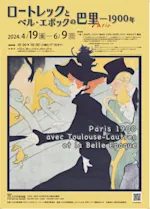 |
Traveling exhibition schedule
Back to Articles
SHARE
No comments yet