

Ricardo Cabret "Transverse"
Akiinoue


Until May 23
SHARE
Artists
Ricardo Cabret
AKIINOUE is pleased to present TRANSVERSE, the first solo exhibition in Japan by Ricardo Cabret, opening on April 25.
Born in Puerto Rico in 1985, Cabret lives and works in New York. He received his B.S. in Electrical Engineering from the University of Puerto Rico at Mayagüez in 2009, and his M.S. in Computer Science from the New York Institute of Technology in 2013. Selected exhibitions include Tropical is Political (Museo de Arte Contemporáneo de Puerto Rico, San Juan, 2023) and The Bronx Museum Biennial (The Bronx Museum of the Arts, New York, 2021). Recent solo exhibitions include Un día (Efrain Lopez Gallery, New York, 2025) and Un Nuevo Manglar (Michael Kohn Gallery, Los Angeles, 2023). His works are held in the collections of the High Museum of Art, Atlanta, and the Museo de Arte Contemporáneo de Puerto Rico.
Both an artist and a computer engineer, Cabret draws upon perspectives from engineering and information science to develop a distinctive practice that moves fluidly across painting, software, and algorithms. His work translates the invisible infrastructures of contemporary society into material form.
Seamlessly shifting between painting and code, the lines and structures generated through this process are layered, scraped, and reconstructed on the canvas, transforming into complex strata in which reality and fiction, light and shadow, data and the body intersect. These works capture the excessive reality, fragility, and constant mutation that characterize today’s landscapes, presenting a new abstract language that hovers between the digital and the painterly.
In TRANSVERSE, Cabret meticulously analyzes the architecture of the gallery space, constructing an installation based on the pre-calculated scale, volume, and positioning of each work. Rather than simply placing works in proximity, the installation is designed with attention to the flow of movement, the shifts in viewers’ perspectives, and the dynamics of light within the space—allowing the experience of viewing itself to emerge as an integral part of the work. Through this spatial approach, the exhibition brings painting, sculpture, and digital media into resonance, offering a new kind of sensory encounter unique to this presentation.
Born in Puerto Rico in 1985, Cabret lives and works in New York. He received his B.S. in Electrical Engineering from the University of Puerto Rico at Mayagüez in 2009, and his M.S. in Computer Science from the New York Institute of Technology in 2013. Selected exhibitions include Tropical is Political (Museo de Arte Contemporáneo de Puerto Rico, San Juan, 2023) and The Bronx Museum Biennial (The Bronx Museum of the Arts, New York, 2021). Recent solo exhibitions include Un día (Efrain Lopez Gallery, New York, 2025) and Un Nuevo Manglar (Michael Kohn Gallery, Los Angeles, 2023). His works are held in the collections of the High Museum of Art, Atlanta, and the Museo de Arte Contemporáneo de Puerto Rico.
Both an artist and a computer engineer, Cabret draws upon perspectives from engineering and information science to develop a distinctive practice that moves fluidly across painting, software, and algorithms. His work translates the invisible infrastructures of contemporary society into material form.
Seamlessly shifting between painting and code, the lines and structures generated through this process are layered, scraped, and reconstructed on the canvas, transforming into complex strata in which reality and fiction, light and shadow, data and the body intersect. These works capture the excessive reality, fragility, and constant mutation that characterize today’s landscapes, presenting a new abstract language that hovers between the digital and the painterly.
In TRANSVERSE, Cabret meticulously analyzes the architecture of the gallery space, constructing an installation based on the pre-calculated scale, volume, and positioning of each work. Rather than simply placing works in proximity, the installation is designed with attention to the flow of movement, the shifts in viewers’ perspectives, and the dynamics of light within the space—allowing the experience of viewing itself to emerge as an integral part of the work. Through this spatial approach, the exhibition brings painting, sculpture, and digital media into resonance, offering a new kind of sensory encounter unique to this presentation.
Schedule Now in session | Apr 25 (Sat) 2026-May 23 (Sat) 2026 16 days left Opening Hours Information
| ||||
|---|---|---|---|---|---|
| Fee | Free | ||||
| Website | https://akiinoue.com/en/exhibitions/ricardo-cabret-transverse/ | ||||
| Venue | Akiinoue https://akiinoue.com/en | ||||
| Location | 2F The Rows, 2-3 Daikanyamacho, Shibuya-ku, Tokyo 150-0034 | ||||
| Access | 8 minute walk from the North exit of Daikanyama Station on the Tokyu Toyoko line, 10 minute walk from the New South exit of JR Shibuya Station. | ||||
| Related images | Click on the image to enlarge it 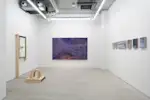  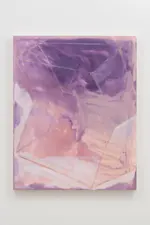 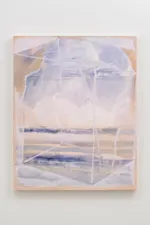 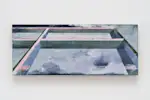 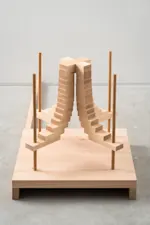 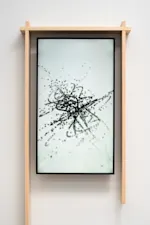 |
Back to Articles
SHARE
No comments yet