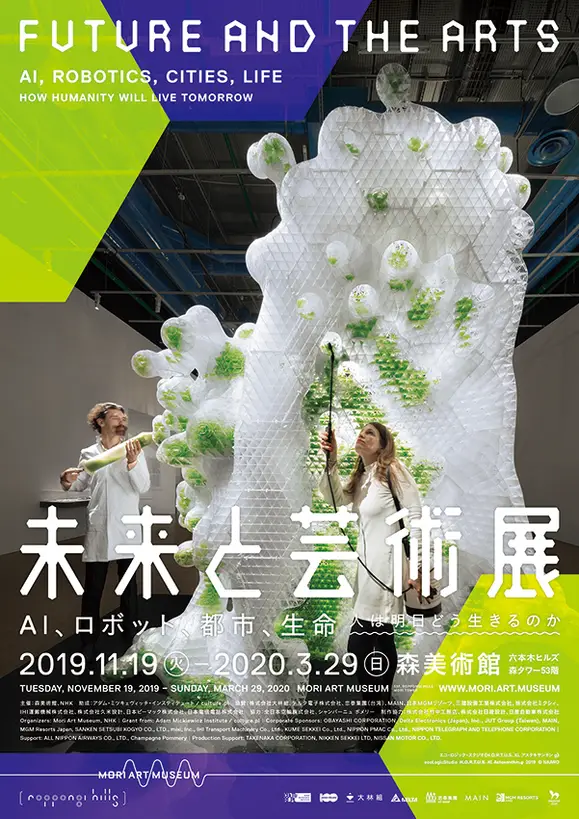
The Matsudo International Science Art Festival took place at a historic Japanese residence and garden while “Future and the Arts” is being exhibited on the 53rd floor of the Roppongi Hills Mori Tower skyscraper. Both exhibitions add to the global conversation about cutting-edge science and its implications for contemporary society.
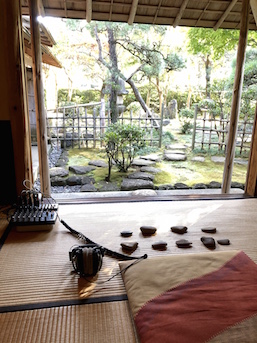
In a tatami-room pavilion at the Tojo-tei House and Garden in Matsudo, the art and technology specialists of Ars Electronica encouraged visitors to reflect on questions about scientific advances. Questions such as “What should artificial technology decide and not decide?” were inscribed on stones. Visitors could sit zazen-style on a cushion looking out onto a Japanese garden while pondering these ideas and listening to garden sounds on headphones.
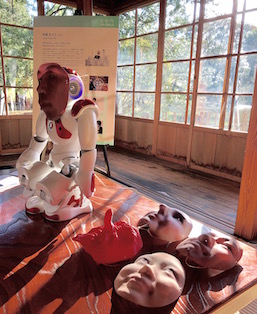
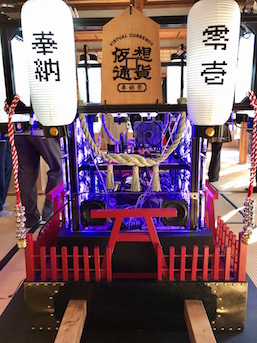
Artist Etsuko Ichihara introduced her Digital Shaman robot used to assist Buddhist funeral rituals and her Virtual Currency Offering Festival float. The latter accepts cashless payments in an update of an old tradition of donating money at festivals.
Shunji Yamanaka LabPhoto: Jennifer Pastore
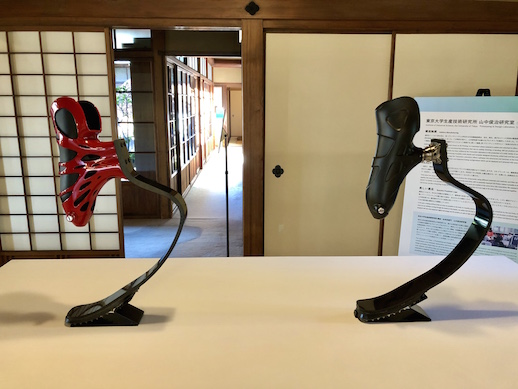
Using robots and design engineering, the Shunji Yamanaka Lab at the University of Tokyo Institute of Industrial Science creates medical prototypes with aesthetics in mind. It presented its sleek prosthetics at the Tojo-tei House.
Shunji Yamanaka LabPhoto: Jennifer Pastore
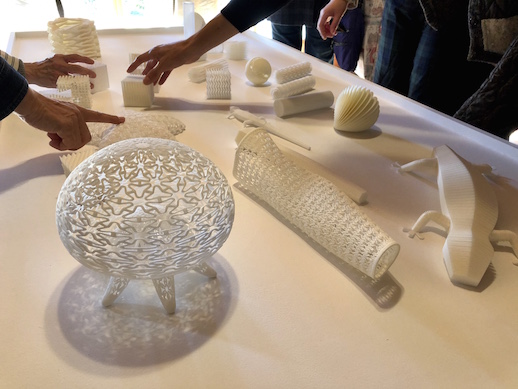
“Ready to Crawl” by the same lab is a 3D printing project. It produces robots with movements and physiologies that mimic wildlife.
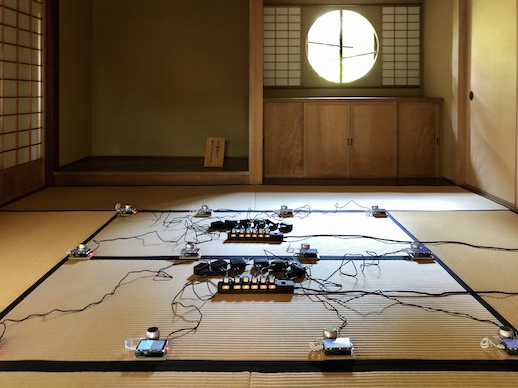
Atsushi TadokoroPhoto: Jennifer Pastore Professor and “creative coder” Atsushi Tadokoro engineered a network of small computers to communicate with each other, orchestrating patterns of rhythm.
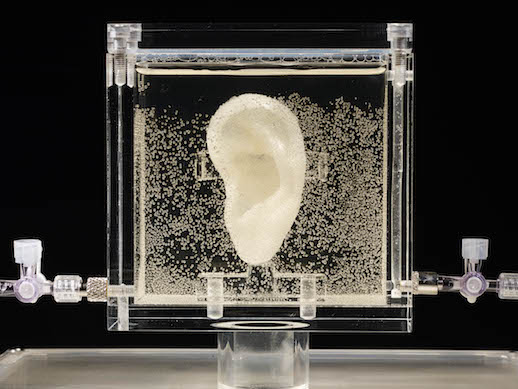
Diemut Strebe, 'Sugababe' (2014-) At “Future and the Arts,” Sugababe by Diemut Strebe reproduces Vincent van Gogh’s severed ear.
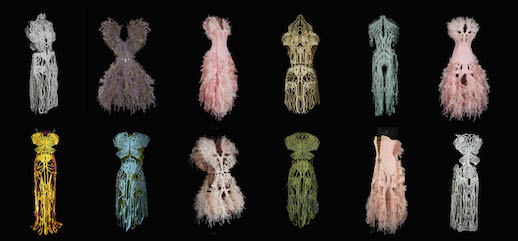
Amy Karle, 'Internal Collection' (2016-2017)Amy Karle’s The Internal Collection is a lineup of garments inspired by the internal tissues of the human nervous system, the lungs, and the ligaments. Karle uses advanced technologies including 3D body scans, CAD, and laser-cut patterns, combining them with artisanal hand-sewing to create these fashion pieces that take the form of “wearable internal organs.”
Ai Hasegawa, 'Shared Baby' (2011) Ai Hasegawa’s work considers how DNA engineering and reproductive technology can alter family structures.
Vincent Fournier, 'Reem B #6 [Pal]' (2010) Barcelona, SpainVincent Fournier’s ‘Man Machine’ photograph series (2009-2010) depicts various robots seemingly well-assimilated into day-to-day situations. The robots are shown doing things such as playing basketball, apparently without having any particular job to do. The robots in our lives today have been given clear roles and are not intended to approach humanity. However, sci-fi novels and movies often feature robots that are just like people or have feelings, and the robots in this series take after them.
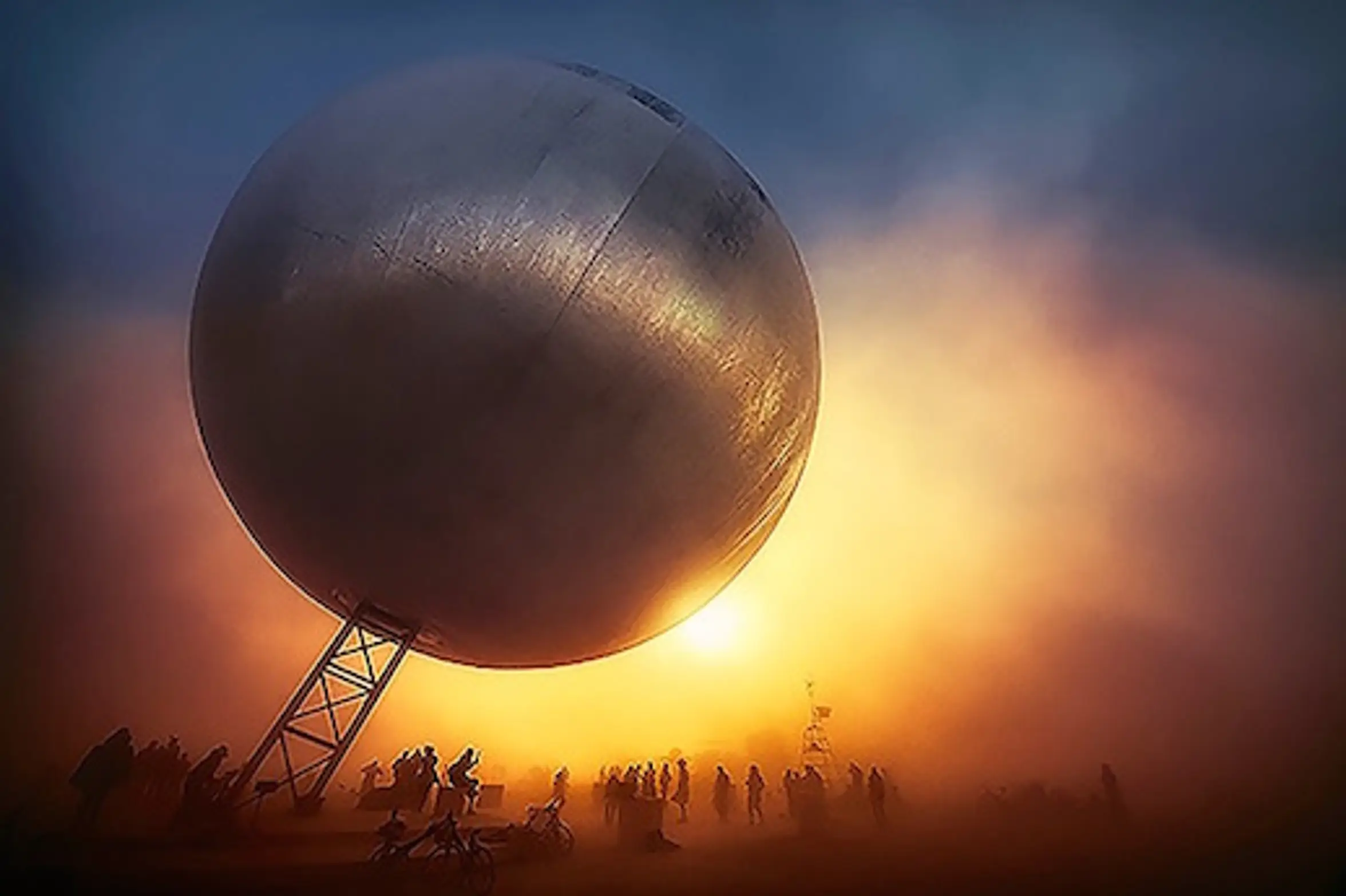
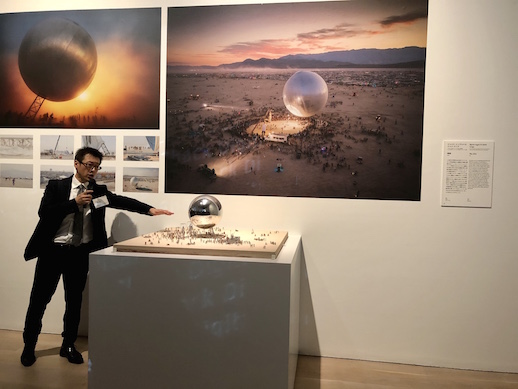
Future and the Arts curator Kenichi Kondo speaks in front of a display for 'The Orb' by Bjarke Ingels and Jakob LangePhoto: Jennifer Pastore
While the exhibitions seem more interested in raising than answering questions about creativity and technology, they both offer intriguing insights about who we are and where we are headed as a human species. Their differences in scale and setting themselves offer glimpses of how far we come and how far we might still go.
“Future and the Arts: AI, Robotics, Cities, Life – How Humanity Will Live Tomorrow” offers ¥200 admission discounts for TAB app and MuPon subscribers.
Jennifer Pastore is a writer, editor, and translator. She was editor of Tokyo Art Beat's web magazine from 2015 to 2022. Her thoughts on the Japanese art scene can be found in publications like artscape Japan.





![Vincent Fournier, 'Reem B #6 [Pal]' (2010) Barcelona, Spain](http://www.tokyoartbeat.com/tablog/entries.en/wp-content/uploads/2019/12/784_S.jpg)

 0Posts