
Yuko Hasegawa on Curation Between Intuition and Structure: A Vision for Ueshima Museum's "Thematic Exhibitions for Creative Encounters"
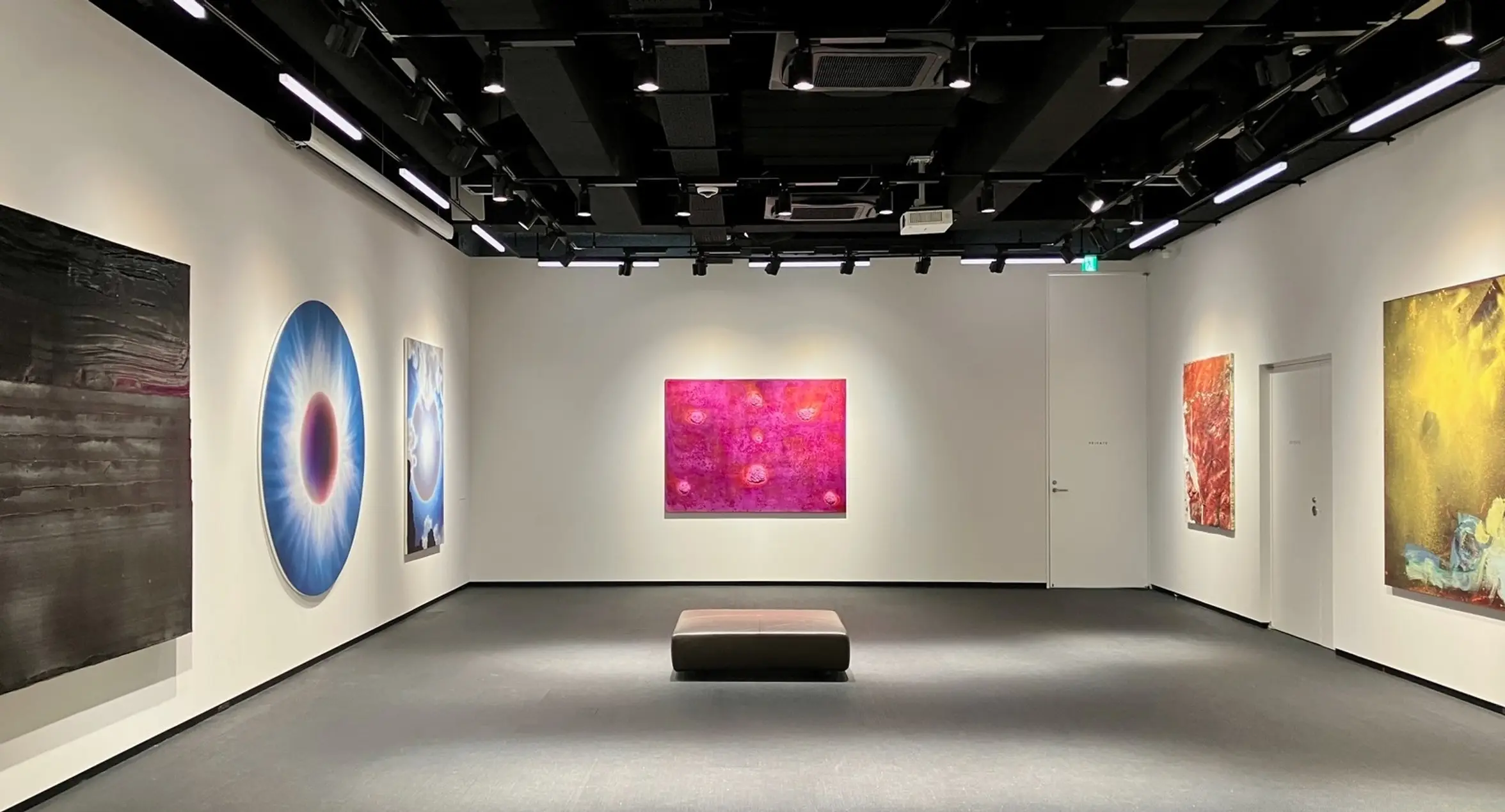
"Thematic Exhibitions for Creative Encounters." exhibition view


Located in Shibuya, Tokyo, the Ueshima Museum was founded by entrepreneur, investor, and art collector Kankuro Ueshima. The museum is currently holding its second collection exhibition entitled Thematic Exhibitions for Creative Encounters. Drawing on its collection of over 700 artworks by international and domestic artists, world-renowned curator and art critic Yuko Hasegawa has organized this exhibition around the core concept of contemporaneity. In this article, Hasegawa describes how she decoded and interpreted the Ueshima Museum Collection, as well as her vision for this exhibition. [Tokyo Art Beat]
Curating a collection extends beyond mere rearrangement or reorganization of artworks; it requires a structural and relational sensibility to discern the resonance that unfolds between them and to articulate new narratives emerging from those relations. Thematic Exhibitions for Creative Encounters brings together more than sixty works from among over seven hundred in the Ueshima Museum Collection, seeking to visualize these resonances while enabling viewers to experience them firsthand.
One of the defining features of the museum’s collection is that its acquisition policy is not motivated by a desire to supplement canonical art-historical narratives, nor does it function as a comprehensive survey of local artists. Director Kankuro Ueshima has assembled the collection through a series of intuitive, affective encounters with artworks. His attunement to the present moment manifests in the absence of any prescriptive acquisition criteria—such as the inclusion of local artists or an emphasis on particular periods—that typically govern public institutions. Consequently, my first curatorial task was to determine how to activate and stage this collection, which functions as a kind of ongoing live document. This openness was challenging, yet it offered the possibility of experimenting with new modes of display and interpretation.
Since this exhibition marks the museum’s second year of operation, I sought—apart from the permanent display on the second floor—to avoid repetition of works shown in the inaugural collection exhibition.
The Ueshima Museum, housed within a former international school building, consists of a sequence of nearly identical rooms, none particularly spacious. To resist monotony, I explored ways of integrating exterior and interior conditions to generate spatial rhythm. As the collection primarily comprises paintings, I was acutely aware that the quality of light and spatial tension would fundamentally shape the viewer’s experience. After consulting with Director Ueshima, we removed the existing curtains and carpet, installed window tints to allow natural light to permeate the space, and constructed a new mortar floor finished with white paint to enhance the luminosity and clarity of the galleries.
In organizing the exhibition, I adhered to two guiding principles. The first was to designate a “protagonist” in each room; a focal work around which other pieces would orbit. The second was to foreground the energy of emerging artists by placing their works in dialogue with these protagonists. Rather than constructing a narrative centered on iconic or spectacular works, I focused on the tensions, harmonies, and contingent affinities that arise from juxtaposition, creating spaces of openness entrusted to the viewer’s interpretive agency. The approximately ten to twenty works per floor were arranged so that their narrative strands would intersect across levels, forming an interlaced topology of meaning. This curatorial approach does not aspire to academic discourse; rather, the exhibition discourse produced here attempts to articulate the elusive, polyphonic texture of the contemporary. Through curation, I sought to uncover the latent logic of the collection’s performative vitality.
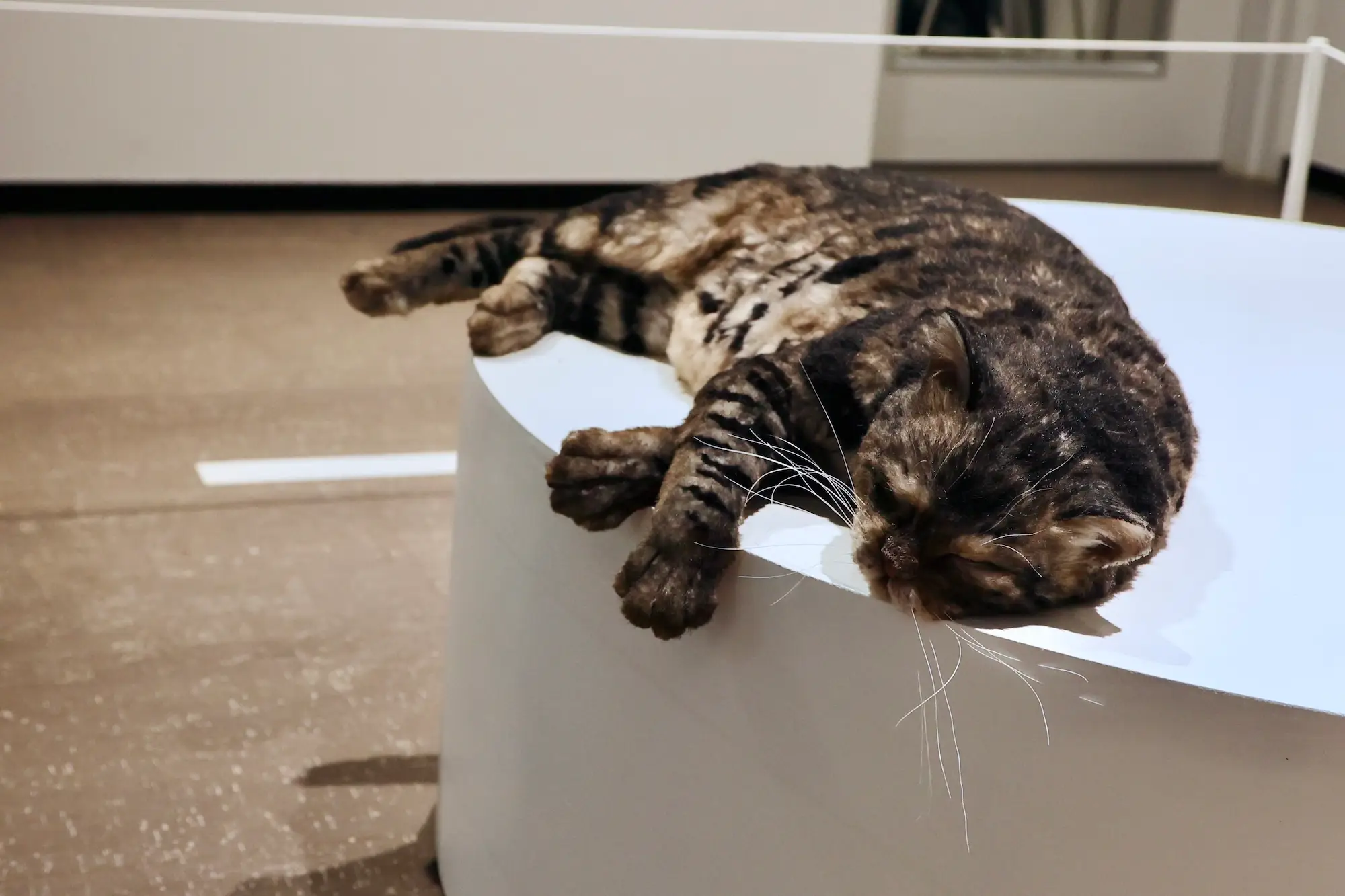
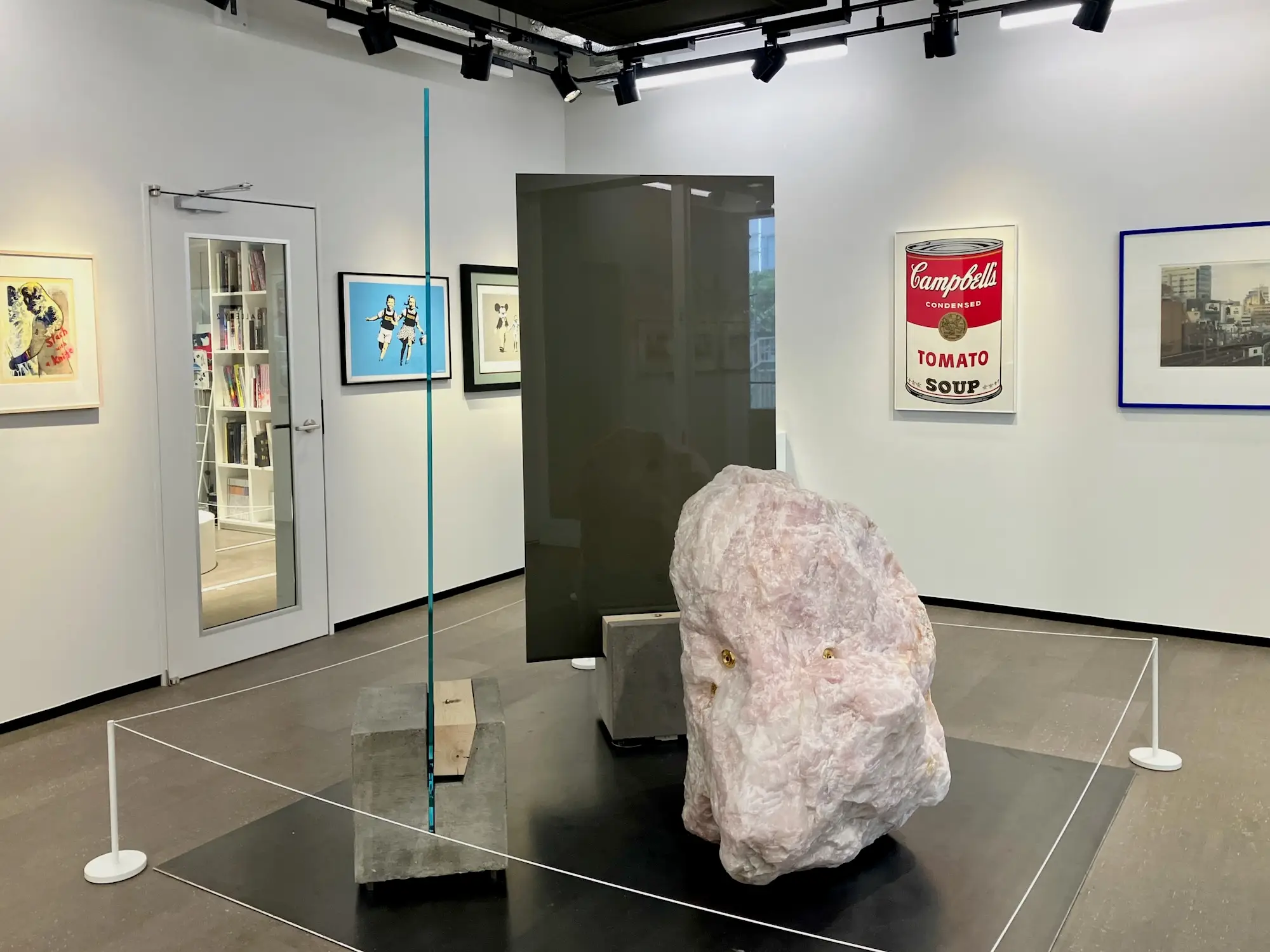
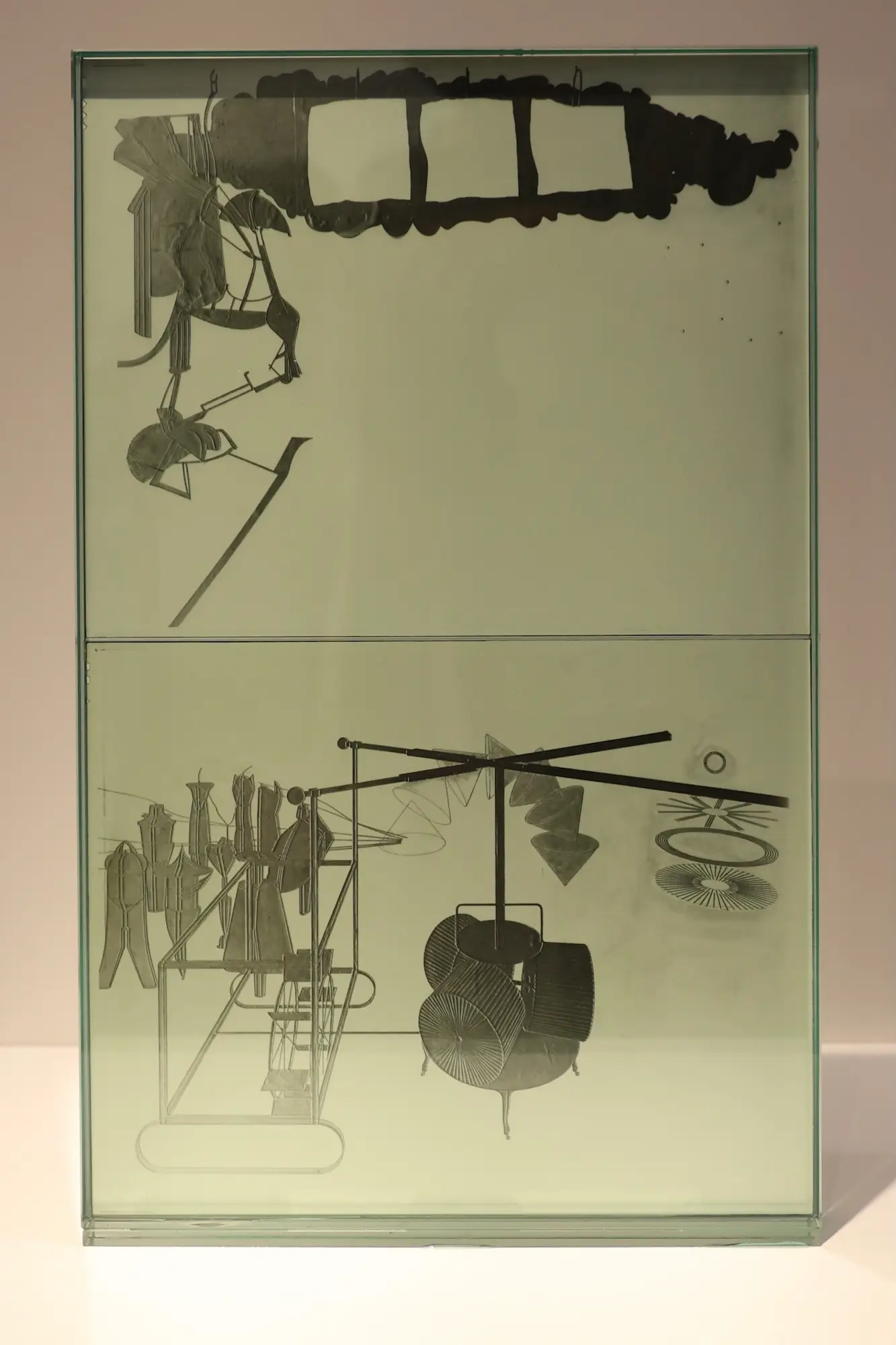
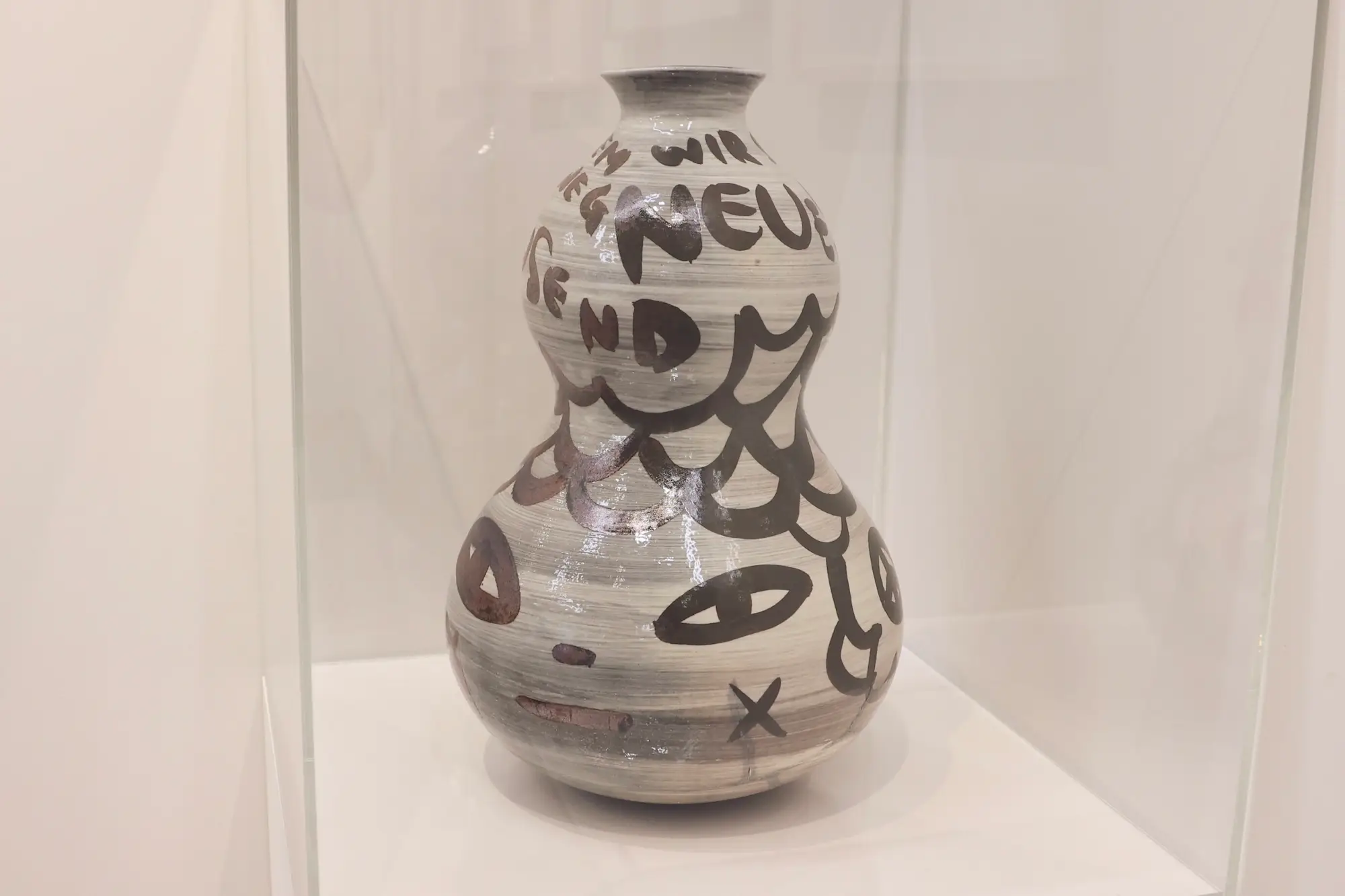
The exhibition opens on the first floor with the theme of City and Pop. Upon entering, the faint respiration of Ryan Gander’s sleeping cat permeates the space, inviting the visitor into a room that seems to flow seamlessly into the streets of Shibuya. By opening the curtains and linking the gallery to the balcony, the pulses of the city become entangled with the artworks’ atmospheres. Thomas Struth’s photographs of Shibuya blur the boundary between urban reality and its representation. Works by Andy Warhol and Hiroshi Sugimoto evoke the cool, analytical gaze of Marcel Duchamp, while Banksy’s cruel satire juxtaposes a fleeing Vietnamese girl with a McDonald’s mascot. Introducing Katsushika Hokusai’s The Arched Bridge at Kamedo Tenjin Shrine—from his Remarkable Views of Bridges in Various Provinces—between Yoshitomo Nara’s No Nukes ceramic and other reappropriated ukiyo-e works referencing natural disasters, creates a metaphorical bridge between worlds, extending Edo-period pop into a contemporary field of critique and political resonance. The subsequent room erupts with feminine energy—Yayoi Deki, Yayoi Kusama, Aya Takano, and Banksy’s Bomb Love—an invisible landmine detonating in the heart of Shibuya. Through the mediating axes of city and pop, this floor reverberates between everyday life and history, irony and beauty’s destructive intensity.

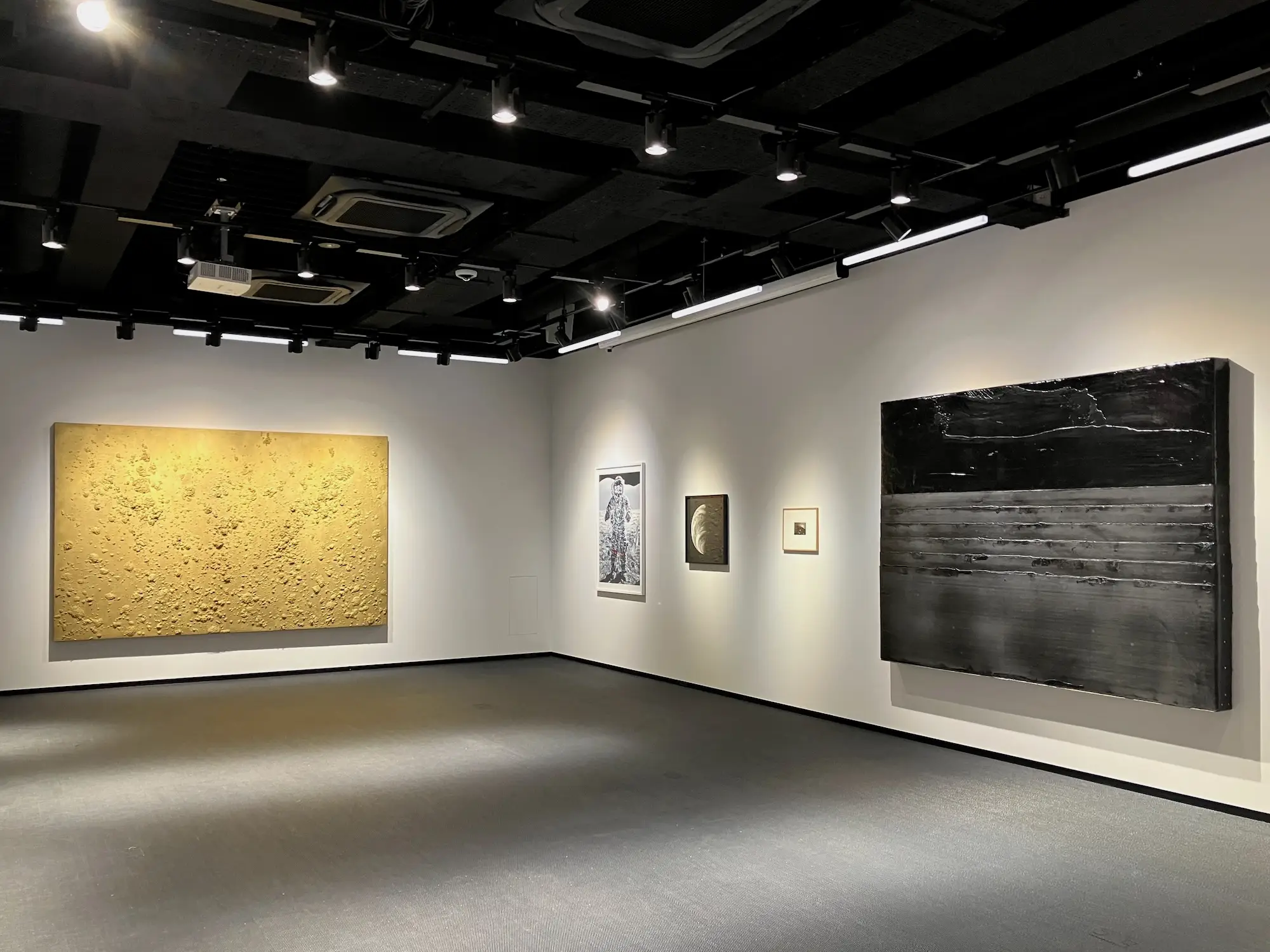
Descending to the basement, the viewer encounters the themes of gravity and materiality. Theaster Gates’s tar-black surface resists gravitational pull, while a miniature by Gerhard Richter radiates a comparable density. Robert Longo’s cold image of Venus resonates with the earthen tactility of Bosco Sodi’s works. The impastoed canvases of Keisuke Tada introduce a visceral material pressure, generating a dynamic tension between terrestrial gravity and the sensation of cosmic suspension. The basement thus stages human existence within the interval between weight and weightlessness—matter drawn downward even as it dreams of ascent.

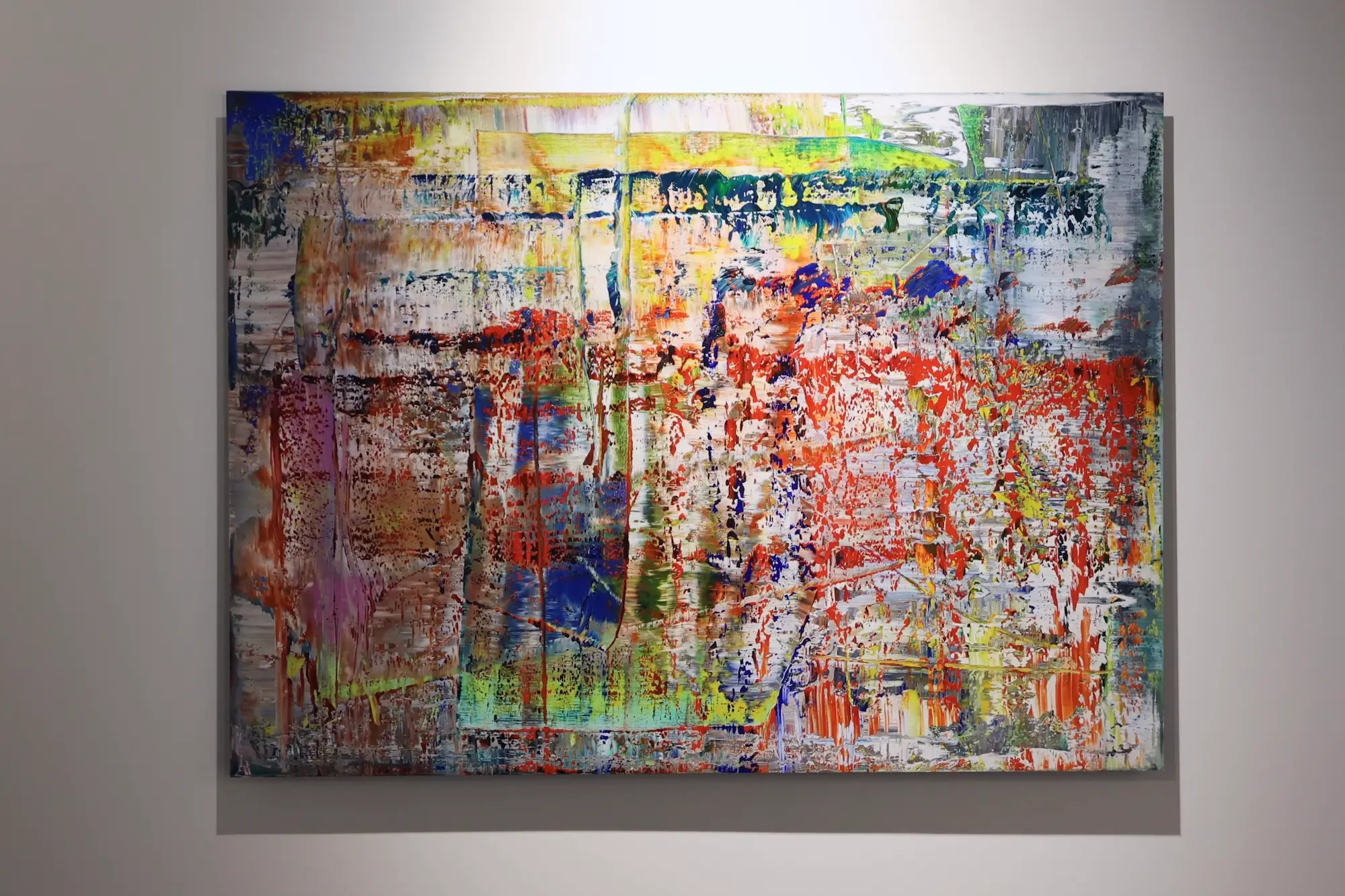
Ascending to the second floor, the weight lifts, and one enters a domain of light and perception—an immersive field where light itself becomes material. Centered on Richter’s notion of Schein—painting as light—the works engage with noise, distortion, and glitch through heliogravure, photography, and painting. Immersion in Turrell’s light chamber recalls that vision is not passive but corporeally encompassing. Ryoji Ikeda’s audiovisual interference and Olafur Eliasson’s optical rhythms recalibrate the viewer’s perception. Here, seeing occurs through eyes, skin, and ears alike, penetrating inward to reaffirm the embodied materiality of light. The floor dissolves distinctions between abstraction and figuration, rendering the world’s contours porous and mutable.
On the third floor, the temperature cools. Geometric abstractions extend from quotidian life; layers of information are embedded in minimalist forms. The repetitive lines of Agnes Martin and the soft geometries of Kapwani Kiwanga evoke an everyday serenity underpinned by rigorous logic. This is abstraction as room-temperature equilibrium—neither ascetic nor excessive. Within this quiet zone, rhythm and order materialize from daily life, allowing perception to flow into thought. Complexity veiled in simplicity draws the viewer inward, leaving a residue of contemplative stillness.

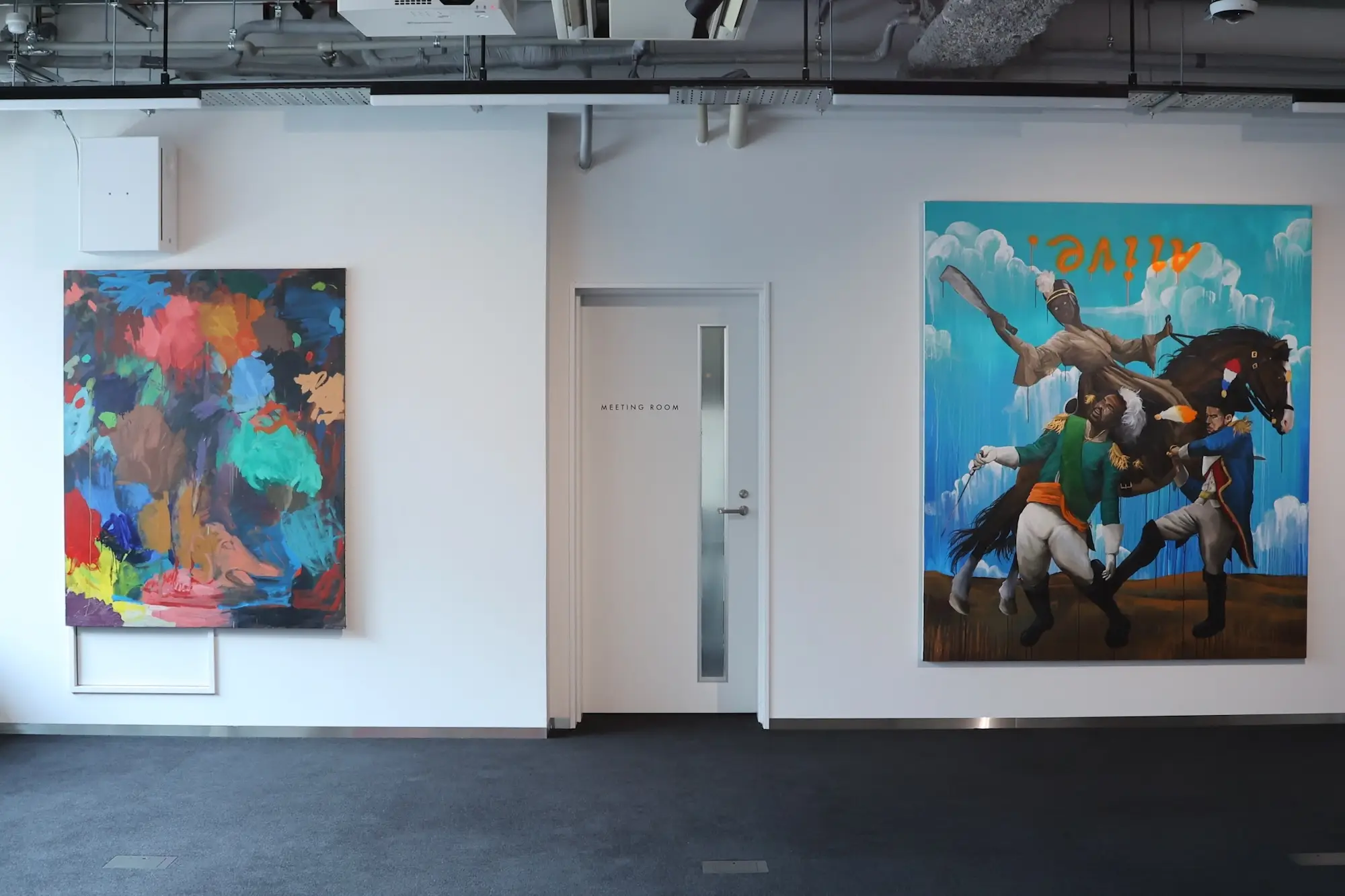
The fourth floor intertwines color and narrative. Here, historically and personally charged works are juxtaposed with abstraction to prevent narrative from becoming overdetermined and to release the autonomous agency of color. The abstractions of Bernard Frize and Aiko Yuno interlace with hybrid post-colonial practices—such as the one of Roberto Pare—to generate a chromatic field of stories. The viewer does not merely follow a pre-given narrative but composes new ones through the surfaces themselves. The space thus operates as a mechanism of polyphonic storytelling, where the narratives of others intersect with one’s own, and color becomes a site of meaning’s continual production.

The fifth floor marks the exhibition’s culmination, engaging with the figurative entanglement—borrowed from quantum theory—between biological information, sand, glass, pigment, and paper. Jean-Michel Othoniel’s coiled glass beads scatter light; Nanae Mitobe’s dense impasto merges image and support; Nicolas Buffe’s paper reliefs weave narrative through ornamentation. Pattern and form regulate these works, producing reverberations where material interlaces with affect and memory. As quantum entanglement suggests, matter and emotion are inseparable. Love and desire, memory and dream manifest through reflection and thickness, transforming the space into a mnemonic apparatus. The viewer’s encounter with materialized emotion elicits awareness of the invisible bonds linking inner worlds to others’ experiences.

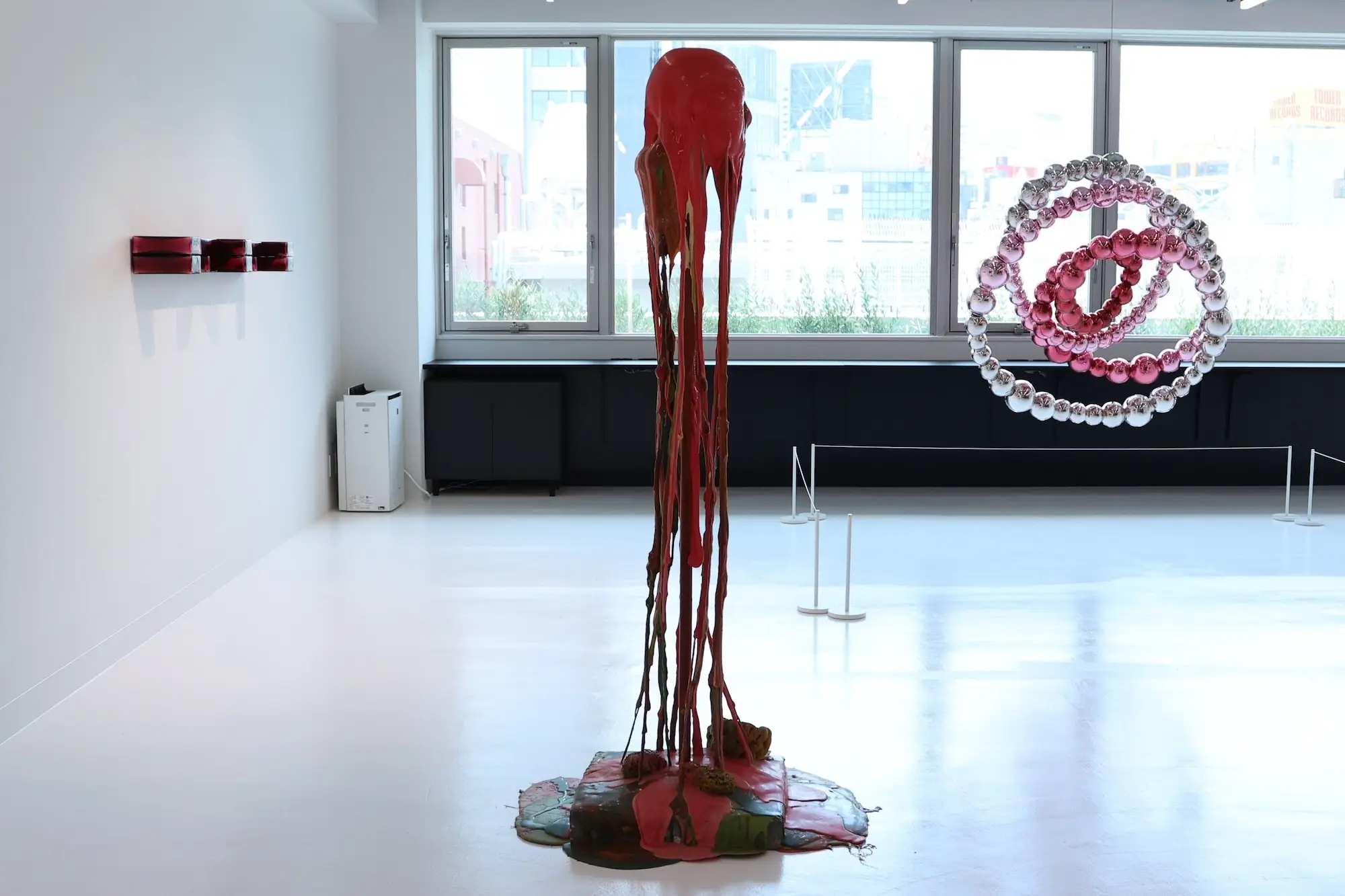
Across its six levels—from the subterranean gravity of matter to the aerial luminosity of perception, from quotidian abstraction to narrative chromaticism, and finally to the entanglement of material and affect—the exhibition unfolds as a stratified choreography of perception. The floors do not operate independently but resonate and interfere, composing an ecosystem of relations. As the viewers move through, they are successively grounded, illuminated, abstracted, and entangled; the exhibition functions as a generative process through which perception and interpretation are continually renewed.
Underlying this entire project is a curatorial logic oscillating between intuition and structure. The aim was to orchestrate an exhibition that cultivates new perspectives and sensory experiences while preserving the unpredictable vitality of the Ueshima Museum Collection. The works illuminate one another through a network of correspondences, forming a web of emergent meanings. Here, the viewer is both actor and agent; the exhibition space itself becomes an active field of co-creation—a living structure continually composed by its participants.

 0Posts
Yuko Hasegawa
Yuko Hasegawa