Best Exhibitions Starting in February 2026



Tokyo Art Beat presents a selection of the best exhibitions opening in January 2026. Bookmark the exhibitions on the TAB website or TAB app and never miss the openings and closings.
- 【Tokyo】Yebisu International Festival for Art & Alternative Visions 2026 "Polyphonic Voices Bathed in Sunlight" (Tokyo Photographic Art Museum)
- 【Tokyo】Gacha Gacha Exhibition Award 2026 (Roppongi Museum)
- 【Tokyo】Claude Monet: Questioning Nature (Artizon Museum)
- 【Tokyo】YBA & Beyond: British Art in the 90s from the Tate Collection (The National Art Center, Tokyo)
- 【Tokyo】Judd | Marfa (Watari-um, The Watari Museum of Contemporary Art)
- 【Tokyo】From Kiyochika to Hasui: Ukiyo-e and Shin-Hanga Woodblock Prints from the Smithsonian’s National Museum of Asian Art (Mitsubishi Ichigokan Museum, Tokyo)
- 【Tokyo】Andrius Arutiunian "Obol" (Ginza Maison Hermès)
- 【Tokyo】Okada Kenzo: Paris, Meguro, New York (Meguro Museum of Art)
- 【Tokyo】Yang02 "Flying Organs" (BUG)
- 【Tokyo】Theater Commons ’26 (Shibaura House, etc)
- 【Tokyo】A World of Flowers 2026: Yokoyama Taikan’s Cherry Blossoms, Kawabata Ryūshi’s Peonies and Hayami Gyoshū’s Plum Blossoms (Yamatane Museum of Art)
- 【Ibaraki】Takehiro Iikawa "Gathering Matters and Mediations" (Contemporary Art Gallery, Art Tower Mito)
- 【Kanagawa】Naoyo Fukuda: At the Threshold’s Edge (Museum of Modern Art, Kamakura Annex)
- 【Ishikawa】Rey Camoy: Commemorating the 40th Anniversary of His Death (Ishikawa Prefectural Museum of Art)
- 【Kyoto】Kyoto Nippon Festival 2026 (Kitano Tenmangu Shrine)
- 【Kyoto】Nihonga Avant-Garde: Kyoto 1948-1970 (Kyoto City Kyocera Museum of Art)
- 【Tokyo】Artistsʼ Fair Kyoto 2026 (Kyoto National Museum)
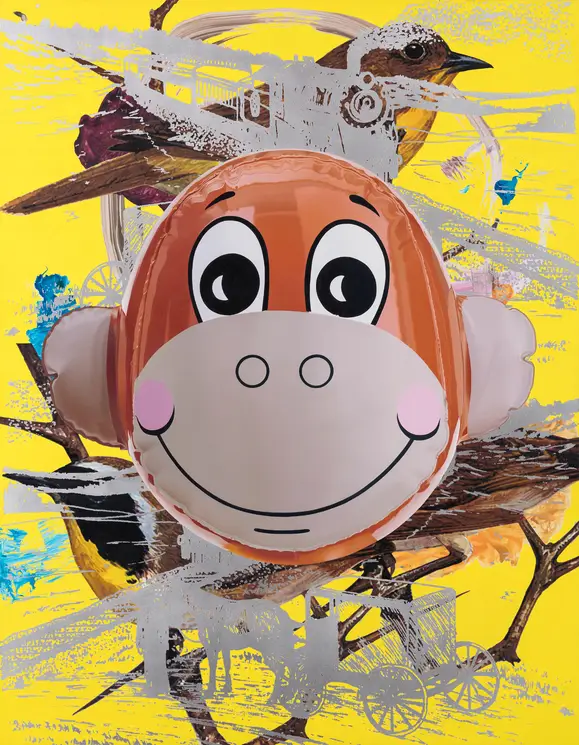
- 【Osaka】Jeff Koons "Paintings and Banality - Selected Works from the Collection" (Espace Louis Vuitton Osaka)
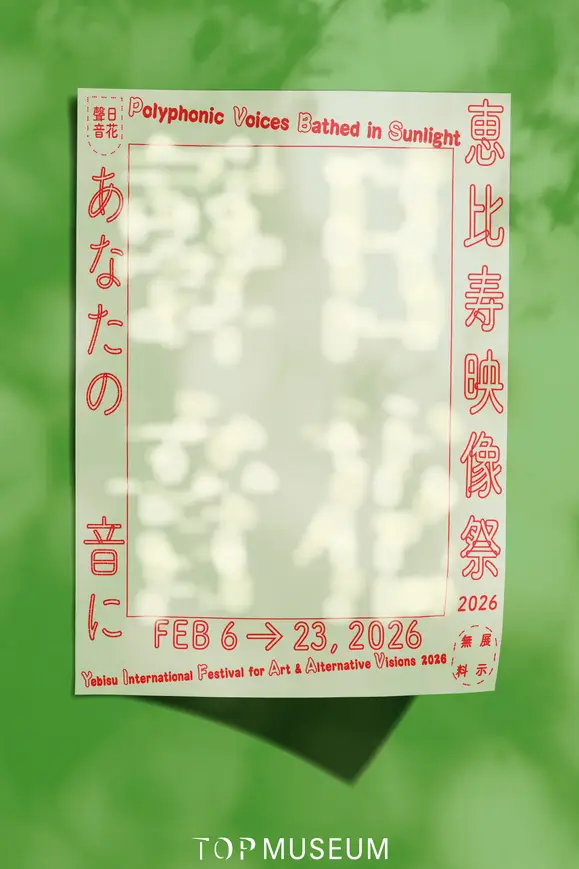
【Tokyo】Yebisu International Festival for Art & Alternative Visions 2026 "Polyphonic Voices Bathed in Sunlight" (Tokyo Photographic Art Museum)
Since its inception, the Yebisu International Festival for Art & Alternative Visions has asked "What is the moving image?" while presenting visual expression from Japan and beyond. This year's edition, themed "Polyphonic Voices Bathed in Sunlight," imagines a space of shared empathy where light and voice intertwine. The program encompasses photography, video, sound, and performance.
Venue: Tokyo Photographic Art Museum
Schedule: February 6 – February 23

 0Posts
【Tokyo】Gacha Gacha Exhibition Award 2026 (Roppongi Museum)
Last year's "Gacha Gacha Exhibition" marked sixty years since capsule toy machines first arrived in Japan. Now the popular show returns to Roppongi at an expanded scale, with two new manufacturers joining the original eleven—thirteen companies in total—alongside five creator collaborations, each with its own dedicated booth.
Venue: Roppongi Museum
Schedule: February 6 – March 2

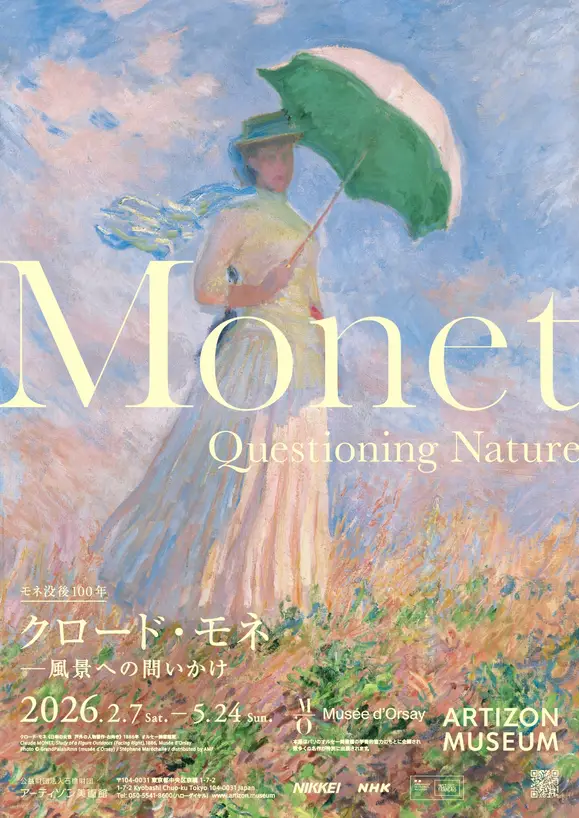
【Tokyo】Claude Monet: Questioning Nature (Artizon Museum)
This exhibition traces Claude Monet's lifelong pursuit of capturing shifting natural light. Charting his artistic development from Le Havre to Giverny, the show also explores his engagement with contemporary painting, photography, Ukiyo-e, and the decorative arts. With approximately 140 works, including major loans from the Musée d'Orsay, the exhibition reveals the enduring appeal of Monet as a landscape painter.
Venue: Artizon Museum
Schedule: February 7 – May 24
【Tokyo】YBA & Beyond: British Art in the 90s from the Tate Collection (The National Art Center, Tokyo)
This exhibition focuses on British art from the late 1980s through the early 2000s. The charged and uncertain social climate of the Thatcher era gave rise to a new generation of artists who challenged traditional norms and embraced bold, experimental practices. Featuring around 100 works by some sixty artists, including those once known as the "Young British Artists" (YBA), the show traces the diverse and provocative movements that defined 1990s British art.
Venue: The National Art Center, Tokyo
Schedule: February 11 – May 11


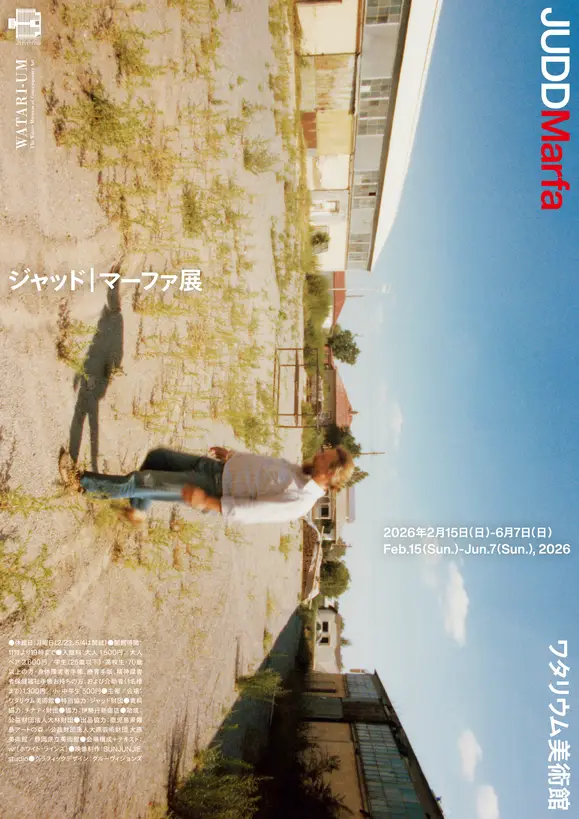
【Tokyo】Judd | Marfa (Watari-um, The Watari Museum of Contemporary Art)
Donald Judd, one of the most influential artists of the twentieth century, left New York in the 1970s and relocated to Marfa, a small Texas town near the Mexican border. Alongside a selection of early paintings from the 1950s and three-dimensional works from the 1960s through 1990s, this exhibition explores the spaces Judd created in Marfa through drawings, plans, videos, and archival materials. Together, these works and documents reveal Judd's unwavering conviction about the integrity of visual art and its installation, which he insisted "cannot be reduced to performance."
Venue: Watari-um, The Watari Museum of Contemporary Art
Schedule: February 15 – June 7
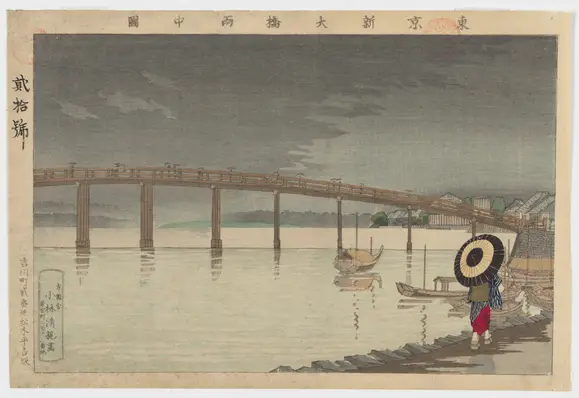
【Tokyo】From Kiyochika to Hasui: Ukiyo-e and Shin-Hanga Woodblock Prints from the Smithsonian’s National Museum of Asian Art (Mitsubishi Ichigokan Museum, Tokyo)
Beginning with Kobayashi Kiyochika, who brought fresh expression to Meiji-era landscape prints, this exhibition traces the evolution of the genre in Japan. Kiyochika's "kōsenga" (light ray pictures) depicted twilight and nocturnal scenes, capturing the fading atmosphere of Edo with rich tonal depth. The show follows the lineage from Kiyochika through Kawase Hasui, drawing on the Robert O. Muller Collection at the Smithsonian's National Museum of Asian Art.
Venue: Mitsubishi Ichigokan Museum, Tokyo
Schedule: February 19 – May 24
【Tokyo】Andrius Arutiunian "Obol" (Ginza Maison Hermès)
The first solo exhibition in Japan by Armenian-Lithuanian artist and composer Andrius Arutiunian. The presentation is organized by guest curator Tomoya Iwata, director of The 5th Floor, known for alternative curatorial practices. Arutiunian approaches music as "the architecture of distorted time," exploring vernacular practices, speculative rituals, and the parallel between political alignment and sonic harmony. The exhibition poses questions about time, the future, and myth.
Venue: Ginza Maison Hermès
Schedule: February 20 – May 31
【Tokyo】Okada Kenzo: Paris, Meguro, New York (Meguro Museum of Art)
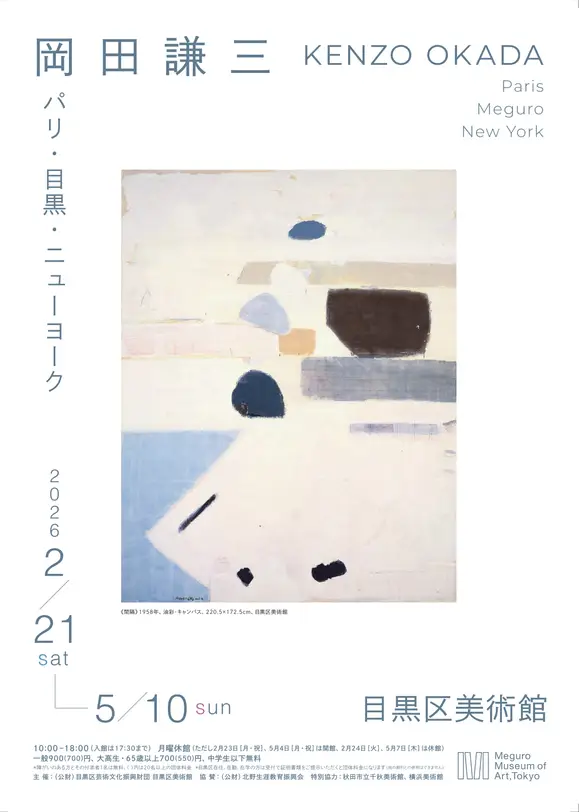
Painter Okada Kenzo established his studio in Jiyugaoka, Meguro in 1935, but his practice took shape across two other cities: Paris in the 1920s and New York from the 1950s onward. This exhibition traces his stylistic evolution through all three locations, from his encounters with ideas that laid the foundation for his abstract approach in Paris to his exchanges with Abstract Expressionist painters in New York.
Venue: Meguro Museum of Art
Schedule: February 21 – May 10
【Tokyo】Yang02 "Flying Organs" (BUG)
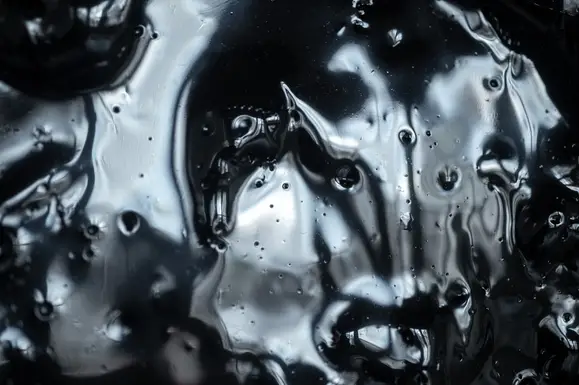
Yang02 works with technologies like AI and Segways while casting a critical eye on progressivism and capitalism. This exhibition asks how we confront the current state of technology and its consequences. A new work makes full use of BUG's towering ceiling height, staging AI-equipped drones in dialogue with devices attempting to shoot them down.
Venue: BUG
Schedule: February 25 – April 5

【Tokyo】Theater Commons ’26 (Shibaura House, etc)
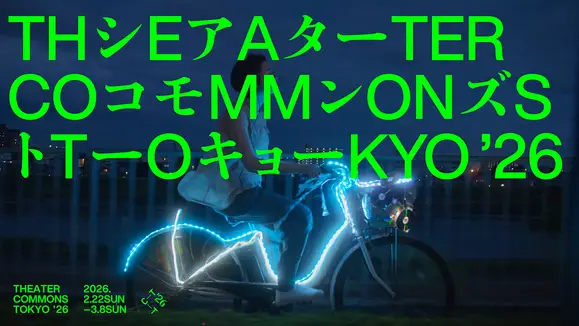
Theater Commons, a project dedicated to creating new "commons"within the city, celebrates its tenth edition. Partnering with Art Translators Collective, this year's festival begins with the question "Will human translation (creative acts) die?" and explores what theater's commons might mean in an era when engagement with AI is unavoidable.
Venue: Shibaura House, etc.
Schedule: February 26 – March 8
【Tokyo】A World of Flowers 2026: Yokoyama Taikan’s Cherry Blossoms, Kawabata Ryūshi’s Peonies and Hayami Gyoshū’s Plum Blossoms (Yamatane Museum of Art)
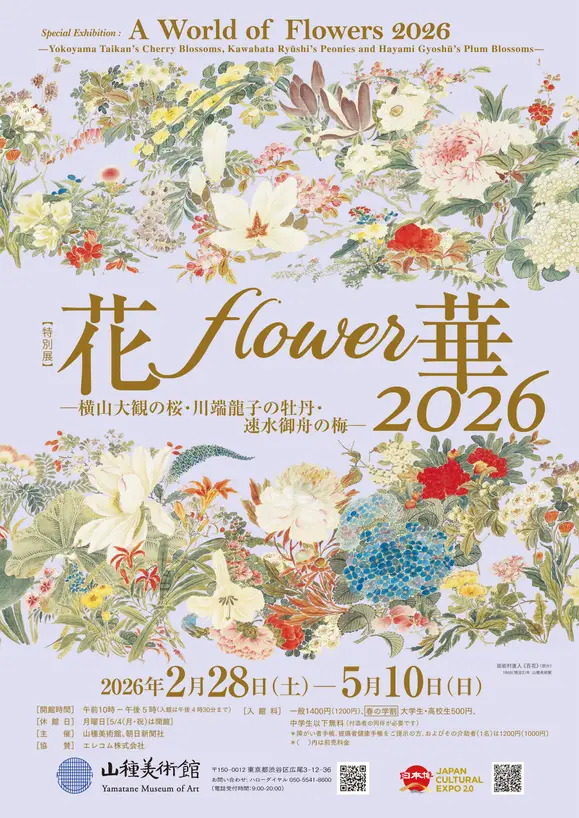
A vibrant exhibition celebrating flowers in Japanese painting. Highlights include Yokoyama Taikan's mountain cherry blossoms glowing in morning light, Yamaguchi Hōshun's hydrangeas glistening after the rain, Sakai Hōitsu's vivid chrysanthemums with small birds, and Hayami Gyoshu's striking contrast of red plum blossoms on an old tree against white blooms on a young one.
Venue: Yamatane Museum of Art
Schedule: February 28 – May 10
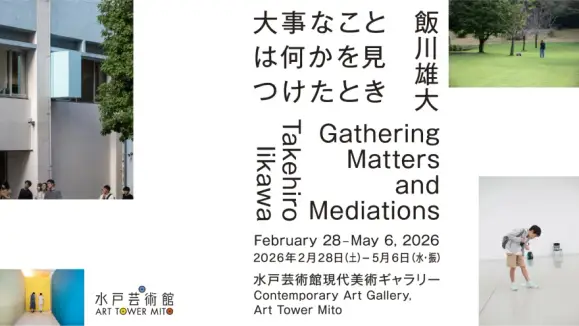
【Ibaraki】Takehiro Iikawa "Gathering Matters and Mediations" (Contemporary Art Gallery, Art Tower Mito)
Takehiro Iikawa's work explores the relativity of time and the instability of perception. Through careful observation of everyday scenes and familiar objects, he draws attention to the uncertainty of human recognition and to what society tends to overlook. For this exhibition, Iikawa presents a new installation that directly involves viewers, asking: how can the shock of unexpected encounters and the raw reality of lived experience be shared with others? Visitors are invited to find their own answers through the experience itself.
Venue: Contemporary Art Gallery, Art Tower Mito
Schedule: February 28 – May 6
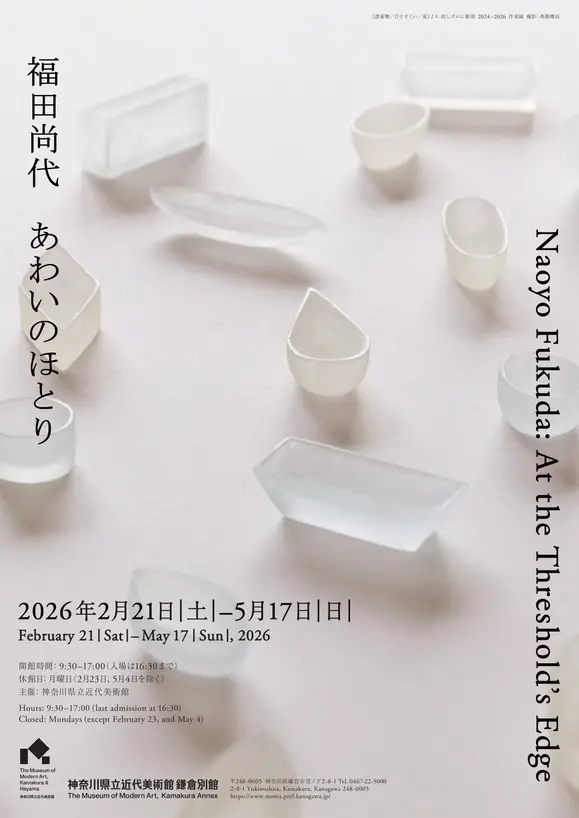
【Kanagawa】Naoyo Fukuda: At the Threshold’s Edge (Museum of Modern Art, Kamakura Annex)
Naoyo Fukuda has built her practice around the idea that "the world is made of words," moving fluidly between language and form. Treating words as tiny "particles," she disassembles and reconstructs them to conjure unknown landscapes. This process has yielded palindrome works and poetry collections alongside sculptures made from books, bookmarks, letters, and other word-bearing objects. This solo exhibition brings together key works from her early career through new pieces, with site-specific installations that probe the core of her thought and expression.
Venue: Museum of Modern Art, Kamakura Annex
Schedule: February 21 – May 17
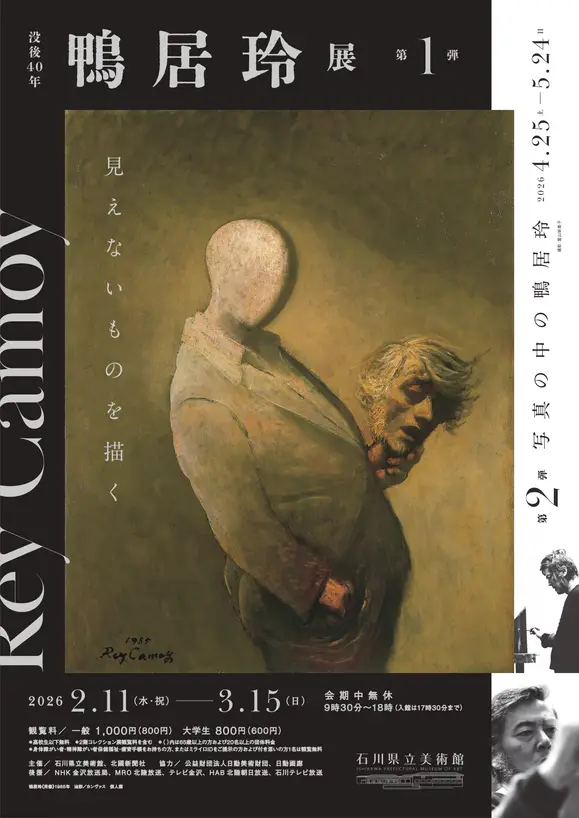
【Ishikawa】Rey Camoy: Commemorating the 40th Anniversary of His Death (Ishikawa Prefectural Museum of Art)
Born in Kanazawa and trained under Miyamoto Saburo, painter Kamoi Rei spent his life exploring "what it means to be human." His recurring figures of drunkards and old women became key motifs, embodying human nature and inner life. The style he developed through years in Spain and Paris quietly reveals the pathos of existence through those burdened by poverty and solitude. For Kamoi, realism was not about reproducing visible reality but about rendering "the invisible." This exhibition focuses on the motifs he returned to throughout his career, while also introducing some ninety illustration originals shown publicly for the first time.
Venue: Ishikawa Prefectural Museum of Art
Schedule: February 11 – March 15
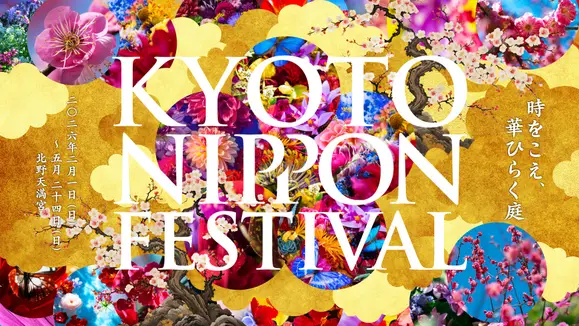
【Kyoto】Kyoto Nippon Festival 2026 (Kitano Tenmangu Shrine)
Mika Ninagawa and creative team EiM, led by Hiroaki Miyata with specialists from various fields, present an installation in Kitano Tenmangu's plum garden. Fusing nature and art, the work transforms the space into a fantastical environment for visitors to explore.
Venue: Kitano Tenmangu Shrine
Schedule: February 1 – May 24
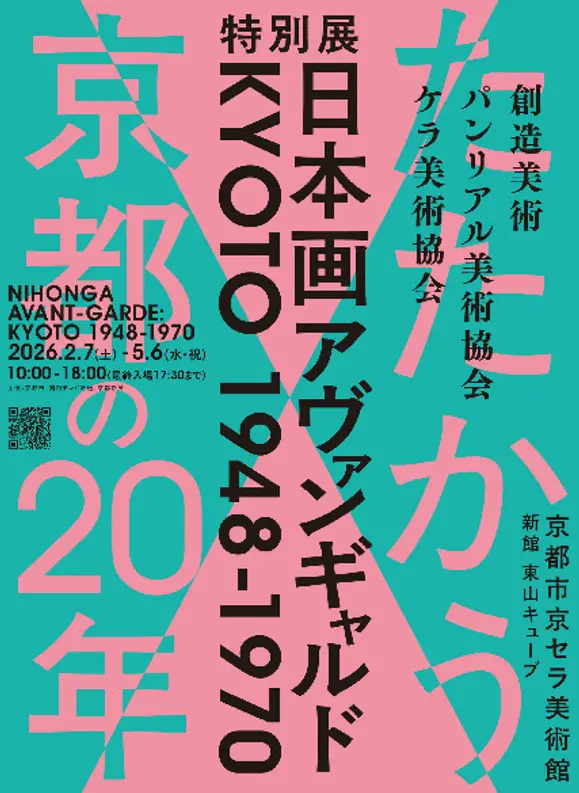
【Kyoto】Nihonga Avant-Garde: Kyoto 1948-1970 (Kyoto City Kyocera Museum of Art)
In the postwar years, as Japanese-style painting wavered between tradition and innovation, avant-garde movements emerged among young painters in Kyoto. This exhibition centers on groups formed from the 1940s onward, highlighting artists who questioned the very framework of nihonga. Rooted in the critical spirit and creativity of the Kyoto painting establishment, these rebellious currents are reframed here as "Nihonga Avant-Garde."
Venue: Kyoto City Kyocera Museum of Art
Schedule: February 7 – May 6
【Tokyo】Artistsʼ Fair Kyoto 2026 (Kyoto National Museum)
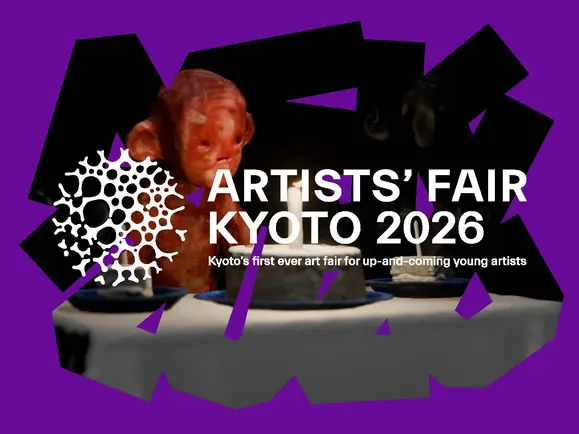
Now in its ninth year, Artists' Fair Kyoto is an artist-driven fair that gives emerging artists a platform to connect directly with collectors and audiences. Directed by Tsubaki Noboru, this edition gathers diverse expressions spanning painting, installation, video, and sculpture under the theme "Singularity of Art."
Venue: Kyoto National Museum
Schedule: February 21 – February 23
【Osaka】Jeff Koons "Paintings and Banality - Selected Works from the Collection" (Espace Louis Vuitton Osaka)
American artist Jeff Koons has occupied a singular position in contemporary art since the 1980s. Known for balloon animal sculptures and works incorporating motifs from mass culture, everyday objects, and pop culture, Koons has built an unmistakable body of work. This exhibition presents seven carefully selected sculptures and paintings from series that define his career.
Venue: Espace Louis Vuitton Osaka
Schedule: February 20 – July 5